Ontario Fireplace & Chimney Specialists
Gas Fireplace Conversion in Windsor
Keep the fireplace, lose the woodpile.
Every job starts with a proper look at your system — not a guess over the phone. You get a written quote before any work begins, a clear explanation of what we found, and a technician who works to manufacturer and code requirements from start to finish.
- Written quotes, no surprise charges
- Photo-backed findings after every visit
- Work performed to code and manufacturer specs
- Serving Windsor and Essex County, year-round
Gas Conversion for Windsor homes
Windsor has extensive pre-war and post-war brick housing with masonry chimneys, and near-universal natural gas service means most of those fireplaces have been converted or supplemented with gas appliances.
The milder winters here reduce freeze-thaw damage compared with the north, but persistent humidity keeps masonry damp, which shows up as efflorescence and interior staining rather than spalling.
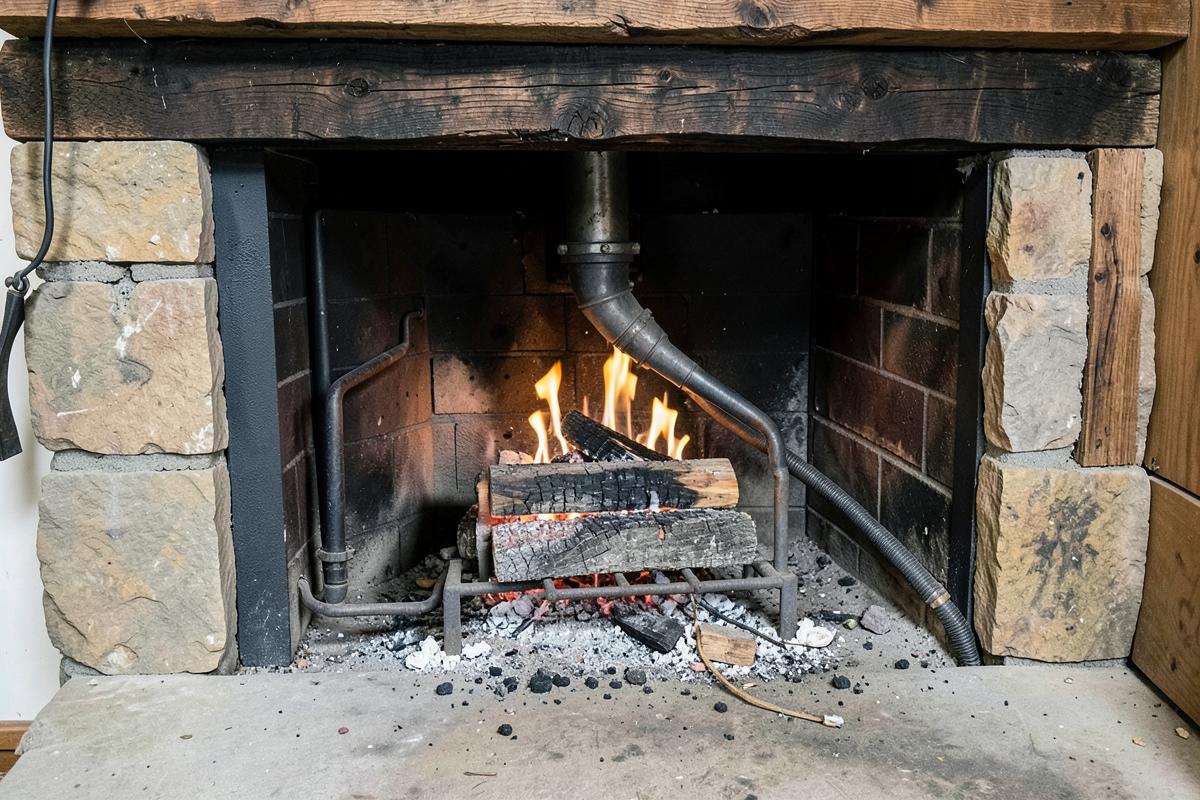
Conversions take one of two forms. A gas insert is a sealed appliance that delivers real heat and runs with the flue relined to its outlet. A log set sits in the existing firebox for appearance, produces much less usable heat, and needs the flue open while burning.
Either way the chimney has to be swept, inspected and relined to suit the new appliance, and the gas line has to be sized and connected by a licensed technician. We lay out both options with honest heat expectations before you choose.
What the visit includes
- Chimney sweep and inspection before conversion
- Insert versus log set comparison for your room
- Correctly sized liner installation
- Licensed gas line connection and pressure test
- Commissioning, and cap or damper clamp as required
Signs you need this
- You stopped using the wood fireplace years ago
- You want heat without hauling and storing wood
- The firebox is sound but the masonry flue is oversized
- Air quality or allergy concerns with wood smoke
Areas we cover around Windsor
Walkerville · Riverside · South Windsor · Sandwich · Forest Glade
Switching an old wood-burning fireplace over to gas is one of the more satisfying upgrades a homeowner can make, mainly because so much of the original character stays put. The brick surround, the mantel, the shape of the opening all remain, while the mess of hauling wood, cleaning ash and fighting a smoky draft on a windy night disappears. What changes underneath is significant: a new appliance, a resized flue and a fuel connection that has to be planned rather than improvised.
Ontario homes present a particular version of this job because so many fireplaces here were built in the 1960s through the 1980s with oversized clay-tile flues meant for open wood fires. Those flues are almost always the wrong diameter for a gas appliance, and getting the sizing wrong is the single most common reason a conversion underperforms afterward, producing sooting, condensation staining or a pilot that will not hold. A conversion done properly treats the chimney as part of the appliance system, not an afterthought.
There are two distinct paths, and they solve different problems. A vented gas log set sits inside the existing firebox and is built almost entirely for appearance, since the damper has to stay open while it burns and most of the heat still goes up the flue. A gas insert is a sealed, glass-fronted firebox that closes off the chimney opening and is built to genuinely heat a room. Deciding between the two, honestly, before any work starts, saves people from disappointment months later.
How the conversion actually happens
Work starts with the existing masonry system, not the new appliance. The flue is swept and inspected, because any conversion built on top of a cracked liner or a deteriorated smoke chamber inherits those problems immediately. Camera inspection down the flue shows tile condition, offsets and any obstruction that would interfere with a new liner run.
Once the flue is confirmed sound or repaired, a liner is sized specifically to the appliance being installed, almost always smaller in diameter than the original masonry flue. That resizing is what allows flue gases to stay warm enough to rise properly rather than cooling and condensing partway up, which is the root cause of the sour, damp smell some gas conversions develop within a year.
The appliance is then set, connected to a properly sized gas line run by a licensed gas technician, and the firebox sealed or fitted according to the manufacturer's listing. A pressure test on the gas line and a full commissioning of the appliance, checking ignition, flame pattern and shutoff response, closes out the mechanical side before the surround or trim is finished.
Log sets versus inserts, decided properly
A vented log set burns with an open damper, which means the majority of the heat produced still exits up the chimney rather than into the room. It looks close to a real wood fire, costs less to install, and suits people who want the sight and sound of flame with the fireplace remaining mostly decorative. It is not, and should never be sold as, a heating upgrade.
A gas insert changes that equation completely. It is a closed combustion appliance with its own glass front, blower option and thermostatic control, capable of heating a room the way the original wood fireplace never could once you account for the heat lost up an open flue. Inserts cost more upfront and reduce the visible firebox opening somewhat, but for anyone who actually wants supplemental heat from the fireplace, they are the appliance that delivers it.
- Log sets require an open damper and lose most heat up the flue
- Inserts are sealed, glass-fronted and genuinely heat a room
- Inserts typically include a blower for forced circulation
- Log sets suit purely decorative, occasional-use fireplaces
- Insert clearance requirements are stricter and firebox-specific
Ontario winters and how they shape the decision
A gas appliance run through an oversized, uninsulated masonry flue during a cold Ontario winter is fighting physics the whole way. Flue gas cools quickly against cold masonry, water vapour in the exhaust condenses before it clears the top of the chimney, and that moisture works its way into brick and mortar from the inside where you cannot see it happening. Over several winters that shows up as staining on the exterior face or spalling brick near the crown.
Insulated liners largely solve this by keeping the flue gas warmer for the length of its travel, but the benefit only holds if the liner is sized correctly for the appliance's actual output. A liner installed loosely to save cost, rather than calculated against the appliance's specifications, gives back most of the protection that insulation was meant to provide.
Code, safety and what an inspector actually checks
Gas fireplace conversions fall under both the general Ontario Building Code framework for venting and combustion air, and the gas-specific codes that govern appliance connection, which is why the fuel connection itself must be made and tested by a licensed gas technician rather than a general contractor. TSSA oversight applies to the gas side of the work in Ontario, and CSA listings on the appliance itself determine clearances, liner sizing and vent configuration, none of which are open to on-site improvisation.
In practical terms, an inspector or a knowledgeable installer is checking that the appliance is CSA-certified for the fuel and configuration being used, that combustion air supply is adequate for the space, that clearances to combustible trim match the appliance's listing exactly, and that the gas line has been pressure tested rather than simply connected and lit.
None of this is about paperwork for its own sake. A gas leak or an improperly vented appliance is a genuine hazard, and the code requirements exist specifically because gas combustion products, unlike wood smoke, are colourless and largely odourless until an additive is present.
What a pre-conversion inspection tells you
The camera inspection before conversion usually turns up one of three pictures: a flue in good condition needing only correct sizing, a flue with cracked or offset tiles needing a full relining regardless of fuel choice, or a firebox with structural issues, such as a cracked throat or damaged smoke chamber, that need masonry repair before any appliance goes in.
That third scenario is worth taking seriously rather than routing around. Installing a gas insert on top of a damaged firebox does not make the damage disappear, and continued heat cycling from a new gas appliance can make an existing crack worse over subsequent seasons.
- Sound flue: proceed straight to liner sizing and installation
- Cracked or offset tiles: full relining required before conversion
- Damaged smoke chamber or throat: masonry repair first
- Missing or undersized damper clamp: addressed during commissioning
- Evidence of prior chimney fire: structural reassessment first
Repair versus full conversion, and how to think about the spend
Homeowners sometimes ask whether a smaller repair, such as fixing a damaged damper or patching the smoke chamber, can substitute for a full conversion if the goal is simply to stop using the fireplace for wood. It usually cannot achieve much on its own, because the underlying decision to switch fuels changes what the flue and appliance need to be, not just their condition.
Where the comparison genuinely matters is between a log set and an insert once conversion is already decided. A log set costs meaningfully less to install and is the sensible choice for a fireplace used a handful of evenings a year purely for ambience. An insert costs more but functions as a real secondary heat source, which matters more in a house with an older furnace, a drafty room, or a homeowner planning to lean on the fireplace during winter storms and outages.
Resale value and insurance considerations
A documented gas conversion, with the appliance model, liner specifications and gas line pressure test on file, tends to be viewed favourably by both home insurers and future buyers, because it replaces an open-flame wood system with a controlled appliance and a clear paper trail. Real estate listings in much of Ontario now treat a working gas fireplace as a selling point rather than a liability, which was not always the case with older, poorly maintained wood fireplaces.
On the insurance side, some carriers ask specifically whether a fireplace conversion was completed by licensed trades and whether the gas line was tested, particularly for older homes. Keeping the commissioning paperwork, liner specification sheet and gas technician's test record together in one place means that question can be answered in minutes rather than becoming a delay at renewal or at the time of a claim.
Gas Fireplace Conversion cost in Windsor
Most wood-to-gas conversions in Ontario land between $4,000 and $6,500 once liner work and gas connection are included.
| Work | Typical range | What moves the price |
|---|---|---|
| Vented gas log set conversionexisting firebox reused, liner and gas run included | $2,200 – $3,600 | existing firebox reused, liner and gas run included |
| Gas insert conversioninsert size, blower option and finish trim | $4,800 – $8,500 | insert size, blower option and finish trim |
| Flue relining as part of conversionflue height and liner diameter | $1,600 – $3,200 | flue height and liner diameter |
| Licensed gas line run and connectiondistance from meter or existing line | $450 – $950 | distance from meter or existing line |
| Firebox or smoke chamber repair prior to conversionextent of masonry damage found | $600 – $2,400 | extent of masonry damage found |
| Commissioning and pressure testusually bundled into the full conversion price | $150 – $260 | usually bundled into the full conversion price |
Ranges are estimates for planning only, not quotes. Final pricing depends on what we find on site, access, and the condition of the existing system.
What moves the price
- Log set versus full glass-front insert
- Existing flue condition and whether relining is required
- Distance and routing of the new gas line from the meter
- Firebox or smoke chamber repairs found during inspection
- Surround or mantel refinishing done alongside the conversion
- Insert size and blower or remote-control options chosen
Want a number for your own fireplace? Send us the details and we will come back with an estimate, or call (833) 949-4153.
How the work goes, step by step
- 1
Sweep and camera inspection
The existing flue is swept clean and inspected end to end with a camera to confirm tile condition, offsets and any damage that would affect liner installation or appliance venting before anything else proceeds.
- 2
Appliance and fuel path selection
Log set or insert is chosen based on how the fireplace is actually used, room size and heating goals, with realistic expectations set about heat output for each option before ordering equipment.
- 3
Liner sizing and installation
A liner is calculated against the specific appliance's outlet size and the flue's height, then installed with insulation wrap where clearance to combustibles requires it.
- 4
Licensed gas connection
A licensed gas technician runs and connects the fuel line, sized correctly for the appliance's BTU rating and distance from the source, then pressure tests the completed run.
- 5
Appliance setting and firebox finishing
The insert or log set is set into the firebox, secured, and finished according to the manufacturer's listed clearances, with any surround or trim work completed to match the room.
- 6
Commissioning and walkthrough
Ignition, flame pattern, shutoff and safety devices are tested, and the homeowner is walked through operation, controls and what a normal flame should look like season to season.
How long it takes: A straightforward log set conversion is usually a one-day job, while an insert conversion with relining typically takes one to two days depending on flue height and access.
Looking after it afterwards
- Book an annual gas service before each heating season starts
- Keep the glass front clean with a proper gas fireplace glass cleaner only
- Do not store anything flammable within the appliance's listed clearance
- Watch for any change in flame colour or pattern and have it checked promptly
- Keep the commissioning and liner paperwork somewhere easy to find
Mistakes we see most often
- Assuming any technician can make the gas connection without a licence
- Choosing a log set expecting real heat output
- Skipping the flue inspection because the fireplace looked fine
- Reusing an oversized masonry flue without relining
- Not budgeting for smoke chamber or firebox repairs uncovered during inspection
Questions homeowners ask
- Is a log set as warm as an insert?
- No, and it is worth being clear about that. Log sets are for appearance; inserts are for heat.
- Can the conversion be reversed later?
- Usually, but the liner sizing that suits gas is often wrong for wood, so returning to wood generally means another liner.
- Can any wood fireplace be converted to gas?
- Most can, but the flue and firebox need to be sound enough to support relining and the new appliance, and the room needs adequate combustion air. A pre-conversion inspection is the only reliable way to know, since problems like a cracked smoke chamber or an unusually short flue can change what is realistic.
- Do I lose the ability to burn wood again later?
- Practically, yes in most cases. The liner sized correctly for a gas appliance is generally too small for safe wood burning, so reverting would mean installing a different liner again, effectively repeating a significant part of the original work.
- How much heat will a gas insert actually produce?
- A quality insert can meaningfully heat the room it is in and sometimes adjoining space, depending on BTU output and home layout, but it is a supplemental heat source rather than a replacement for a furnace in most Ontario homes.
- Is a permit needed for a gas fireplace conversion?
- Gas work is regulated under Ontario's gas safety framework and typically requires the connection to be completed and reported by a licensed gas technician, separate from any building permit that may apply to structural changes to the firebox or chimney.
- Why does the flue need to be smaller than before?
- Wood fires need a larger flue to move a big volume of smoke and hot air. Gas appliances produce a smaller, steadier volume of exhaust, and a flue sized for wood is too large to keep those gases warm enough to rise properly, leading to condensation and staining.
- Does a conversion affect home insurance?
- It can, generally for the better, since a documented, licensed gas conversion with test records tends to be viewed as lower risk than an older wood fireplace with no maintenance history. Some insurers ask about fireplace type and installation documentation at renewal.
Nearby
Other Communities Near Windsor
Related work
Often Booked Together
Gas Fireplace Repair in Windsor
Licensed diagnosis and repair of pilots, valves, ignitions, blowers and remote controls.
Gas Fireplace Installation in Windsor
Direct-vent and B-vent gas fireplace installation by licensed gas technicians.
Gas Annual Service in Windsor
Yearly maintenance for gas fireplaces: cleaning, testing, log placement and vent checks.
Chimney Sweeping in Windsor
Full mechanical sweep of the flue, smoke chamber and firebox with containment and photos.