Ontario Fireplace & Chimney Specialists
Chimney Animal Removal in Midland
Get them out, get the nest out, then make sure it cannot happen again.
Every job starts with a proper look at your system — not a guess over the phone. You get a written quote before any work begins, a clear explanation of what we found, and a technician who works to manufacturer and code requirements from start to finish.
- Written quotes, no surprise charges
- Photo-backed findings after every visit
- Work performed to code and manufacturer specs
- Serving Midland and Simcoe County, year-round
Animal Removal for Midland homes
Midland's pre-war and post-war housing uses masonry chimneys, many adapted from coal or oil to gas, alongside waterfront properties with wood-burning fireplaces.
Bay humidity and hard winter cycling make crown and cap condition the first thing we look at, and oversized converted flues are a recurring liner concern.
An open flue is prime nesting habitat, and a nest is both a blockage and a fire load. Blocked flues push combustion gases back into the room, which is the reason animal problems are a safety issue rather than a nuisance.
Our sequence is removal, full cleanout of nesting material from the smoke shelf and flue, deodorising treatment where droppings have soaked in, and then a screened cap so the space is permanently excluded. Where protected species or young are involved, we coordinate timing with a licensed wildlife service.
What the visit includes
- Camera inspection to locate the nest and any young
- Removal of nesting material and debris
- Full flue and smoke shelf cleanout
- Deodorising and sanitising treatment
- Screened stainless cap for permanent exclusion
Signs you need this
- Scratching, chirping or fluttering in the chimney
- Twigs, straw or droppings in the firebox
- A strong ammonia or musty smell
- Smoke spilling into the room from a flue that used to draft
Areas we cover around Midland
Penetanguishene · Victoria Harbour · Port McNicoll · Tiny · Waubaushene
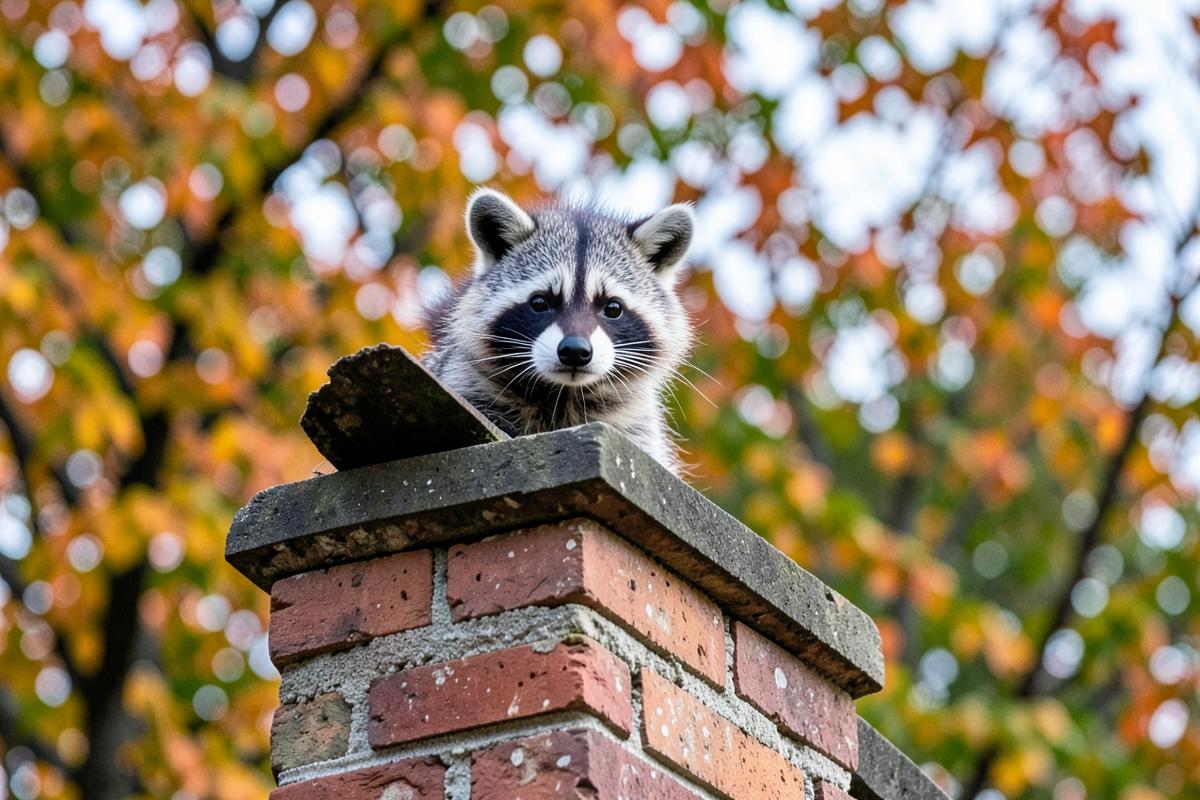
An open, uncapped chimney looks to a bird, squirrel, or raccoon almost exactly like the hollow tree cavity it would otherwise be nesting in: dark, sheltered, warm from residual heat, and reasonably safe from predators. Ontario has a long list of species that regularly use chimneys this way, and once one has moved in, the situation is rarely limited to a nuisance noise problem. A blocked or nested flue is a combustion safety issue, a fire risk, and often a source of persistent odour that will not resolve on its own.
The specific species matters for how the situation gets handled. Some birds that commonly use chimneys, notably chimney swifts, are protected, and removal, timing, and method have to account for that protection status rather than proceeding as a routine pest job. Squirrels and raccoons are not protected in the same way but come with their own challenges, particularly when young are present in a den, since separating a mother from dependent young creates both an animal welfare problem and a very good chance the animal will simply try to re-enter.
This service covers safe removal of the animal or nest, complete cleanout of nesting material and waste, deodorizing where droppings have soaked into masonry or a smoke shelf, and permanent exclusion with a properly fitted screened cap so the same chimney cannot be reused as a den in future seasons.
Which animals get into Ontario chimneys and why
Raccoons are among the most common chimney intruders in the province, particularly females looking for a safe, elevated den to raise young in spring, and they are strong enough to tear at chimney caps or screening that is not properly secured. Squirrels, both grey and red, also use chimneys for nesting and can squeeze through surprisingly small gaps around a damaged cap or crown.
Birds are a distinct category of problem. Chimney swifts specifically evolved to nest in vertical, dark, rough-walled cavities, and open masonry chimneys are functionally identical to their natural nesting habitat of hollow trees, which is exactly why the species has adapted so successfully to them and why they receive legal protection in many jurisdictions. Other birds like starlings and occasionally smaller songbirds also nest in chimneys, though generally without the same protection status.
Bats occasionally roost in chimney structures as well, particularly in older masonry chimneys with gaps between the flue liner and the surrounding brick, and several bat species found in Ontario also carry conservation protections that affect how and when removal work can proceed.
Why a nest is a genuine safety hazard, not just a nuisance
A nest sitting on the smoke shelf or partway down the flue is, first and foremost, a physical blockage. Combustion gases and smoke from a fire need somewhere to go, and a blocked flue forces them back down into the firebox and out into the living space instead, which means a homeowner unaware of a nest could light a fire and fill the room with smoke, or worse, with carbon monoxide from an appliance that vents through the same flue.
Nesting material itself is also highly combustible. Twigs, dry grass, leaves, and feathers packed against the flue walls represent a real fuel source sitting directly in the path of hot flue gases, and in some documented cases nest material has ignited from residual heat even without an active fire being lit that day, particularly where a furnace or water heater vents through the same chimney.
Beyond the fire and blockage risk, dead animals occasionally end up trapped in flues, either young that did not survive or adults that became stuck, and decomposition creates both a serious odour problem and a health consideration from the resulting bacteria and insect activity.
Legal and seasonal timing considerations
Because chimney swifts and some bat species carry legal protections in Ontario, removal work involving these species cannot simply proceed on the homeowner's schedule. Nesting season timing matters enormously; disturbing an active nest with dependent young present can violate protections designed to prevent exactly that outcome, and it is also simply less effective, since young unable to fly or move on their own will often remain in place regardless of what happens to the adult.
For raccoons and squirrels, general animal welfare practice favours non-lethal removal methods and, wherever practical, waiting for young to reach an age where the entire family can be encouraged to relocate together rather than separating a mother from her litter, which typically results in more persistent re-entry attempts and distressed animal behaviour.
In practice, this means a chimney animal removal visit often starts with careful assessment of species and life stage before any physical removal happens, and timing recommendations sometimes mean waiting a defined period before young are mobile enough for a full, humane resolution.
The cleanout and deodorizing process
Once an animal has been safely removed or relocated, the nest and any accumulated debris need to come out of the flue completely, not just enough to clear an obvious blockage. Leftover nesting material continues to hold odour and remains a fire hazard even in smaller quantities, and droppings left on the smoke shelf or flue walls will continue to produce ammonia-heavy odour, particularly in warm or humid weather.
Deodorizing treatments are applied where waste has soaked into masonry or metal surfaces, since simply removing visible material does not always eliminate absorbed odour sources. In cases of heavier, longer-term infestation, this can require more than a single treatment pass to fully resolve.
- Full removal of nesting material from the smoke shelf and flue walls
- Cleanout of droppings and debris that may have fallen into the firebox
- Enzymatic or specialized deodorizing treatment on affected surfaces
- Camera verification that the flue is fully clear before capping
- Coordination with a licensed wildlife specialist for protected species
Exclusion: making sure it does not happen again
Removal without permanent exclusion is a temporary fix, since an open chimney that attracted one animal will very likely attract another, sometimes within the same season. A properly sized and securely fastened stainless steel screened cap is the standard permanent solution, built with mesh openings small enough to keep out birds and small mammals while still allowing smoke and gases to vent freely.
Cap quality and installation matter here more than they might seem to. A poorly fitted or flimsy cap can be pried off or torn open by a determined raccoon, which is a strong enough animal to damage weak fasteners or thin mesh over time. This is why exclusion work uses full-perimeter fastening and mesh rated for wildlife exclusion rather than a basic rain cap that was never intended to keep animals out.
Ontario seasonal patterns for chimney intrusions
Spring is the peak season for chimney animal problems in Ontario, as raccoons and squirrels actively seek den sites for that year's young, and returning chimney swifts arrive back from migration looking for familiar or newly available nesting cavities. A chimney that sat unused and uncapped all winter is an easy target right as this seasonal search is happening.
Fall brings a second, smaller wave, as animals look for warm shelter ahead of winter, sometimes moving into a chimney that was fine all summer once outdoor temperatures start dropping. This is one of several reasons an inspection before the heating season starts each fall is worth doing even for households that had no issues the previous winter.
How this connects to broader chimney condition
An animal problem is very often the visible symptom of an underlying condition issue: a missing or damaged cap, a crown with gaps large enough for entry, or a chase cover that has rusted and separated from the structure. Addressing the animal and nest without correcting whatever allowed entry in the first place is incomplete work, which is why exclusion capping is treated as a required part of the service rather than an optional add-on.
Homeowners sometimes discover, once an animal problem is resolved, that the same access points were also letting in water, which had gone unnoticed because the animal issue was the more immediately obvious problem. A full inspection at the time of animal removal is a reasonable opportunity to catch that kind of overlapping issue before it develops separately.
Chimney Animal Removal cost in Midland
A complete animal removal job, including cleanout and a proper exclusion cap, typically averages around $650 to $800 for a standard single-flue chimney.
| Work | Typical range | What moves the price |
|---|---|---|
| Inspection and species identificationcamera check to confirm species and location | $120 – $200 | camera check to confirm species and location |
| Nest and debris removal, standard cleanoutsingle flue, no protected species involved | $220 – $380 | single flue, no protected species involved |
| Coordination with licensed wildlife specialistbilled separately by the specialist for protected species | $150 – $400 | billed separately by the specialist for protected species |
| Deodorizing and sanitizing treatmentdepends on extent of droppings and soak-in | $140 – $260 | depends on extent of droppings and soak-in |
| Stainless steel screened exclusion cap installationsized and fastened for wildlife exclusion | $250 – $475 | sized and fastened for wildlife exclusion |
| Full service package: removal, cleanout, and cappingcombined pricing for a complete resolution | $550 – $950 | combined pricing for a complete resolution |
Ranges are estimates for planning only, not quotes. Final pricing depends on what we find on site, access, and the condition of the existing system.
What moves the price
- Whether the species involved requires coordination with a licensed wildlife specialist
- Whether young are present, which can affect timing and method
- Extent of nesting material and how deeply droppings have soaked into surfaces
- Whether deodorizing treatment needs more than one application
- Condition of the existing cap or crown and what repair is needed alongside exclusion
- Number of flues affected on chimneys with multiple flue openings
Want a number for your own fireplace? Send us the details and we will come back with an estimate, or call (833) 949-4153.
How the work goes, step by step
- 1
Camera inspection and species identification
Before any removal begins, we use a camera to confirm what species is present, roughly how old any young are, and exactly where in the flue system the nest or animal is located.
- 2
Removal planning based on species
For non-protected species with no dependent young present, removal can generally proceed directly. For protected species or situations involving young, we coordinate timing and method with a licensed wildlife specialist.
- 3
Safe removal or relocation
The animal is safely removed or encouraged to relocate using humane methods appropriate to the species and situation, prioritizing keeping family groups together where young are involved.
- 4
Full nest and debris cleanout
All nesting material, droppings, and loose debris are removed from the smoke shelf and flue walls, not just enough to clear the immediate blockage.
- 5
Deodorizing treatment
Affected surfaces are treated to neutralize absorbed odour from droppings, with additional passes where longer-term infestation has soaked deeper into masonry or metal.
- 6
Permanent exclusion capping
A stainless steel screened cap sized to the flue is securely fastened around the full perimeter, closing off the access point that allowed the animal in originally.
How long it takes: Straightforward removal and capping is usually completed in one visit of two to four hours; cases involving protected species or dependent young may require a follow-up visit after a waiting period.
Looking after it afterwards
- Have the exclusion cap checked annually to confirm it remains securely fastened and undamaged
- Avoid leaving pet food or accessible garbage near the chimney base, which can attract animals looking for a den nearby
- Schedule a fall inspection each year before heating season, since this is a common time for new animals to seek shelter
- Watch for renewed scratching, chirping, or odour, which can indicate a new attempt at entry
- Keep tree branches trimmed back from the chimney, since overhanging limbs make roof and chimney access easier for squirrels and raccoons
Mistakes we see most often
- Sealing a chimney opening without confirming an animal or young are not still trapped inside
- Attempting to remove or relocate wildlife without checking species-specific legal protections first
- Installing a lightweight or poorly fastened cap that a raccoon can pry open
- Cleaning only enough to clear the blockage rather than removing all nesting material and waste
- Ignoring persistent odour after removal, which usually means deodorizing treatment was insufficient or incomplete
Questions homeowners ask
- Can you remove animals during nesting season?
- Timing and method depend on the species and whether young are present. We inspect first and coordinate with a licensed wildlife specialist where the law requires it.
- Will the smell go away on its own?
- Rarely. Droppings and nesting material hold odour, so the material has to come out and the surfaces have to be treated.
- Are chimney swifts really protected, and what does that mean for removal?
- Yes, chimney swifts carry legal protection in many Canadian jurisdictions, which affects the timing and method of any work involving an active nest. In practice this often means confirming the species first and, where protection applies, coordinating timing around the nesting cycle rather than removing a nest immediately.
- What happens if there are baby raccoons in my chimney?
- The preferred approach is generally to wait until the young are mobile enough to leave with the mother, since separating them creates both a welfare concern and a strong likelihood of repeated re-entry attempts. A licensed wildlife specialist can advise on realistic timing for your specific situation.
- How do I know if the noise I'm hearing is an animal and not something else?
- Scratching, chirping, or fluttering sounds concentrated in the chimney area, especially at dawn or dusk when many species are most active, are strong indicators. A camera inspection can confirm definitively without needing to open up any part of the chimney structure.
- Can animals get in even if I have a chimney cap already?
- Yes, if the cap is damaged, poorly fastened, has mesh openings too large for the species involved, or was never rated for wildlife exclusion in the first place. A basic rain cap is not the same thing as a proper animal exclusion cap.
- Will removing the nest get rid of the smell right away?
- Not always. Droppings and nesting material can soak odour into masonry and metal surfaces over time, so a deodorizing treatment after the physical cleanout is usually needed to fully resolve persistent smell, and heavier cases sometimes need more than one treatment pass.
- How can I prevent this from happening again next year?
- A properly sized and securely fastened stainless steel screened cap is the most reliable long-term prevention, since it physically blocks entry while still allowing the chimney to vent normally. Annual inspection of the cap's condition is worth doing to catch any damage before it becomes an opening again.
Nearby
Other Communities Near Midland
Related work
Often Booked Together
Chimney Sweeping in Midland
Full mechanical sweep of the flue, smoke chamber and firebox with containment and photos.
Chimney Repair in Midland
Targeted repairs to crowns, caps, mortar joints, flashing and liners.
Chimney Liner in Midland
Stainless steel and cast-in-place relining sized to the appliance being vented.
Chimney Cap in Midland
Stainless caps and multi-flue covers that keep out rain, snow, animals and embers.