
Ontario Fireplace & Chimney Specialists
Chimney Cap Installation in Midland
The cheapest part of the chimney prevents the most expensive damage.
Every job starts with a proper look at your system — not a guess over the phone. You get a written quote before any work begins, a clear explanation of what we found, and a technician who works to manufacturer and code requirements from start to finish.
- Written quotes, no surprise charges
- Photo-backed findings after every visit
- Work performed to code and manufacturer specs
- Serving Midland and Simcoe County, year-round
Chimney Cap for Midland homes
Midland's pre-war and post-war housing uses masonry chimneys, many adapted from coal or oil to gas, alongside waterfront properties with wood-burning fireplaces.
Bay humidity and hard winter cycling make crown and cap condition the first thing we look at, and oversized converted flues are a recurring liner concern.
An uncapped flue is an open drain into the middle of your house. Every rainfall and every thaw sends water down onto the damper and smoke shelf, where it rusts steel components and saturates masonry that then spalls the following winter.
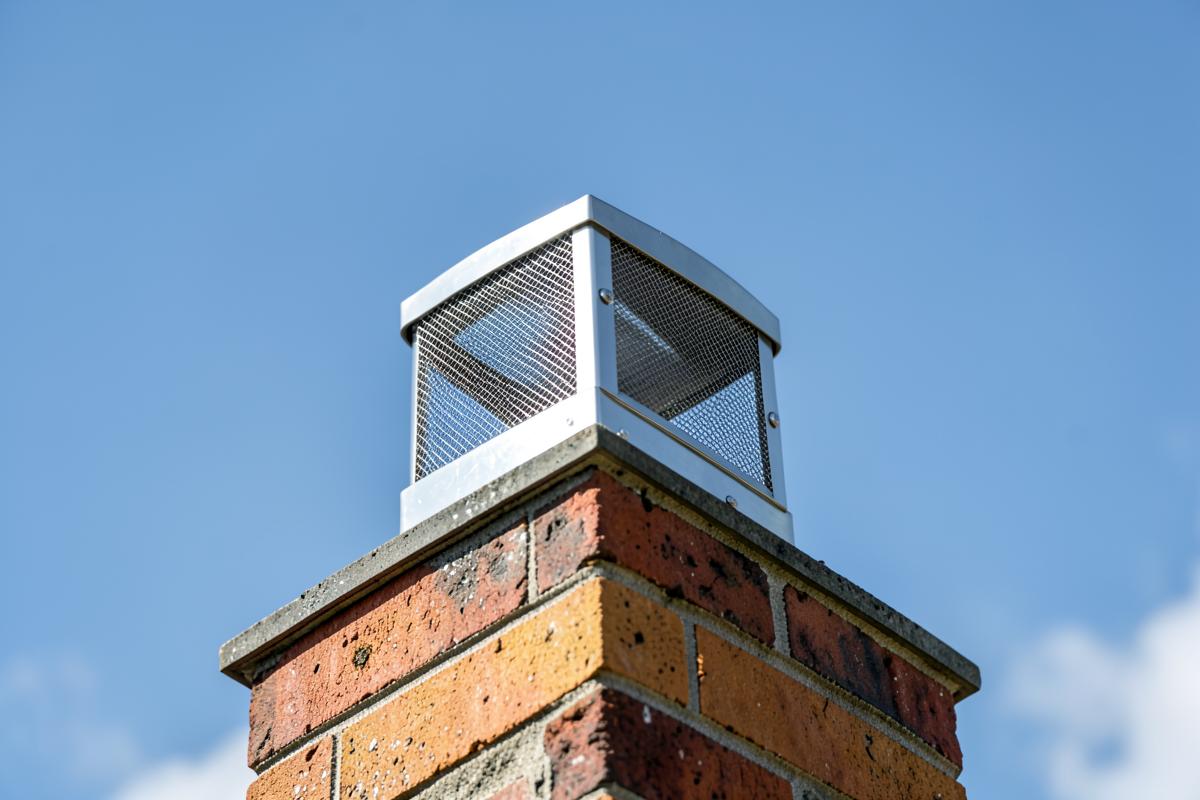
A properly made cap does three jobs at once: it sheds water clear of the flue, it screens out birds, raccoons and squirrels, and it arrests sparks leaving the flue. We fit stainless or copper caps sized to the tile or crown, and multi-flue covers where several flues share one crown.
What the visit includes
- Measurement of flue tile or crown dimensions
- Stainless or copper single or multi-flue cap
- Integral animal screen and spark arrestor mesh
- Secure mechanical fastening, not adhesive alone
- Removal of any nesting material found beneath
Signs you need this
- You can see daylight straight down the flue from the roof
- Rain sounds or drips inside the firebox
- Birds or animals audible in the chimney
- An old cap that is rusted, crushed or missing mesh
Areas we cover around Midland
Penetanguishene · Victoria Harbour · Port McNicoll · Tiny · Waubaushene
A chimney cap is a small, inexpensive component that does an outsized amount of protective work. Sitting at the very top of the flue, it is the last line of defence against rain, snow, wildlife and embers, and an uncapped or damaged cap is one of the most preventable causes of expensive chimney damage seen across Ontario homes.
It is easy to underestimate how much water an open flue lets in over a year. Every rainfall sends water directly down onto the smoke shelf and damper, and every winter thaw does the same with meltwater, and that moisture sits against steel components and saturates masonry that then spalls when it freezes again. A cap that costs a few hundred dollars routinely prevents damage costing many times that amount.
This page covers what a properly made cap actually needs to do, the difference between single-flue and multi-flue covers, material choices and their tradeoffs in this climate, and the animal and pest issues that a missing or damaged cap commonly causes.
The three jobs a cap does at once
A well-made cap combines three functions in a single component. The lid or hood sheds rain and snow away from the flue opening while still allowing smoke and combustion gases to exit freely around its sides. The mesh screening around the sides keeps birds, squirrels and raccoons from entering and nesting inside the flue, which happens with striking frequency on uncapped chimneys, particularly during spring nesting season.
The same mesh also functions as a spark arrestor, catching embers carried up from a wood fire before they can land on a roof, particularly relevant for the many Ontario homes with asphalt shingle roofing directly adjacent to the chimney. Losing any one of these three functions, for instance a mesh that has rusted through, leaves the whole cap only partially doing its job even if the lid itself still looks intact.
What an uncapped flue actually costs a homeowner over time
Water landing directly in an open flue collects on the smoke shelf, a low point in the smoke chamber that has nowhere to drain, and it sits there against a steel damper assembly that begins to rust. A rusted damper eventually seizes, either stuck open, which lets warm house air escape and cold outdoor air in even when the fireplace is not in use, or stuck closed, which is a safety issue the next time the fireplace is lit.
Beyond the damper, standing water in the smoke chamber and upper flue saturates the surrounding masonry from the inside, a less visible but often more damaging path than surface rain hitting the exterior brick face, because that interior saturation feeds directly into freeze-thaw spalling of the flue tile and brickwork with no opportunity to dry out between rain events.
It is a genuinely common finding, during inspections of houses that have never had a cap, that the smoke shelf holds a noticeable puddle after any rain within the past day or two, which is a clear practical demonstration of exactly what a cap is meant to prevent.
Single-flue caps versus multi-flue covers
A single-flue cap sits directly over one flue tile or liner termination and is sized to that specific opening. This is straightforward on a chimney with one flue and a well-defined crown around it.
Where a chimney crown carries two or more flues, as is common on homes with both a fireplace and a furnace or water heater vent sharing the same masonry stack, a multi-flue cover spans the entire crown as a single unit rather than fitting individual caps to each opening. This tends to look cleaner and can be more weathertight across the whole crown surface, though it requires careful attention to keep each flue's exhaust properly separated and unobstructed within the shared cover.
- Single-flue caps: sized to one specific flue tile or liner opening
- Multi-flue covers: span the whole crown for two or more flues
- Multi-flue covers need internal separation between different flue outlets
- Combustion appliance flues (furnace, water heater) need dedicated, unobstructed openings
- Mixed fuel types sharing a crown require covers designed for that specific combination
Material choice: stainless, copper and galvanised steel
Stainless steel is the most common material used for new cap installations, offering strong corrosion resistance across the decades of freeze-thaw and salt-air exposure a chimney faces even well inland, thanks to winter road salt carried in precipitation and general atmospheric moisture. It holds its appearance well over time and rarely needs replacement due to material failure rather than physical damage.
Copper caps cost more upfront but develop a weathered patina that some homeowners specifically want for the look, particularly on older or heritage-style homes, and copper resists corrosion at least as well as stainless over a long service life. Galvanised steel caps are the least expensive option but the galvanised coating tends to wear through within a decade or so of Ontario winters, after which the underlying steel rusts, often staining the crown and brick below with a visible rust streak that is unattractive and can be difficult to fully clean off masonry.
Sizing, fastening and installation details
A cap needs to be measured precisely to the flue tile or liner outer dimension it will sit on, since an ill-fitting cap either leaves gaps that defeat the animal and spark protection or fails to seat securely against wind loading. Mechanical fastening, typically with screws or clamps into the flue tile or liner rather than adhesive alone, is the standard for a secure long-term installation, since adhesive-only mounting is vulnerable to failure from thermal expansion cycling and wind uplift over time.
Installation is also the point at which any existing nesting material, old bird's nests or accumulated debris on the smoke shelf and crown gets removed, since installing a new cap over an existing animal problem does not solve it, it just traps whatever is already inside.
Wildlife issues specific to Ontario chimneys
Raccoons and squirrels are the most common uninvited chimney residents across Ontario, and a female raccoon looking for a den site in spring can consider an uncapped flue an ideal, weatherproof nesting spot, sometimes bringing kits that are then difficult and legally regulated to remove during certain periods of the year. Birds, particularly chimney swifts in some parts of the province, present their own considerations since some species have protected status, making capping before nesting season begins far preferable to dealing with an occupied chimney later.
Beyond the nuisance and potential legal complexity of removing wildlife, nesting material itself is a fire hazard and can also block the flue entirely, creating a carbon monoxide risk if the fireplace or connected appliance is used without anyone realizing the flue is obstructed.
Cap maintenance and when to replace rather than repair
A cap is checked as part of a routine annual sweep or inspection, primarily looking at whether the mesh is intact, whether the lid shows rust, dents or separation from the frame, and whether the fasteners are still secure. A cap that has been crushed by fallen branches, has significant rust-through, or has mesh torn open by animal activity is generally more sensible to replace outright than to patch, given how inexpensive a new cap is relative to a repair labour visit.
It is worth checking cap condition specifically after any major storm, since wind can loosen fasteners or bend a cap enough to compromise its seal even without obvious damage visible from ground level.
Chimney Cap Installation cost in Midland
A standard stainless steel single-flue cap installed in Ontario typically averages around $275 to $350.
| Work | Typical range | What moves the price |
|---|---|---|
| Single-flue stainless cap, standard sizeincludes removal of any old cap and installation | $225 – $375 | includes removal of any old cap and installation |
| Single-flue copper capmaterial premium for copper over stainless | $375 – $650 | material premium for copper over stainless |
| Multi-flue stainless coverspans two or more flues sharing one crown | $450 – $850 | spans two or more flues sharing one crown |
| Custom or oversized cap fabricationnon-standard flue dimensions requiring custom sheet metal work | $500 – $1,000 | non-standard flue dimensions requiring custom sheet metal work |
| Nesting material removal (as part of cap installation)additional charge when significant animal debris is found | $100 – $250 | additional charge when significant animal debris is found |
| Cap replacement after storm or fall damagetypical range depending on single or multi-flue configuration | $225 – $500 | typical range depending on single or multi-flue configuration |
Ranges are estimates for planning only, not quotes. Final pricing depends on what we find on site, access, and the condition of the existing system.
What moves the price
- Single-flue versus multi-flue crown configuration
- Material choice (stainless, copper or galvanised)
- Standard versus custom-fabricated sizing
- Roof pitch and height affecting access and installation time
- Whether nesting material or debris removal is needed first
- Urgency of replacement after storm or fall damage
Want a number for your own fireplace? Send us the details and we will come back with an estimate, or call (833) 949-4153.
How the work goes, step by step
- 1
Measure the flue or crown
Exact outer dimensions of the flue tile or liner, or the full crown for a multi-flue cover, are measured to ensure a properly fitted cap rather than an approximate size.
- 2
Remove any old cap or debris
A damaged or ill-fitting existing cap is removed, and any nesting material or accumulated debris on the smoke shelf is cleared out.
- 3
Select material and style
Stainless, copper or another material is chosen based on the homeowner's budget and the look of the house, along with single-flue or multi-flue configuration.
- 4
Fit and adjust
The cap is test-fitted to the flue or crown and adjusted as needed before final fastening.
- 5
Mechanically fasten
The cap is secured with screws or clamps into the flue tile, liner or crown rather than relying on adhesive alone.
- 6
Final check
The mesh, lid clearance and fasteners are checked for a secure, weathertight fit before the visit is complete.
How long it takes: A standard single-flue cap installation typically takes thirty to sixty minutes; multi-flue or custom covers can take one to two hours.
Looking after it afterwards
- Check the cap visually after any major windstorm for looseness or damage
- Include cap condition as a standard item during each annual sweep or inspection
- Clear any debris that accumulates on top of the mesh over time
- Replace promptly if mesh tears or rusts through rather than leaving it partially open
- Avoid painting over stainless or copper caps, which can trap moisture against the metal
Mistakes we see most often
- Leaving a flue uncapped because the chimney is rarely used
- Choosing galvanised steel purely on upfront price without factoring in its shorter service life
- Installing a cap without first removing existing animal nesting material
- Fastening a cap with adhesive alone instead of mechanical fasteners
- Ignoring a crushed or bent cap after storm damage until the next scheduled visit
Questions homeowners ask
- Does a cap reduce draft?
- A correctly sized cap does not. Draft problems come from caps that are too low or clogged with creosote and lint, which is why mesh should be checked at each service.
- Stainless or galvanised?
- Stainless, in our view. Galvanised caps are cheaper but tend to rust through within several Ontario winters and stain the masonry below.
- Does a chimney cap reduce draft?
- A correctly sized cap should not meaningfully affect draft, since it is designed to let smoke exit freely around its sides while blocking rain from above. Draft problems attributed to a cap are more often caused by a cap sitting too low relative to the roofline or mesh clogged with creosote and debris, both of which get checked during routine service.
- Can I install a chimney cap myself?
- It is possible for a comfortable, properly equipped homeowner on an easily accessible single-storey roof, but incorrect sizing or fastening are common DIY mistakes, and working safely at height on a chimney is not something to attempt without proper fall protection, so many homeowners choose to have it done professionally.
- What if I hear animals in my chimney right now?
- Do not cap the flue immediately, since that can trap an animal inside. The situation needs to be assessed first, and depending on the species and time of year, safe removal may need to happen before a cap is installed to prevent the same problem recurring.
- How long does a stainless steel cap last?
- A quality stainless cap can commonly last multiple decades under normal conditions, since it resists the corrosion that shortens the life of cheaper galvanised options, though physical damage from storms or falling branches can still require earlier replacement regardless of material.
- Do gas appliance flues need a cap too?
- Yes, though the design differs from a wood fireplace cap since gas venting has different clearance and draft requirements. An appropriate cap or termination cover still protects the flue from water and debris even when the appliance is not producing the creosote a wood fire would.
- Will a cap stop water stains inside my fireplace?
- In most cases, yes, if the stains were caused by rain entering an uncapped or poorly capped flue. If staining persists after a proper cap is installed, the water is more likely entering through the crown, flashing or masonry rather than straight down the flue opening, and that needs a separate diagnosis.
Nearby
Other Communities Near Midland
Related work
Often Booked Together
Chimney Sweeping in Midland
Full mechanical sweep of the flue, smoke chamber and firebox with containment and photos.
Chimney Repair in Midland
Targeted repairs to crowns, caps, mortar joints, flashing and liners.
Chimney Liner in Midland
Stainless steel and cast-in-place relining sized to the appliance being vented.
Flashing Repair in Midland
Step and counter-flashing repair where the chimney meets the roof.