
Ontario Fireplace & Chimney Specialists
Wood Stove Service in Milton
Stoves burn cleanly when they are sealed and the baffle is intact.
Every job starts with a proper look at your system — not a guess over the phone. You get a written quote before any work begins, a clear explanation of what we found, and a technician who works to manufacturer and code requirements from start to finish.
- Written quotes, no surprise charges
- Photo-backed findings after every visit
- Work performed to code and manufacturer specs
- Serving Milton and Halton Region, year-round
Wood Stove Service for Milton homes
Milton's rapid expansion means the great majority of fireplaces here are contemporary direct-vent gas units, with older masonry limited to the original town core and nearby escarpment properties.
Because so much of the stock is the same age, we see clusters of the same commissioning oversights, particularly log sets never set to the manufacturer diagram, which is the main cause of the sooty glass we get called about.
A wood stove controls combustion by controlling air, and it can only do that if the door and glass gaskets seal. Flattened gaskets let uncontrolled air in, which burns wood fast, produces less heat and drives creosote up the flue.
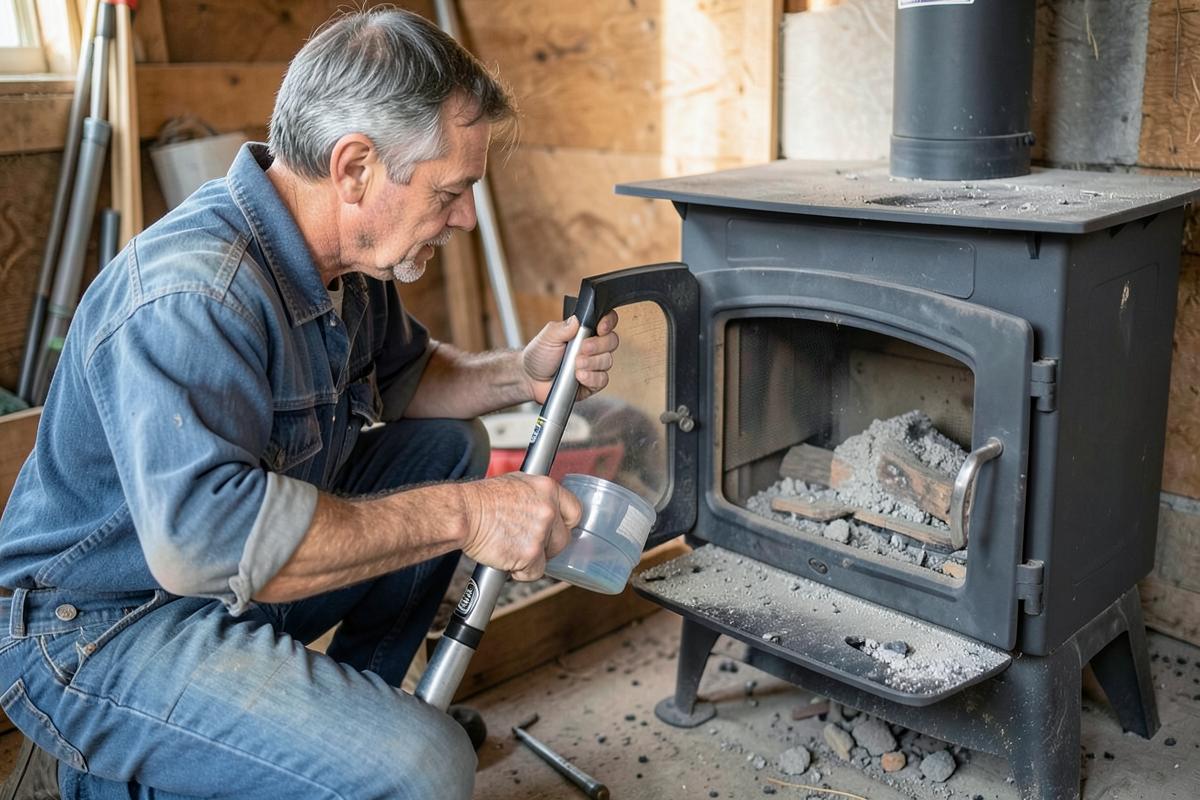
Service covers gasket replacement, baffle and firebrick condition, air control and secondary air passage cleaning, catalytic combustor checks where fitted, and the connector pipe to the chimney.
What the visit includes
- Door and glass gasket replacement
- Baffle, blanket and firebrick inspection
- Primary and secondary air passage cleaning
- Catalytic combustor check where applicable
- Connector pipe and chimney connection inspection
Signs you need this
- Wood burns through much faster than it used to
- You cannot slow the fire with the air control
- Glass sooting up quickly every burn
- Visible sagging or gaps in the baffle
Areas we cover around Milton
Old Milton · Beaty · Hawthorne Village · Scott · Campbellville
A wood stove is essentially a controlled-combustion box, and it can only control combustion if the parts meant to seal and direct airflow are actually doing their job. Once a door gasket flattens or a baffle sags, the stove stops burning the way it was designed to, and the results show up as faster wood consumption, less heat for the fuel burned, and considerably more creosote heading up the flue than a properly sealed stove would produce. None of these failures happen overnight; they creep in slowly enough over a season that most owners adjust their habits around a degrading stove without ever realizing the appliance itself is the reason wood consumption keeps climbing.
Annual service on a wood stove is different from a chimney sweep, though the two are often booked together. Sweeping clears the flue itself; servicing addresses the stove's internal components, the door and glass gaskets, the baffle and firebrick lining, the air control mechanism and secondary air passages, and on catalytic models, the combustor. Both jobs matter, and neither substitutes for the other, since a technician who only swept the flue and never opened the loading door could easily miss a gasket that has already flattened past the point of sealing properly.
Ontario's long burning season, often running steadily from October through April, puts real wear on these components over a single winter, let alone several. A gasket that sealed perfectly last spring is routinely compressed and worn by the following autumn, which is why checking it every year rather than assuming it is still fine is the difference between a stove that performs consistently and one that slowly, unnoticeably, gets worse. Households heating primarily with wood, rather than using the stove occasionally on cold evenings, put considerably more cycles on these parts across a single season and should generally expect wear items to need attention somewhat sooner than a lightly used unit.
What gets checked and serviced during a visit
The door and glass gaskets are checked first because a failed gasket undermines everything else about how the stove burns. A simple paper-strip test, closing a strip of paper in the door and pulling it out, reveals resistance or lack of it around the full perimeter; any spot where the paper slides free without resistance means the gasket is no longer sealing there. Corners and the latch side of the door tend to wear before the hinge side, simply because that is where the door closes with the most repeated pressure over hundreds of openings each season.
The baffle, which sits above the firebox and forces hot gases to travel a longer path before exiting, is inspected for sagging, cracking or gaps, since a compromised baffle lets heat and unburned gases escape too quickly, reducing efficiency and pushing more creosote up the connector pipe. Firebrick lining the firebox is checked for cracking or crumbling, since it protects the steel or cast-iron body from direct flame contact.
Primary and secondary air control passages, which regulate how much oxygen reaches the fire and where, get cleaned of ash and soot buildup that restricts airflow over a season. On stoves fitted with a catalytic combustor, that combustor is inspected for cracking or clogging, since a degraded combustor loses much of its ability to burn off gases that would otherwise pass unburned up the flue.
The ash pan and its gasket, on stoves equipped with one, get the same attention as the main door, since an ash pan door that no longer seals introduces the same uncontrolled air problem lower in the firebox where it can be harder to notice during a casual visual check. Igniter components on stoves with an electric start feature, where fitted, are also tested for continuity while the stove is disassembled.
- Door and glass gasket condition, tested by resistance
- Baffle inspection for sagging, cracking or gaps
- Firebrick lining check for cracks or crumbling
- Primary and secondary air passage cleaning
- Catalytic combustor inspection where fitted
Why gasket condition changes how a stove actually burns
A stove regulates its burn rate almost entirely through controlled air intake, which only works if the only air reaching the fire comes through the air control rather than leaking in around a worn door seal. Once a gasket flattens, uncontrolled air enters constantly regardless of how the air control is set, and the fire burns hotter and faster than intended no matter what adjustment is made.
This shows up practically as wood disappearing noticeably faster for the same amount of heat, a fire that cannot be slowed down or banked overnight the way it once could, and, over time, more creosote deposited in the flue because a fire burning too hot and too fast still produces incomplete combustion byproducts that a properly sealed, well-regulated burn would minimize.
Homeowners sometimes describe this as the stove suddenly needing constant reloading, when the actual cause is a seal problem rather than a change in the wood supply or the weather. Replacing the gasket restores the air control's authority over the burn almost immediately, which is why it is worth ruling out before assuming a stove has simply reached the end of its useful performance.
Seasonal wear patterns specific to Ontario burning
A wood stove used through a full Ontario winter typically goes through several hundred burn cycles between October and April, each one compressing the door gasket slightly and exposing the baffle and firebrick to repeated heating and cooling. That cycling is what wears these components down gradually rather than suddenly, which is exactly why an annual check catches problems before they become obvious from the fire's behaviour.
Firewood moisture content also plays directly into how much wear the stove sees each season. Wood that has not been properly seasoned burns cooler and produces significantly more creosote and soot, which accelerates buildup in air passages and shortens gasket life by depositing more residue in and around the door seal area than a clean, hot burn from properly dried wood would.
Households that run a stove overnight on a low, banked burn to hold heat through to morning put a different kind of stress on gaskets and firebrick than those burning shorter, hotter fires and letting the stove go out between uses, since a long slow burn holds sustained heat against the door seal and firebrick for many more hours per cycle. Neither pattern is wrong, but a technician benefits from knowing which one a household actually follows when assessing wear against the stove's age.
Code and safety framework behind wood stove maintenance
Wood stoves are covered under the same solid-fuel provisions of the Ontario Building Code that govern their installation, and WETT-trained technicians are specifically trained to assess ongoing condition against those standards, not just initial installation. Manufacturers also specify maintenance intervals for gaskets and catalytic combustors as part of maintaining the appliance's certified performance and emissions rating.
The safety reasoning is direct: a stove burning uncontrolled due to a failed gasket runs hotter than its design intends, which increases stress on the stove body and connector pipe over time and drives more creosote into the chimney system, directly raising chimney fire risk. Annual service is one of the more effective ways to keep that risk from building silently over several seasons.
Manufacturer parts lists and service bulletins are also checked during a visit where available, since gasket dimensions, firebrick shapes and combustor models are specific to each stove and using a generic substitute that does not match the original specification can quietly undermine the same certified performance the appliance was designed around.
What service findings actually indicate
A flattened gasket found during service is a routine, inexpensive fix and does not indicate anything wrong with the stove itself, only that a wear item has reached the end of its service life, typically every few seasons depending on how hard the stove runs. A cracked or badly sagging baffle is a more significant finding, since it affects combustion efficiency directly and, left unaddressed, accelerates wear on everything downstream including the flue.
Heavy soot or creosote found specifically in the air passages, rather than in the flue itself, usually points back to a burn quality issue, either unseasoned wood or a gasket that failed earlier in the season than the service visit caught, and addressing the root cause matters more than just cleaning the passages out once.
Repair versus replacement for wear components
Almost every wood stove service finding, a worn gasket, a cracked firebrick, a degraded combustor, is a straightforward parts replacement rather than a decision point about the stove as a whole. These are wear items by design, expected to need periodic replacement over the appliance's working life, and replacing them promptly is simply routine upkeep rather than a sign of a bigger problem.
The stove itself becomes a replacement conversation only when the body shows cracking, warping or a firebox that has burned through, none of which are addressed by parts replacement and all of which indicate the appliance has reached genuine structural end of life. This is uncommon on a well-maintained stove but does eventually happen on units run hard for well over a decade.
Parts availability is worth raising early on an older or discontinued stove model, since gaskets are usually a universal fit by dimension, but firebrick shapes and catalytic combustors are sometimes model-specific and can take longer to source once a manufacturer has stopped producing them, which is a reasonable thing to ask about before assuming a repair will be quick.
Insurance and resale relevance of documented service
Some Ontario insurers ask for evidence of regular wood stove maintenance alongside chimney sweeping records when underwriting a policy on a home with solid-fuel heat, since both directly affect fire risk. A documented annual service history is a straightforward way to answer that question without ambiguity.
At resale, a wood stove with a clear service and sweep history reassures a buyer that the appliance has been genuinely cared for rather than just occasionally lit, which matters given how much variability exists in how well wood stoves are maintained across different households. Keeping receipts or service notes together with the original installation documentation completes the picture for anyone reviewing the home later.
Signs a stove needs service sooner than the annual schedule
A handful of warning signs are worth acting on outside the usual pre-season booking window rather than waiting. Smoke drifting into the room each time the door opens, even briefly, points to a draft or gasket problem that is worth checking promptly rather than living with for months. Glass that blackens quickly after each fire, rather than staying reasonably clear, often signals an air control or gasket issue affecting how completely the stove is burning.
A stove that used to hold a low overnight burn but now needs frequent reloading through the night has usually developed a gasket or air leak problem, and this is one of the more reliable early indicators that something has changed mechanically rather than the wood supply simply being of lower quality than usual.
Any strong odour of gas-like or acrid smoke inside the home, distinct from the normal smell of a working wood fire, warrants stopping use and having the stove and connector pipe checked before lighting another fire, since it can indicate a leak at a joint or a draft problem pulling combustion byproducts back into the room rather than up the flue.
Wood Stove Service cost in Milton
A standard annual wood stove service in Ontario typically averages around $230 including a basic gasket check.
| Work | Typical range | What moves the price |
|---|---|---|
| Standard annual wood stove servicesingle stove, no major parts needed | $180 – $290 | single stove, no major parts needed |
| Door or glass gasket replacementgasket length and stove model | $90 – $180 | gasket length and stove model |
| Baffle or firebrick replacementmaterial and extent of replacement needed | $150 – $380 | material and extent of replacement needed |
| Catalytic combustor replacementcombustor size and model availability | $220 – $420 | combustor size and model availability |
| Air control mechanism cleaning or repaircorrosion or ash buildup severity | $100 – $220 | corrosion or ash buildup severity |
| Combined service and chimney sweep visittypically discounted versus booking separately | $260 – $420 | typically discounted versus booking separately |
Ranges are estimates for planning only, not quotes. Final pricing depends on what we find on site, access, and the condition of the existing system.
What moves the price
- Whether gaskets, baffle or firebrick need outright replacement
- Presence and condition of a catalytic combustor
- How heavily the stove has been used through the season
- Firewood quality and moisture content used through the season
- Whether service is combined with a chimney sweep in the same visit
- Stove age and parts availability for older or discontinued models
Want a number for your own fireplace? Send us the details and we will come back with an estimate, or call (833) 949-4153.
How the work goes, step by step
- 1
Gasket testing
The door and glass gaskets are tested around their full perimeter using a paper-strip resistance check, identifying any section that has flattened or lost its seal since the last service.
- 2
Baffle and firebrick inspection
The baffle is checked for sagging, cracking or displacement, and firebrick lining is examined for cracks or crumbling that would expose the stove body to direct flame contact.
- 3
Air passage cleaning
Primary and secondary air control passages are cleared of ash and soot buildup accumulated over the season, restoring the air control's ability to properly regulate the burn.
- 4
Catalytic combustor check
On stoves fitted with one, the combustor is inspected for cracking, clogging or degradation, and cleaned or replaced if it is no longer functioning at an acceptable level.
- 5
Connector pipe and chimney connection check
The connector pipe joining the stove to the chimney is inspected for creosote buildup, corrosion and secure fit at both the stove collar and the chimney connection.
- 6
Parts replacement and reassembly
Any worn gaskets, firebrick or other components identified during the visit are replaced, and the stove is reassembled and tested for proper door seal and air control operation.
How long it takes: A standard wood stove service typically takes 45 minutes to an hour and a half, longer if gasket or baffle replacement is needed during the same visit.
Looking after it afterwards
- Burn only properly seasoned wood with moisture content the stove manufacturer recommends
- Test the door gasket seal at the start of each season with a paper-strip check
- Clean ash from the firebox regularly rather than letting it build up excessively
- Operate the air control fully open during startup to reach proper burn temperature quickly
- Book the annual sweep and service together before the heating season begins
Mistakes we see most often
- Continuing to burn on a stove with a known failed door gasket
- Burning unseasoned or wet wood, which accelerates creosote and gasket wear
- Ignoring a sagging baffle because heat output still feels adequate
- Assuming a catalytic combustor never needs replacement
- Skipping annual service because the stove was serviced when new
Questions homeowners ask
- How do I test the door gasket?
- Close a strip of paper in the door. If it slides out without resistance anywhere around the perimeter, the gasket is done.
- How often should a stove be serviced?
- Annually alongside the sweep for regular use. Gaskets typically need replacing every few seasons depending on how hard the stove is run.
- How do I know if my door gasket needs replacing?
- Close a strip of paper in the closed door at several points around its perimeter and pull gently. If it slides free without resistance anywhere, that section of gasket is no longer sealing and the full gasket should be replaced.
- How often does a catalytic combustor need replacing?
- It varies with use, but many combustors need replacement every few seasons of regular burning as the catalyst material degrades, and a visible check during annual service is the most reliable way to know when it has reached that point.
- Can I service the stove myself?
- Basic checks like the gasket paper test and visual inspection of the baffle are reasonable for a homeowner to do, but firebrick replacement and catalytic combustor service are usually better handled by a technician familiar with the specific stove model.
- Why is my wood burning so much faster than it used to?
- This is most commonly caused by a failed door gasket letting uncontrolled air into the firebox regardless of how the air control is set, and it is one of the first things checked during a service visit.
- Does firewood quality really affect how often service is needed?
- Yes, significantly. Unseasoned or wet wood burns cooler and dirtier, depositing more creosote and soot throughout the stove and air passages, which increases both cleaning needs and wear on gaskets over a season.
- Should service and chimney sweeping be done together?
- For most regularly used stoves, yes. Sweeping addresses the flue while service addresses the stove's internal components, and booking them together is typically more efficient and often less costly than two separate visits.
- What does a blackening glass front usually mean?
- It commonly points to an air control or gasket problem reducing how completely the stove burns, since the wash of air designed to keep the glass clear depends on the air control and door seal working as intended, though it can also simply mean unseasoned wood is being burned.
- Is it normal for an older stove to need more frequent parts replacement?
- Somewhat, yes. Gaskets, firebrick and combustors are wear items on any stove regardless of age, but an older unit that has been through many seasons of heavy use will typically need attention to these components more often than a newer, lightly used one.
Nearby
Other Communities Near Milton
Related work
Often Booked Together
Wood Stove Installation in Milton
Freestanding wood stove installation with listed chimney, hearth pad and clearances.
Pellet Stove Service in Milton
Deep cleaning and repair of pellet stoves: augers, burn pots, exhaust and control boards.
Chimney Sweeping in Milton
Full mechanical sweep of the flue, smoke chamber and firebox with containment and photos.
Chimney Inspection in Milton
Documented inspection of the flue, liner and structure with photos and a plain-language report.