
Ontario Fireplace & Chimney Specialists
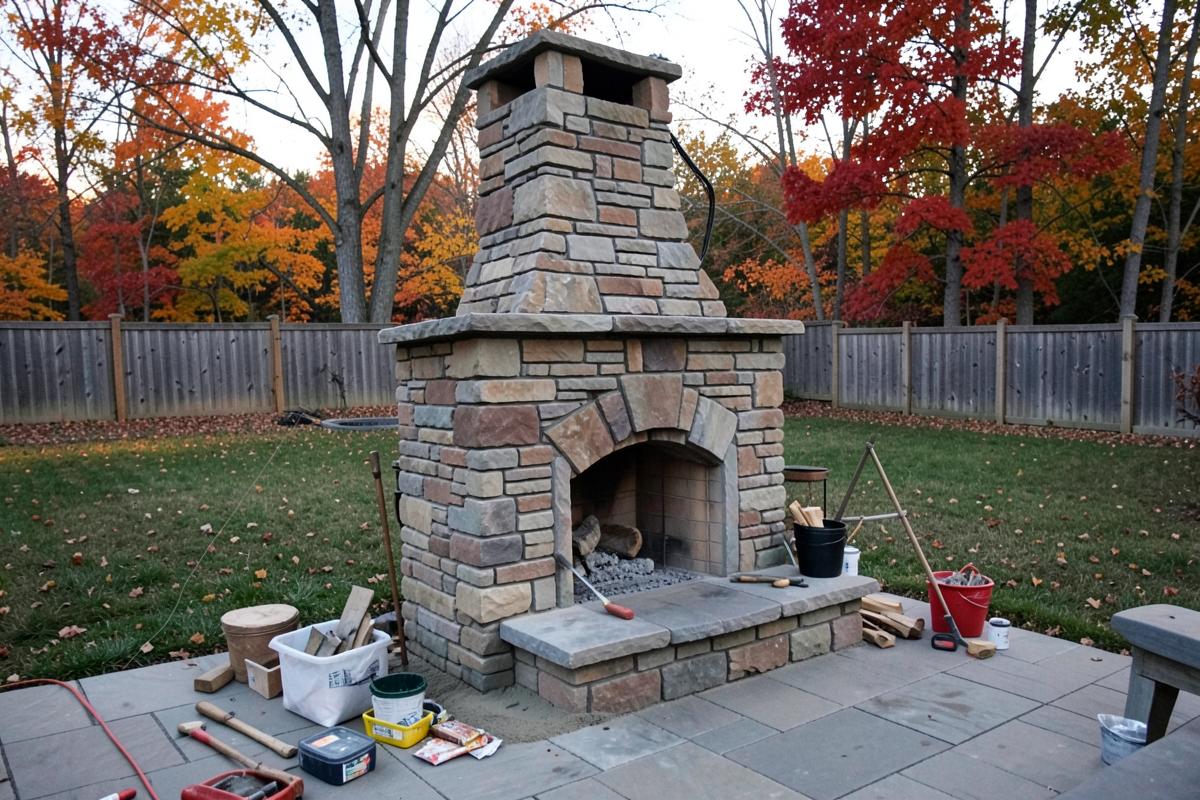
Outdoor Fireplace Installation in Niagara Falls
Built for winter, not just for the summer it was designed in.
Every job starts with a proper look at your system — not a guess over the phone. You get a written quote before any work begins, a clear explanation of what we found, and a technician who works to manufacturer and code requirements from start to finish.
- Written quotes, no surprise charges
- Photo-backed findings after every visit
- Work performed to code and manufacturer specs
- Serving Niagara Falls and Niagara Region, year-round
Outdoor Fireplace for Niagara Falls homes
Niagara Falls housing includes a substantial older brick stock with masonry chimneys plus a large number of properties operated as short-term rentals with gas or electric fireplaces.
Rental properties need documented annual servicing more than owner-occupied homes do, because the appliance is used by people unfamiliar with it and an operating fault gets reported late.
Outdoor fireplaces fail in this climate for predictable reasons: no frost-depth footing, ordinary brick where firebrick belongs, and no drainage or crown detail so water sits in the masonry through every freeze.
We build on a footing below frost depth, use firebrick and refractory mortar in the firebox, form a crown that sheds water, and detail the structure so it drains. Gas fire features are connected by a licensed technician with an accessible shutoff.
What the visit includes
- Footing design below frost depth
- Firebrick firebox with refractory mortar
- Flue sizing and termination for outdoor draft
- Water-shedding crown, cap and drainage detailing
- Licensed gas connection for gas fire features
Signs you need this
- You are building or renovating a patio
- An existing outdoor fireplace is cracking apart
- An outdoor structure smokes badly in use
- You want a gas fire feature installed correctly
Areas we cover around Niagara Falls
Chippawa · Stamford · Fallsview · Mount Carmel · Drummond Hill
An outdoor fireplace extends the usable months of a backyard patio well into Ontario's cooler shoulder seasons and adds a genuine architectural feature to a property, but it is a considerably different undertaking from an indoor installation, involving foundation work, local permitting, setback requirements from property lines and structures, and material choices that need to withstand direct weather exposure year-round rather than sitting inside a conditioned building envelope.
Homeowners considering an outdoor fireplace are usually choosing between a masonry structure built on site, a manufactured pre-fabricated unit installed on a prepared base, and a gas-fired outdoor appliance that avoids wood smoke and ash entirely. Each comes with a distinct cost profile, installation timeline, and set of ongoing maintenance needs, and the right choice depends heavily on how the space will actually be used and how much the family wants to be involved in tending an open wood fire outdoors.
This page walks through the main construction approaches, what municipal approval typically involves, sizing and placement considerations specific to Ontario yards, and realistic costs across the range of options.
Masonry versus manufactured versus gas-fired options
A fully masonry outdoor fireplace, built from stone, brick or concrete block on a poured foundation, offers the most design flexibility and the most substantial, permanent presence in a yard, but it requires the longest construction timeline and the highest upfront cost of the three approaches. Design details like an integrated seating wall, a raised hearth, or a matching outdoor kitchen counter are most naturally achieved with a fully custom masonry build.
Manufactured or modular units, prefabricated in sections and assembled on a prepared concrete pad, offer a considerably faster installation timeline and lower cost than full custom masonry while still providing a genuine wood-burning fireplace experience, though the design options are limited to what the manufacturer offers in terms of size, finish and shape.
Gas-fired outdoor fireplaces, whether built into a custom masonry surround or installed as a self-contained manufactured unit, eliminate wood smoke, ash cleanup and the need to source and store firewood, at the cost of the ambiance many people specifically want from a crackling wood fire and with an ongoing gas line or propane tank supply requirement that adds its own installation considerations.
- Custom masonry: most flexible design, longest timeline, highest cost
- Manufactured modular unit: faster installation, moderate cost, limited design range
- Gas-fired: no smoke or ash, requires gas line or propane supply, different ambiance
Municipal permitting and setback requirements
Most Ontario municipalities require a building permit for a permanent outdoor fireplace structure, and many also have specific setback distances that must be maintained from property lines, the house itself, fences and any combustible structures such as a wood deck or shed. These distances vary by municipality and by fireplace type, with some jurisdictions treating a masonry wood-burning structure more strictly than a smaller gas-fired unit.
Homeowners should confirm requirements with their local building department before finalizing a design or location, since a fireplace built without permit approval can create complications at resale and, in some cases, be subject to a removal order if it is found to violate zoning setback rules after the fact. This step should happen at the very start of planning, not as an afterthought once construction has begun.
Some municipalities also regulate outdoor wood burning more broadly through fire code bylaws addressing smoke nuisance to neighbouring properties, which is worth checking particularly for smaller urban and suburban lots where a wood-burning fireplace's smoke could reasonably reach an adjacent yard.
Homeowners in a subdivision governed by a homeowners' association or a builder's architectural control document should check those private agreements in addition to municipal rules, since some communities impose their own restrictions on visible structures, fence-line proximity or fuel type that go beyond what the municipality itself requires, and a structure compliant with municipal rules can still run into a dispute under a private covenant if that step is skipped.
Foundation and site preparation
Every outdoor fireplace type needs a foundation appropriate to Ontario's frost depth, meaning footings or a slab extending below the frost line to prevent seasonal heaving from cracking the structure over successive winters. Skipping proper frost-depth footings to save cost is one of the more common corners cut on lower-budget outdoor fireplace projects, and it reliably results in visible cracking and structural movement within a few winters.
Site grading around the fireplace also needs attention to ensure water drains away from the foundation rather than pooling against it, since standing water combined with freeze-thaw cycling accelerates any weaknesses in the foundation or lower masonry courses considerably faster outdoors than the equivalent problem would develop on an indoor hearth.
Sizing and placement for a typical Ontario yard
Firebox opening size should be proportioned to the outdoor seating area it will serve, since an oversized firebox in a small patio radiates uncomfortable heat and burns through firewood quickly, while an undersized one fails to provide meaningful warmth for a larger gathering space. A common approach is to size the opening relative to the intended seating distance, generally keeping seating far enough back that radiant heat is comfortable rather than overwhelming even during a full burn.
Placement should also account for prevailing wind direction, since smoke blowing consistently across a seating area or toward a neighbouring property makes the fireplace unpleasant to use regardless of how well it is built, and adjusting orientation relative to typical wind patterns during the design stage avoids a problem that is difficult to correct after construction.
- Size the firebox opening relative to the seating area it serves
- Position seating at a comfortable radiant heat distance
- Account for prevailing wind direction to keep smoke away from seating and neighbours
Material choices for Ontario's climate
Natural stone and properly rated fire brick handle Ontario's freeze-thaw cycling better than lower-grade masonry units not specifically rated for exterior, unprotected exposure, and choosing weather-rated materials throughout, including the mortar mix used for exterior applications, is worth the modest additional cost compared to interior-grade equivalents that were never intended to sit outside through a Canadian winter.
A properly designed cap or spark arrestor at the flue termination protects the interior of the structure from rain and snow infiltration between uses, and this detail matters more for an outdoor structure exposed to weather from every direction than it does for an indoor chimney partially sheltered by the surrounding building.
Gas line and utility considerations for gas-fired units
A gas-fired outdoor fireplace connected to the home's natural gas supply requires a licensed gas fitter to run and connect the line, sized appropriately for the appliance's BTU rating and the distance from the existing supply, and this work typically requires its own permit and inspection separate from the general building permit for the structure itself.
Propane-fed units avoid the need to trench a gas line to the fireplace location but require a suitably sized tank, either a portable cylinder for smaller units or a larger buried or above-ground tank for a fireplace with higher BTU output, and homeowners should factor ongoing propane delivery or refill costs into the total cost of ownership compared to a natural gas connection.
Seasonal use and closing down for winter
Even a well-built outdoor fireplace benefits from a seasonal shutdown routine in Ontario's climate, including a thorough cleaning of the firebox, a check of the cap and flue for any damage from the previous season, and covering vulnerable components such as gas connections or decorative elements not rated for direct snow and ice exposure through the coldest months.
Homeowners who plan to use the fireplace through shoulder seasons and even occasionally in winter should discuss with their builder whether the specific materials and design chosen support that level of year-round exposure, since some finishes and components are better suited to a three-season use pattern than genuine winter operation.
Integrating an outdoor fireplace with the rest of the landscape
An outdoor fireplace rarely sits in isolation from the rest of a backyard renovation, and coordinating its construction timeline with related work such as patio paving, a pergola or covered structure overhead, or an outdoor kitchen counter avoids the cost and disruption of having separate contractors return to a finished space to complete adjacent work later. Sequencing the fireplace foundation early, before final patio surfacing goes in, is generally more efficient than trying to work around a completed hardscape afterward.
Lighting placed near the fireplace seating area, whether low-voltage path lighting or fixtures integrated into a seating wall, extends the usable hours of the space into the evening and is far easier to wire in during the initial construction phase than to retrofit afterward through finished masonry or an established lawn.
Landscaping choices immediately around the fireplace also matter for practical reasons beyond appearance, since combustible mulch, dry ornamental grasses or overhanging branches positioned too close to the firebox opening create an avoidable spark hazard that a thoughtful planting plan, established during the same design phase as the structure itself, easily avoids.
Outdoor Fireplace Installation cost in Niagara Falls
Most Ontario outdoor fireplace projects range from roughly $6,000 for a manufactured unit to $18,000 or more for a fully custom masonry build.
| Work | Typical range | What moves the price |
|---|---|---|
| Manufactured modular wood-burning unit, installed on prepared padfaster installation, limited design customization | $4,500 – $8,000 | faster installation, limited design customization |
| Custom masonry wood-burning fireplace, standard designincludes foundation, structure and standard stone or brick finish | $9,000 – $16,000 | includes foundation, structure and standard stone or brick finish |
| Custom masonry fireplace with seating wall or extended hearthlarger footprint and added masonry features | $14,000 – $24,000 | larger footprint and added masonry features |
| Gas-fired outdoor fireplace, self-contained unit with line hookupincludes gas fitter connection to existing supply | $6,000 – $11,000 | includes gas fitter connection to existing supply |
| Gas-fired fireplace built into custom masonry surroundcombines masonry structure with a gas-fired firebox insert | $11,000 – $19,000 | combines masonry structure with a gas-fired firebox insert |
| Building permit and municipal application feesvaries by municipality and structure classification | $150 – $500 | varies by municipality and structure classification |
Ranges are estimates for planning only, not quotes. Final pricing depends on what we find on site, access, and the condition of the existing system.
What moves the price
- Choice between manufactured modular unit and fully custom masonry construction
- Wood-burning versus gas-fired appliance and associated utility hookup work
- Foundation depth and complexity required for local frost conditions
- Additional features such as an integrated seating wall or extended hearth
- Municipal permit requirements and any required setback-related design adjustments
- Material selection, particularly natural stone versus manufactured veneer finishes
Want a number for your own fireplace? Send us the details and we will come back with an estimate, or call (833) 949-4153.
How the work goes, step by step
- 1
Site evaluation and permitting
The yard is assessed for setback compliance, drainage and wind exposure, and municipal permit applications are prepared and submitted.
- 2
Design finalization
Firebox size, seating layout, material finish and fuel type are confirmed based on the site evaluation and homeowner preferences.
- 3
Foundation construction
Footings or a slab are excavated and poured to the appropriate frost depth before any above-ground structure begins.
- 4
Structure construction or unit placement
The masonry structure is built course by course, or the manufactured unit is placed and secured on the prepared foundation.
- 5
Utility connection
For gas-fired units, a licensed gas fitter completes the line connection and the installation is inspected as required by the municipality.
- 6
Final finishing and inspection
Hearth surfaces, caps and any decorative elements are completed, and a final check confirms the structure is ready for safe use.
How long it takes: Manufactured unit installations typically take one to two weeks including pad preparation; full custom masonry builds usually take four to eight weeks depending on complexity and weather.
Looking after it afterwards
- Perform a seasonal shutdown routine before winter, including cleaning and covering exposed components
- Check the cap and flue for weather damage at the start of each burning season
- Reapply any recommended sealant to masonry surfaces on the manufacturer's or mason's suggested schedule
- Keep firewood storage away from the immediate firebox opening to reduce spark risk to stacked wood
- Have gas line connections inspected periodically by a licensed gas fitter for wear or leaks
Mistakes we see most often
- Beginning construction before confirming municipal setback and permit requirements
- Skipping frost-depth footings to reduce upfront cost
- Sizing the firebox opening without regard to the actual seating area it will serve
- Ignoring prevailing wind direction when positioning the fireplace and seating
- Using interior-grade materials or mortar not rated for exterior exposure
Questions homeowners ask
- Do outdoor fireplaces need permits?
- Often yes, and municipal rules on setbacks, height and open burning vary considerably. We check your municipality's requirements before design.
- Why did my outdoor fireplace crack in one winter?
- Almost always a footing above frost depth or standing water in the masonry. Both are structural, not cosmetic.
- Can an outdoor fireplace be added to an existing deck rather than a ground-level patio?
- This requires careful structural evaluation, since most residential decks are not built to support the weight of a masonry fireplace and its foundation, and in most cases a ground-level footing set beside or through the deck structure is needed rather than placing the fireplace directly on the deck surface itself.
- How much clearance does an outdoor fireplace need from a wood fence?
- Required clearance depends on local bylaws and the specific fireplace type, but wood fencing is a combustible material that generally needs meaningfully more distance from an open wood-burning firebox than a gas-fired unit would require, which is a detail worth confirming during the permitting stage rather than assuming a fence-adjacent placement is automatically fine.
- Do all outdoor fireplaces need a building permit in Ontario?
- Most permanent structures do require a permit, though requirements vary by municipality and sometimes by structure size or type, so confirming directly with the local building department before starting any construction is an essential first step.
- How close to my property line can an outdoor fireplace be built?
- Setback distances vary significantly between municipalities and by fireplace type, and there is no single Ontario-wide standard, which is why checking local zoning bylaws during the planning stage is necessary rather than assuming a generic distance applies.
- Can an existing indoor chimney design principle be applied outdoors?
- Many of the same draft and flue sizing principles apply, but an outdoor structure faces additional weather exposure and foundation considerations that an indoor chimney, partially sheltered by the building, does not need to address to the same degree.
- Is a gas-fired outdoor fireplace cheaper to run than a wood-burning one over time?
- Ongoing costs depend heavily on local gas or propane pricing versus firewood costs and how frequently the fireplace is used, so there is no universal answer, though gas eliminates the labour and mess of sourcing and handling firewood regardless of the direct cost comparison.
- How long does a masonry outdoor fireplace typically last?
- A well-built structure on proper frost-depth footings using weather-rated materials can last several decades with routine maintenance, though the specific lifespan depends heavily on material quality, foundation work and how consistently seasonal maintenance is performed.
- Can an outdoor fireplace be built onto an existing patio surface?
- Only if that existing surface already meets the frost-depth foundation requirements the new structure needs, which most standard patio slabs or pavers do not, so in most cases new dedicated footings are required regardless of what surface currently exists.
Nearby
Other Communities Near Niagara Falls
Related work
Often Booked Together
Chimney Rebuild in Niagara Falls
Partial or full rebuild of deteriorated masonry chimneys, from the roofline up or from the footing.
Crown Repair in Niagara Falls
Crown resurfacing, rebuilding and sealing to stop water entering the masonry from above.
Waterproofing in Niagara Falls
Vapour-permeable water repellent that keeps rain out while letting masonry dry.
Tuckpointing in Niagara Falls
Grinding out and replacing failed mortar joints with a correctly matched mix.