
Ontario Fireplace & Chimney Specialists
Gas Fireplace Repair in Ajax
Gas work is licensed work — and most no-heat calls are a small part, not a new appliance.
Every job starts with a proper look at your system — not a guess over the phone. You get a written quote before any work begins, a clear explanation of what we found, and a technician who works to manufacturer and code requirements from start to finish.
- Written quotes, no surprise charges
- Photo-backed findings after every visit
- Work performed to code and manufacturer specs
- Serving Ajax and Durham Region, year-round
Gas Fireplace Repair for Ajax homes
Ajax combines post-war housing near the lake, where masonry chimneys are common, with newer northern subdivisions running gas appliances.
Lakeside exposure accelerates cap and flashing corrosion, and galvanised components installed a couple of decades ago in this area are typically at the end of their service life now.
The common faults are predictable: a dirty or drifting pilot, a weak thermopile, a failed igniter, a sooted burner, a tired blower or a receiver that has lost its remote pairing. Each is a defined test with a defined replacement part.
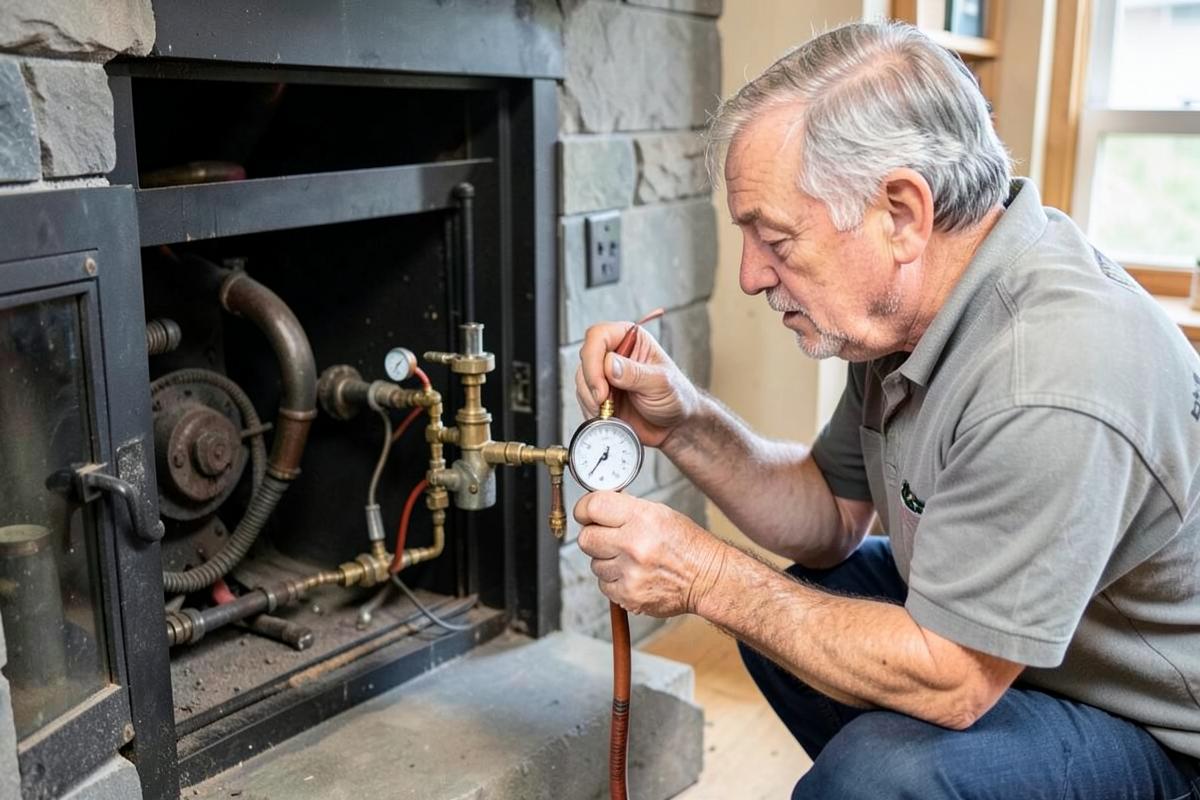
We test in sequence with a meter rather than replacing parts hopefully, then clean the burner and glass, check the venting, and verify millivolt output and flame pattern before leaving. All gas work is performed by licensed technicians.
What the visit includes
- Pilot, thermocouple and thermopile millivolt testing
- Valve, igniter and switch diagnosis
- Burner, pilot assembly and glass cleaning
- Blower, fan and remote receiver service
- Vent, seal and flame-pattern verification
Signs you need this
- The pilot will not light or will not stay lit
- The unit ignites then shuts down after a few minutes
- Sooty black film on the glass
- A strong smell, or a carbon monoxide alarm sounding
Areas we cover around Ajax
Pickering Beach · Southwood · Nottingham · Central Ajax · Riverside
Gas fireplace faults follow a predictable pattern once you have seen enough of them: a pilot that will not stay lit, a burner that ignites and then shuts itself off a few minutes later, a remote that has stopped talking to the receiver, or glass that has gone black with soot. None of these usually mean the appliance needs replacing. They mean a specific, testable component has drifted out of spec or failed outright, and finding which one is a matter of methodical testing rather than guesswork.
This is licensed work in Ontario, and for good reason — gas appliances involve combustion, venting, and components that can create a carbon monoxide risk if they fail in the wrong way. That is exactly why we test each suspect component with a meter before replacing anything, rather than swapping parts hopefully until the problem goes away, which wastes money and sometimes leaves the actual fault untouched.
Most repair visits resolve in a single appointment once the fault is identified, since the common failure points — pilot assemblies, thermocouples, thermopiles, valves, igniters and blower motors — are all standard replacement parts that a technician carries or can source quickly. The diagnostic step is what takes the real skill; the part swap itself is usually fast.
The pilot-lights-but-burner-won't-fire pattern
This is one of the most common calls we get, and it almost never means the pilot assembly itself is at fault, since the pilot clearly works if it lights. The usual suspects are the thermopile, which generates the millivolt signal that holds the main gas valve open, the wall switch or remote receiver sending the call for heat, or the main valve itself failing to open despite receiving a good signal.
A millivolt reading taken directly at the valve terminals during pilot operation distinguishes between these possibilities within minutes — a low reading points to the thermopile, a normal reading with no burner response points toward the switch, receiver or valve. This is the kind of diagnosis that genuinely requires a meter rather than an educated guess, since a weak thermopile and a failed switch present almost identically to the naked eye.
Once the specific component is identified, replacement is usually straightforward, though thermopile and valve parts vary by manufacturer and sometimes need to be sourced for the specific model rather than pulled from generic stock.
The delayed shutdown pattern
A fireplace that lights normally and then shuts down after a few minutes of running is a distinct pattern from one that never lights at all, and it usually points at a different set of components: a drifting thermocouple that loses its signal once it heats up fully, a flame sensor reading interference from a sooted or misaligned pilot, or an overheat safety switch tripping due to restricted airflow around the appliance.
This pattern is worth describing accurately when booking a repair call, since it narrows the diagnostic path considerably compared with a fireplace that simply will not light. We test flame sense and thermocouple output under actual running conditions rather than only at initial pilot light, since some of these faults only show up once the unit has been running for several minutes and components have reached full operating temperature.
- Pilot lights but burner won't ignite: check thermopile, switch, valve
- Unit shuts down after a few minutes: check thermocouple, flame sensor, overheat switch
- Sooty glass: usually a log placement or air-to-fuel ratio issue
- Remote unresponsive: often a receiver pairing or battery issue, not the valve
- Weak or yellow flame: typically a burner air shutter or gas pressure issue
Diagnosing sooting glass and flame pattern issues
Black film building up on the inside of the glass is almost always related to logs or burner components sitting even slightly out of their listed positions, which disrupts the air-to-fuel ratio the manufacturer engineered for clean combustion. Even a log resting a centimetre off its intended spot can noticeably increase sooting within a handful of uses.
We reset logs and burner components to their listed positions during a repair visit and clean the glass and burner assembly as part of the same appointment, since sooted glass often accumulates faster once a layer has already formed, trapping more particulate on subsequent burns. Persistent sooting despite correct log placement can indicate a gas pressure issue that requires the valve and orifice to be checked.
Gas pressure issues are confirmed with a manometer reading at the appliance's test port rather than assumed from symptoms alone, since both too little and too much pressure can produce a similar-looking yellow, lazy flame with visible sooting. Correcting pressure sometimes means adjusting the appliance's own regulator, and occasionally points to a supply-side issue further back in the household gas system worth flagging to a gas utility or plumber.
When a repair visit uncovers a venting problem
Occasionally what looks like a simple component fault turns out to trace back to the venting system itself, a partially blocked termination, a disconnected section of pipe inside a wall cavity, or a vent that was never installed to the appliance's specified length and elbow count in the first place. These findings are less common than a straightforward part failure, but they matter enough that every repair visit includes a basic vent check regardless of the reported symptom.
A venting issue found during a repair call is treated as a priority finding rather than an optional upsell, since it affects combustion safety directly rather than just comfort or efficiency. We explain exactly what was found, why it matters, and what correcting it involves before proceeding, since venting corrections are a different scope of work than a component swap and deserve a clear, separate conversation.
This is also one of the more common findings on older homes where a fireplace has changed hands through two or three owners, since venting problems introduced during a prior renovation, a re-sided exterior wall, or a deck built too close to a termination point are not always obvious until someone actually looks.
Ontario seasonal patterns in gas fireplace faults
Fall is the peak season for no-heat calls, similar to wood fireplace repair, as units that sat idle all summer get their first test of the season and reveal whatever drifted out of adjustment or failed quietly in the meantime. A pilot assembly that gathers dust over an unused summer is more prone to weak flame sense on first relight than one used more consistently through the year.
We also see a smaller wave of calls after extended power outages, since electronic ignition models depend on continuous power and a poorly maintained battery backup, where one exists, sometimes fails exactly when it is needed during a storm-related outage.
Code and safety context for gas repairs
All gas fireplace repair work in Ontario must be performed by a licensed gas technician, and this applies to any work touching the gas line, valve, burner or venting system regardless of how minor the fault appears. A soot-blackened glass or a persistent gas smell are both findings that warrant immediate attention rather than a scheduled convenience visit, since either can indicate a combustion or venting problem with carbon monoxide implications.
Every repair visit includes a vent and seal check as standard practice, confirming the appliance's venting is intact and that door seals and glass gaskets are seated correctly, since these affect both efficiency and combustion safety even when they were not the reported complaint.
Repair versus replacement for aging gas units
Most gas fireplace faults are inexpensive, targeted repairs measured in a single component replacement, and the appliance itself typically has a long service life when properly maintained. Replacement becomes the more sensible conversation when a unit is old enough that parts are becoming difficult to source, or when multiple components are failing in succession, suggesting the appliance's overall service life is genuinely being reached rather than experiencing an isolated fault.
We will flag plainly when repeated repair calls on an older unit start approaching what a new, more efficient appliance would cost, since continuing to patch a unit at that point is sometimes a false economy compared with replacing it and gaining better efficiency in the process.
Gas Fireplace Repair cost in Ajax
A typical gas fireplace repair in Ontario runs between $300 and $600 once diagnosis and a single component replacement are combined.
| Work | Typical range | What moves the price |
|---|---|---|
| Diagnostic visit with meter testingOften credited toward same-visit repair | $150 – $230 | Often credited toward same-visit repair |
| Thermocouple or thermopile replacementVaries by manufacturer part availability | $180 – $320 | Varies by manufacturer part availability |
| Main valve replacementHigher end for specialty or discontinued models | $350 – $650 | Higher end for specialty or discontinued models |
| Igniter or spark module replacementElectronic ignition units cost more than standing pilot | $200 – $400 | Electronic ignition units cost more than standing pilot |
| Blower motor replacementDepends on fan size and accessibility | $220 – $450 | Depends on fan size and accessibility |
| Burner and glass cleaning with log resetOften bundled with any other repair on the same visit | $150 – $250 | Often bundled with any other repair on the same visit |
Ranges are estimates for planning only, not quotes. Final pricing depends on what we find on site, access, and the condition of the existing system.
What moves the price
- Which specific component has failed
- Whether the appliance's parts are still readily available
- Standing pilot versus electronic ignition system complexity
- Whether venting or seal issues are found alongside the primary complaint
- Accessibility of the unit for blower or valve service
- Age of the appliance and history of prior repairs
Want a number for your own fireplace? Send us the details and we will come back with an estimate, or call (833) 949-4153.
How the work goes, step by step
- 1
Describe the fault pattern
We ask specific questions about how the fault presents — lights but won't fire, shuts down after minutes, remote unresponsive — since the pattern narrows which components are likely involved before the technician even arrives.
- 2
Meter-based diagnosis
The suspect components are tested with a multimeter for millivolt output, continuity, or resistance rather than replaced speculatively, isolating the actual failed part.
- 3
Burner and glass inspection
The burner assembly, log placement and glass condition are checked as standard practice, since sooting and flame pattern issues often accompany or mimic other faults.
- 4
Venting and seal check
Vent termination, door seals and glass gaskets are checked for integrity, since these affect combustion safety and efficiency even if they were not the reported issue.
- 5
Component replacement
The identified faulty part is replaced with a manufacturer-appropriate component by a licensed gas technician, and the system is retested under normal operating conditions.
- 6
Final verification
Flame pattern, millivolt output and blower operation are verified before the visit ends, confirming the repair holds under actual running conditions rather than just on initial ignition.
How long it takes: Most gas fireplace repairs are completed within a single visit of one to two hours once the fault is diagnosed; parts requiring special order may need a follow-up appointment.
Looking after it afterwards
- Have the unit serviced annually even without an obvious complaint
- Keep the area around the appliance clear to avoid overheat shutdowns
- Test the remote and backup battery periodically, especially before winter
- Report a persistent gas smell immediately rather than waiting for a scheduled visit
- Avoid adjusting log placement yourself, since it affects combustion and sooting
Mistakes we see most often
- Assuming a pilot problem when the actual fault is the thermopile or valve
- Repeatedly relighting a pilot that will not hold instead of having it tested
- Ignoring sooty glass as cosmetic rather than a combustion sign
- Using a non-licensed technician for gas component work
- Continuing to patch an aging unit well past the point replacement makes more sense
Questions homeowners ask
- The pilot lights but the burner will not — why?
- That pattern usually points at the thermopile, the wall switch or the valve rather than the pilot itself, and a millivolt reading distinguishes them in minutes.
- Why is the glass sooting up?
- Almost always an air-to-fuel or log-placement problem. Logs set even slightly out of their listed positions will soot a burner quickly.
- Why does my pilot light but the main burner won't fire?
- This pattern usually points to the thermopile, the wall switch, or the main valve rather than the pilot assembly itself, since the pilot lighting proves it is functioning. A millivolt test at the valve distinguishes between these causes quickly.
- Is it normal for a gas fireplace to shut off after a few minutes?
- No, and it usually indicates a drifting thermocouple, a flame sensing issue, or an overheat switch responding to restricted airflow. This should be diagnosed rather than worked around by repeatedly relighting the unit.
- Can I clean sooty glass myself?
- Light cleaning with an appropriate glass cleaner is fine between service visits, but recurring soot buildup usually indicates a log placement or air-to-fuel ratio problem that cleaning alone will not resolve.
- Do I need a licensed technician for a simple gas fireplace repair?
- Yes, any work involving the gas valve, burner, or venting must be performed by a licensed gas technician under Ontario's gas safety regulations, regardless of how minor the fault seems.
- Why did my gas fireplace stop responding to the remote?
- This is most often a receiver pairing issue or a depleted battery rather than a valve fault, and it is worth checking those simple causes before assuming a more significant repair is needed.
- How often should a gas fireplace be serviced?
- An annual service check is generally recommended even without an obvious fault, since it catches drifting components like a weakening thermopile before they cause a no-heat call during the coldest part of the season.
- Can a repair visit reveal a problem beyond the original complaint?
- Yes, and one of the more significant examples is a venting issue found during the standard vent check every repair visit includes. These are flagged as priority findings since they affect combustion safety rather than just comfort.
- What tool confirms a gas pressure problem versus another cause of sooting?
- A manometer reading taken at the appliance's test port gives an objective pressure measurement, since both low and high pressure can produce a similar-looking yellow, sooting flame that is hard to diagnose by sight alone.
Nearby
Other Communities Near Ajax
Related work
Often Booked Together
Gas Fireplace Installation in Ajax
Direct-vent and B-vent gas fireplace installation by licensed gas technicians.
Gas Conversion in Ajax
Converting wood-burning fireplaces to gas inserts or log sets, with proper relining.
Gas Annual Service in Ajax
Yearly maintenance for gas fireplaces: cleaning, testing, log placement and vent checks.
Chimney Sweeping in Ajax
Full mechanical sweep of the flue, smoke chamber and firebox with containment and photos.