
Ontario Fireplace & Chimney Specialists
Electric Fireplace Installation in Aylmer
No venting, no gas line, and a finished wall with nothing on show.
Every job starts with a proper look at your system — not a guess over the phone. You get a written quote before any work begins, a clear explanation of what we found, and a technician who works to manufacturer and code requirements from start to finish.
- Written quotes, no surprise charges
- Photo-backed findings after every visit
- Work performed to code and manufacturer specs
- Serving Aylmer and Elgin County, year-round
Electric Installation for Aylmer homes
Aylmer's in-town brick housing sits among farm properties where wood and pellet appliances handle much of the winter heating load.
Heavy seasonal use means sweeping on a schedule, and we frequently find stove installations in older chimneys that need a correctly sized liner to be safe.
Electric units need no flue, which makes them the practical answer for condominiums, basements, bedrooms and any wall where venting cannot run. The design work is framing, recess depth and getting the power to the right place without a visible cord.
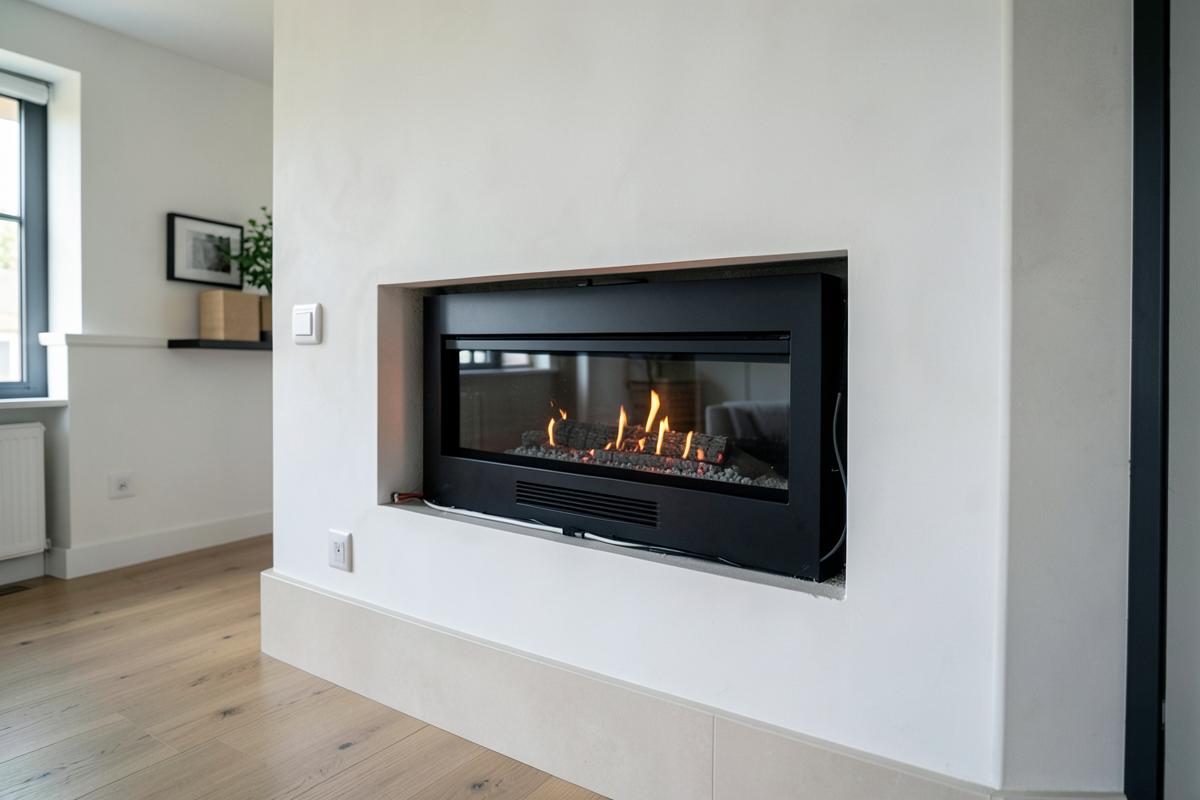
We frame and recess the unit, coordinate a dedicated circuit with a licensed electrician where the load requires it, and finish the surround with materials rated for the unit's clearances. The result reads as built-in rather than mounted.
What the visit includes
- Wall assessment, recess depth and framing
- Load review and licensed electrical coordination
- Concealed wiring and outlet placement
- Unit setting, levelling and secure fastening
- Surround, mantel and media wall finishing
Signs you need this
- The room has no chimney and venting is not possible
- You live in a condominium with gas restrictions
- You want a media wall with a fireplace beneath the screen
- You want ambience without combustion
Areas we cover around Aylmer
Springfield · Straffordville · Vienna · Port Burwell · Belmont
Electric fireplaces solve a problem that gas and wood units simply cannot: they need no chimney, no flue, no gas line and no combustion air at all. That makes them the practical answer for condominiums where venting is restricted, basements without existing masonry, bedrooms, and any interior wall in a house where running a flue to the outside would mean tearing into finished ceilings or exterior walls that were never designed for it.
The installation itself is really two trades working together rather than one: the carpentry of framing a recess or building a media wall to the unit's exact depth and clearance requirements, and the electrical work of getting power to that spot cleanly, often on its own dedicated circuit, without a visible cord running across the floor or up the wall. Getting both right is what separates a fireplace that looks built-in from one that looks like a box sitting in a hole.
Because there is no venting to plan around, the design conversation for an electric fireplace installation is almost entirely about the room: where the television will sit relative to the unit, how deep the recess needs to be for the specific model, what finish material goes around it, and whether the final look is a simple insert or a full floor-to-ceiling media wall built specifically around the fireplace.
Recessed inserts, wall-mounts and full media walls
A recessed insert sits inside a framed cavity in an existing or new wall, finished flush with trim or masonry so only the glass front and control area are visible, closely resembling a built-in gas fireplace from across the room. This is the most common request for a main living space where the fireplace becomes a genuine architectural feature rather than an accessory.
A surface wall-mount unit, by contrast, hangs directly on the wall face like a large picture frame, with only a power connection and sometimes a floating shelf beneath it. It suits rentals, condos with restrictions on wall modification, or rooms where a full recess is not practical.
A media wall combines both ideas into one build: a fireplace recessed low in a framed wall structure with a television mount, shelving and often concealed cable routing built above and around it. These are larger carpentry projects and are usually the most requested style in newer Ontario homes and basement renovations because they turn one wall into a complete focal point.
- Recessed insert: flush finish, built-in appearance
- Wall-mount: surface mounted, minimal structural change
- Media wall: full framed structure combining fireplace and television
- Corner units: designed for angled or corner-specific cavities
- Linear units: wide, low-profile format popular in modern builds
How the installation is actually carried out
The process begins with confirming the exact recess dimensions the chosen unit requires, since electric fireplace depths and clearances vary considerably between manufacturers and are not interchangeable. Framing is built to those exact tolerances, with attention to airflow clearance behind and above the unit because electric heater elements do generate real heat and need the space the manufacturer specifies to avoid nuisance shutoffs.
Electrical work runs in parallel: most larger units draw close to the maximum a standard 15-amp circuit can handle, so a dedicated circuit is common practice rather than an upsell, particularly if other loads already share the circuit being considered. Wiring is run inside the framed cavity before any finish material goes on, with the outlet positioned exactly where the unit's power cord will reach it without being visible.
Once framing and wiring are complete, the unit is set, levelled and secured according to the manufacturer's mounting hardware, and the surround is finished, whether that is drywall, tile, stone veneer or a built-in media wall structure with shelving and cable management.
Ontario housing stock and where electric fits best
Condominiums across Ontario very often restrict or outright prohibit gas appliances and open flames, which makes electric fireplaces one of the only realistic hearth options for condo owners who still want the visual effect of a fireplace. Because these units need no venting or gas approval from a condo board in most buildings, they tend to be the simplest hearth project to get approved.
In older Ontario houses, basements without existing masonry chimneys and bedrooms far from any exterior wall are the other common candidates. Where a homeowner wants fireplace ambience in a room that a gas line or vent run could never reasonably reach, electric is very often the only practical answer rather than one option among several.
Code and safety context specific to electric units
Electric fireplaces fall under general electrical safety requirements rather than combustion or venting codes, since there is no flue or gas connection involved. That means the relevant work, running a new circuit, installing a new outlet or junction box, falls to a licensed electrician and needs to meet the Ontario Electrical Safety Code, including proper circuit sizing for the unit's rated draw and correct placement relative to any water sources if the installation is near a bathroom or basement area prone to dampness.
Clearance requirements printed in the manufacturer's installation manual, particularly around and above the unit where heat is exhausted, still apply even though there is no open flame. A media wall built without respecting those clearances can develop uneven heat buildup around the unit or trip its thermal safety cutout repeatedly, which is often mistaken for a defective unit when the actual cause is simply a recess built too tight.
What installation findings mean for existing electrical panels
During the planning visit, a load review sometimes turns up an older electrical panel that is already close to capacity, particularly in houses with older 100-amp service and several major appliances added over the years. In that case, adding a dedicated circuit for a large electric fireplace can mean a broader look at panel capacity rather than a simple new breaker, and it is better to know that before framing begins than after.
In most modern homes with adequate panel capacity, a dedicated 15 or 20-amp circuit run specifically for the fireplace is a straightforward addition and the more common outcome. Either way, this is one of the few places in an electric fireplace project where the finding genuinely changes the scope and cost of the job, so it is worth resolving early.
Repair-friendly design versus built-in permanence
One underappreciated advantage of electric fireplaces is that most units are designed to be removable from their recess for servicing, meaning a media wall built around one does not have to be torn apart if the unit itself eventually needs repair or replacement years down the line. Leaving accessible clearance and a serviceable power connection rather than hard-wiring directly into a junction box behind drywall preserves that flexibility.
Choosing a unit purely for its finish, rather than checking that the model will still be supported with parts in five or ten years, is a common regret. Well-known manufacturers with a longer track record in the Canadian market tend to make more sense for a media wall build that a homeowner does not want to rebuild from scratch if the insert eventually fails.
Resale considerations for electric fireplace installations
A well-built electric fireplace media wall reads to most buyers as a finished, deliberate feature rather than a temporary appliance, particularly in a basement or family room where it becomes the visual centre of the space. Because there is no gas line or venting to inspect or worry about, it also tends to raise fewer questions during a home inspection than a wood or gas system might.
The one point worth flagging honestly to a future buyer, or noting for yourself before selling, is whether the unit was installed on a dedicated circuit as intended or improvised onto an existing one that is already carrying other loads. That distinction rarely shows up on a casual walkthrough but can matter if a home inspector traces circuits during a pre-sale inspection.
Electric Fireplace Installation cost in Aylmer
A typical electric fireplace installation in Ontario averages around $2,000 once framing and electrical work are included.
| Work | Typical range | What moves the price |
|---|---|---|
| Wall-mount unit installationunit supplied and mounting complexity | $450 – $850 | unit supplied and mounting complexity |
| Recessed insert with basic framingwall type and finish material | $1,200 – $2,200 | wall type and finish material |
| Full media wall build with fireplacesize, shelving and material finish | $3,500 – $8,000 | size, shelving and material finish |
| Dedicated electrical circuit installationdistance from panel and panel capacity | $300 – $650 | distance from panel and panel capacity |
| Panel capacity upgrade if requiredexisting panel age and service size | $1,500 – $3,500 | existing panel age and service size |
| Corner or linear unit installationunit format and framing complexity | $900 – $2,600 | unit format and framing complexity |
Ranges are estimates for planning only, not quotes. Final pricing depends on what we find on site, access, and the condition of the existing system.
What moves the price
- Recessed insert versus surface wall-mount versus full media wall
- Whether a dedicated electrical circuit needs to be run
- Existing electrical panel capacity
- Finish material chosen for the surround, such as tile or stone
- Unit size, including linear or corner-specific formats
- Whether a television and shelving are integrated into the same build
Want a number for your own fireplace? Send us the details and we will come back with an estimate, or call (833) 949-4153.
How the work goes, step by step
- 1
Site assessment and unit selection
The wall, available depth and intended location are assessed, and a unit is selected based on the exact recess dimensions and heat output the room realistically calls for.
- 2
Electrical load review
Panel capacity and existing circuit loads are reviewed to determine whether a new dedicated circuit is needed, coordinated with a licensed electrician where panel work is required.
- 3
Framing and recess construction
A cavity is framed to the unit's exact specified dimensions and clearances, whether as a simple recess in an existing wall or as part of a larger media wall structure.
- 4
Wiring and outlet placement
New wiring and an outlet are run inside the framed cavity before any finish material is applied, positioned precisely where the unit's cord will connect without being visible.
- 5
Unit setting and levelling
The fireplace is set into the finished recess, levelled, and secured using the manufacturer's mounting hardware, then powered on to confirm heater, flame effect and remote function before finishing.
- 6
Surround and finish work
Trim, tile, stone veneer or media wall shelving is completed around the unit, and cable management for any television is routed and concealed as part of the same build.
How long it takes: A wall-mount installation is often completed in a single day, while a full media wall build typically takes two to five days depending on finish complexity.
Looking after it afterwards
- Dust the heater vents periodically to keep airflow unobstructed
- Avoid blocking the top and rear clearance space with décor or furniture
- Keep the unit's remote control batteries fresh to avoid intermittent response
- Check the power connection point occasionally for any sign of a loose fit
- Follow the manufacturer's schedule for cleaning the flame effect components
Mistakes we see most often
- Choosing a unit before confirming the wall can accommodate its exact recess depth
- Plugging a large unit into an already loaded circuit instead of a dedicated one
- Building a media wall without leaving the fireplace serviceable for future repair
- Ignoring manufacturer clearance requirements above the unit under a mounted television
- Selecting a unit purely on price without checking long-term parts availability
Questions homeowners ask
- Do electric fireplaces heat a room?
- They supplement it. Most produce roughly the output of a portable heater, which suits a bedroom or basement rather than a whole-home heat source.
- Can one go under a television?
- Yes, provided the manufacturer's clearance above the unit is respected so heat is not directed at the screen.
- Will an electric fireplace actually heat my room?
- Most units provide supplemental heat comparable to a portable space heater, which works well for a bedroom, basement or den but should not be relied on as a home's primary heating source in an Ontario winter.
- Can I install an electric fireplace myself?
- Mounting a small unit on an existing wall outlet is within reach for many homeowners, but framing a recess to exact clearances and running new electrical circuits are best left to a contractor and licensed electrician respectively.
- Is a permit required for an electric fireplace installation?
- The fireplace itself typically does not require a building permit, but new electrical circuit work must meet the Ontario Electrical Safety Code and, depending on scope, may require an electrical inspection.
- Can an electric fireplace go under a wall-mounted television?
- Yes, provided the manufacturer's stated clearance above the unit is maintained so heat is directed away from the screen rather than up into it, which most media wall designs account for from the start.
- Do condo boards usually allow electric fireplace installations?
- Most do, since there is no venting or gas connection involved, though it is still worth checking any condo-specific rules about wall modifications or electrical work before starting a media wall build.
- How long do electric fireplace units typically last?
- Many well-maintained units run reliably for eight to fifteen years, with heater elements and LED modules being the most common components to eventually need replacement rather than the unit as a whole.
Nearby
Other Communities Near Aylmer
Related work
Often Booked Together
Electric Repair in Aylmer
Repair of heaters, flame motors, LED assemblies, remotes and control boards.
Chimney Sweeping in Aylmer
Full mechanical sweep of the flue, smoke chamber and firebox with containment and photos.
Chimney Inspection in Aylmer
Documented inspection of the flue, liner and structure with photos and a plain-language report.
Chimney Repair in Aylmer
Targeted repairs to crowns, caps, mortar joints, flashing and liners.