
Ontario Fireplace & Chimney Specialists
Chimney Waterproofing in Barrie
Keep water out of the brick without trapping what is already inside.
Every job starts with a proper look at your system — not a guess over the phone. You get a written quote before any work begins, a clear explanation of what we found, and a technician who works to manufacturer and code requirements from start to finish.
- Written quotes, no surprise charges
- Photo-backed findings after every visit
- Work performed to code and manufacturer specs
- Serving Barrie and Simcoe County, year-round
Waterproofing for Barrie homes
Barrie's growth has produced large tracts of newer gas-fireplace housing, while older neighbourhoods near the waterfront and the historic core retain masonry chimneys, and rural properties nearby often run wood or pellet appliances.
Snowbelt accumulation makes termination height and cap design matter here. Drifting snow around a low termination can restrict a flue outright, and we look at that as part of any Barrie inspection.
Brick and mortar absorb water, and in Ontario that water freezes and expands dozens of times each winter. That cycle is what pops brick faces off and turns mortar joints to sand. Waterproofing slows the absorption dramatically.
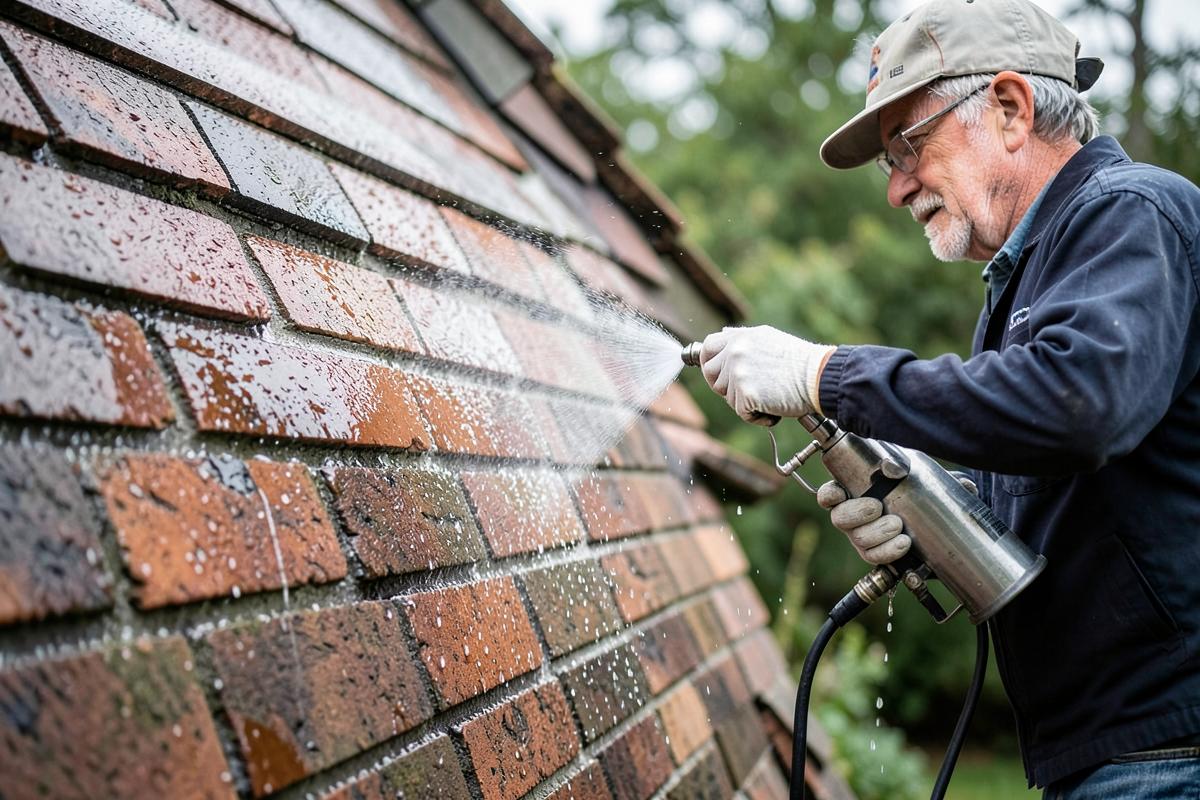
The product choice is the whole job. Film-forming sealers trap moisture behind them and accelerate the damage they were meant to prevent. We use vapour-permeable siloxane repellents that block liquid water while letting vapour escape, applied after any repointing has cured.
What the visit includes
- Moisture-source assessment before any coating
- Repointing and crack repair first where needed
- Vapour-permeable siloxane repellent application
- Flood-coat technique for full absorption
- Cap, crown and flashing review as part of the visit
Signs you need this
- Brick faces spalling on the weather side
- White efflorescence powder on the masonry
- Damp interior wall around the chimney breast
- Masonry that stays dark for days after rain
Areas we cover around Barrie
Allandale · Painswick · Ardagh · Holly · Innisfil
Brick and mortar are not solid, waterproof materials by nature; they are porous, absorbent materials that soak up water like a very slow sponge. In most weather that is a manageable trait, since masonry dries out again between rain events. The problem specific to Ontario is that absorbed water frequently does not get the chance to dry out before the next freeze arrives, and water expands by roughly nine percent when it turns to ice, exerting real mechanical force from inside the brick or mortar it is trapped in.
That freeze-thaw cycle, repeated dozens of times across a typical Ontario winter, is the primary mechanism behind spalling brick faces, crumbling mortar joints, and the general masonry deterioration that shows up on so many older chimneys in the province. Waterproofing does not eliminate the freeze-thaw cycle itself, but it dramatically reduces how much water the masonry absorbs in the first place, which is the actual variable that determines how much damage each freeze event causes.
This service is not about coating masonry in something impermeable; that approach, using film-forming sealers, actually makes the underlying problem worse by trapping existing moisture inside the brick where it has nowhere to go. Proper chimney waterproofing uses vapour-permeable repellents specifically formulated to block liquid water penetration while still allowing water vapour to pass through and escape, which is a meaningfully different chemistry and outcome than a generic masonry sealer.
Why film-forming sealers make freeze-thaw damage worse
A film-forming sealer works by creating a continuous, impermeable layer across the masonry surface, similar in concept to a coat of paint. This stops liquid water from getting in from the outside, which sounds like exactly the right outcome, but it also stops any existing moisture inside the brick or mortar from evaporating out through that same surface, since vapour movement is blocked in both directions.
Masonry chimneys are rarely bone dry to begin with, since they pick up moisture from rain, snowmelt, and even normal atmospheric humidity over years of exposure. Trapping that existing moisture behind an impermeable film means it has nowhere to go except to sit inside the material through the next freeze cycle, where it does exactly the expansion damage waterproofing was meant to prevent, except now concentrated and repeated because the moisture cannot escape between cycles the way it normally would.
This is a genuinely common and avoidable mistake, sometimes made with well-intentioned DIY products purchased without understanding the difference between sealing and waterproofing chemistry. Reversing this kind of damage sometimes requires extensive repointing or even partial rebuilding, which is a far more expensive outcome than the original moisture problem the sealer was meant to solve.
How vapour-permeable repellents actually work
Siloxane and silane-based water repellents work at a molecular level rather than forming a surface film. They penetrate into the pore structure of the brick and mortar and bond to the interior pore walls, creating a water-repellent lining within the material itself rather than a coating on top of it. Liquid water beading on the surface cannot penetrate because the pore walls now repel it, but water vapour molecules, being much smaller, can still pass through the treated pores in either direction.
The practical result is masonry that sheds rain and snowmelt dramatically better while still being able to dry out normally between weather events, exactly the balance needed to reduce freeze-thaw damage without introducing a new trapped-moisture problem. This is why professional masonry restoration work consistently specifies vapour-permeable products over film-forming sealers for exterior brick and stone applications.
- Siloxane-based penetrating water repellents
- Silane-based repellents for denser or less porous masonry
- Flood-coat application method for full, even absorption
- Testing for existing moisture content before treatment where warranted
- Compatibility check with any existing coatings or previous treatments
What has to happen before waterproofing, not after
Waterproofing is meant to be one of the last steps in restoring a chimney's exterior condition, not a first response to visible damage. Applying a water repellent over cracked mortar joints, spalled brick faces, or an already-deteriorated crown does not address the sources of water entry that repointing, crown repair, or flashing work would fix, and treated masonry with underlying structural gaps will still let water in through those specific openings regardless of how well the surrounding brick repels it.
The general sequence that produces a lasting result is: repair structural and mortar issues first, let any new mortar or masonry work cure fully, typically a period of several weeks depending on weather and mortar type, and only then apply the water repellent treatment. Skipping ahead to waterproof over unrepaired damage wastes the treatment's effectiveness and can mask a problem that continues to worsen underneath the treated surface.
Ontario-specific application timing and conditions
Water repellent products need a period of dry weather both immediately before and after application to cure properly, since rain shortly after application can wash away product that has not yet penetrated and bonded within the pore structure. This makes late spring through early fall the practical application window in Ontario, avoiding both the wetter shoulder seasons and the freezing temperatures of winter, when the product cannot cure correctly at all.
Surface and ambient temperature both matter for proper penetration and curing, and most manufacturers specify a minimum application temperature that rules out cold-weather work entirely. This is one of the more clearly seasonal chimney services, and homeowners noticing spalling or moisture problems over winter are generally advised to plan the waterproofing treatment for the following warm season rather than attempting it out of window.
Identifying whether your chimney is a good candidate
Not every chimney needs waterproofing, and painted masonry is actually a poor candidate, since paint already forms the kind of impermeable film that causes trapped-moisture problems, and a penetrating repellent cannot bond to masonry through an existing paint layer anyway. Chimneys with paint present typically need the paint addressed as a separate, more involved project before any waterproofing conversation makes sense.
Good candidates are typically bare, exposed masonry chimneys showing early signs of water absorption, such as darkening that persists for days after rain, minor efflorescence, or early spalling on a few brick faces, especially on chimneys facing the prevailing weather direction, commonly west or northwest exposures in much of Ontario. Chimneys already showing extensive spalling and mortar loss usually need repointing and possibly brick replacement first, with waterproofing following as a protective final step rather than a stand-alone fix.
What waterproofing findings and follow-up checks reveal
During a waterproofing assessment, a technician is really evaluating the full moisture picture: where water is currently getting in, how porous the specific brick and mortar are, whether previous coatings are present, and whether cap, crown, and flashing conditions are already doing their part to keep bulk water away from the masonry surface in the first place. Waterproofing the brick while a cracked crown continues to let water directly into the flue system addresses only part of the actual problem.
This is why a waterproofing visit typically includes at least a basic check of the crown, cap, and flashing as part of the overall assessment, even though those are technically separate repair items. A chimney's water management is really one connected system, and treating the vertical brick surface in isolation from the horizontal crown at the top misses how water actually moves through and around the structure.
Insurance and resale relevance
Freeze-thaw masonry deterioration is generally treated by insurers as a gradual maintenance issue rather than sudden accidental damage, which means the cost of repairing significant spalling or mortar failure often falls to the homeowner rather than being covered under a standard policy. Waterproofing, applied at the right time in a chimney's maintenance cycle, is one of the more cost-effective ways to slow that deterioration and avoid facing a large uninsured repointing or rebuilding bill later.
At resale, visible spalling, efflorescence, or crumbling mortar on a chimney are common flags in a home inspection report, and a documented waterproofing treatment, applied after any necessary repairs, is a reasonable point of confidence to offer a buyer that the masonry has received proper maintenance rather than being left to deteriorate.
Chimney Waterproofing cost in Barrie
A standalone waterproofing treatment on a typical single-storey chimney averages around $450 to $550 once access and material quantity are factored in.
| Work | Typical range | What moves the price |
|---|---|---|
| Waterproofing application, single-storey chimneybare masonry, no repointing required first | $375 – $600 | bare masonry, no repointing required first |
| Waterproofing application, taller or two-storey chimneyadditional access and material required | $550 – $850 | additional access and material required |
| Combined repointing and waterproofing packagewhen mortar repair is needed before treatment | $1,200 – $2,400 | when mortar repair is needed before treatment |
| Moisture assessment and diagnostic visitoften credited toward treatment if proceeding | $140 – $230 | often credited toward treatment if proceeding |
| Crown and cap check included with waterproofing visitfrequently bundled at reduced or no extra cost | $0 – $120 | frequently bundled at reduced or no extra cost |
| Reapplication on previously treated masonrymaintenance reapplication after several years | $300 – $500 | maintenance reapplication after several years |
Ranges are estimates for planning only, not quotes. Final pricing depends on what we find on site, access, and the condition of the existing system.
What moves the price
- Chimney height and access difficulty, particularly for two-storey or steep-roof homes
- Whether repointing or crack repair is required before the repellent can be applied
- Total surface area and porosity of the masonry being treated
- Whether an existing coating needs to be assessed or removed first
- Bundling with a crown, cap, or flashing repair during the same visit
- Product grade selected, since higher-performance siloxane formulations cost more per unit
Want a number for your own fireplace? Send us the details and we will come back with an estimate, or call (833) 949-4153.
How the work goes, step by step
- 1
Moisture and condition assessment
We evaluate where and how the masonry is absorbing water, check for existing coatings, and assess whether any structural repair needs to happen before treatment can proceed.
- 2
Crown, cap, and flashing check
Since bulk water intrusion at the top of the chimney affects treatment effectiveness, we confirm these components are in reasonable condition or flag needed repairs separately.
- 3
Surface preparation
The masonry surface is cleaned of dirt, biological growth, and loose debris so the repellent can penetrate evenly into the pore structure rather than sitting on surface contaminants.
- 4
Repellent application
A vapour-permeable siloxane or silane repellent is applied using a flood-coat method, saturating the surface enough for full penetration rather than a light surface mist.
- 5
Curing period
The treated masonry is left undisturbed to cure, with application timed around forecasted dry weather so rain does not interrupt the penetration and bonding process.
- 6
Final check
We do a visual check for even coverage and confirm no drips, pooling, or missed sections before considering the job complete.
How long it takes: Application itself typically takes two to four hours depending on chimney size and height, and the product needs roughly 24 to 48 hours of dry weather afterward to cure fully.
Looking after it afterwards
- Avoid pressure-washing treated masonry, which can wear down the repellent prematurely
- Have masonry condition checked every few years to determine when reapplication is worthwhile
- Keep gutters and downspouts functioning properly nearby, since bulk water diverted onto the chimney reduces treatment effectiveness
- Address any new cracking or mortar loss promptly rather than waiting, since repellent does not fix structural gaps
- Avoid applying any additional paint or film-forming coating over treated masonry
Mistakes we see most often
- Applying a film-forming sealer or paint instead of a vapour-permeable repellent
- Waterproofing over unrepaired cracked mortar or a damaged crown, leaving the actual water entry points open
- Attempting application in cold or wet weather when the product cannot cure properly
- Assuming waterproofing eliminates freeze-thaw risk entirely rather than substantially reducing it
- Treating painted masonry without addressing the paint layer first
Questions homeowners ask
- How long does waterproofing last?
- Quality breathable repellents typically perform for several years on exposed masonry before reapplication is worth considering.
- Can you waterproof over paint?
- No. Painted masonry is already sealed, often with the film that caused the trapped-moisture damage, and it needs a different approach.
- How is waterproofing different from just sealing the brick?
- A generic sealer often forms an impermeable film that traps existing moisture inside the masonry, which worsens freeze-thaw damage over time. Proper waterproofing uses a vapour-permeable repellent that blocks liquid water while still letting trapped moisture escape as vapour, which is a meaningfully different outcome.
- Can waterproofing fix spalling brick that has already happened?
- No, waterproofing does not repair damage that has already occurred; it slows further absorption going forward. Existing spalled brick faces typically need to be replaced or repaired through repointing and masonry repair before or alongside waterproofing treatment.
- How often does a chimney need to be re-waterproofed?
- Quality breathable repellents generally perform well for several years on exposed masonry before reapplication is worth considering, though sun exposure, weather severity, and masonry porosity all affect how long a single application lasts.
- Is it worth waterproofing a chimney that already has a chimney cap and good crown condition?
- Yes, waterproofing addresses moisture entering through the porous brick and mortar directly, which is a separate water pathway from the top of the chimney that a cap and crown protect. Both are part of a complete water management approach.
- Can I waterproof my chimney myself with a product from a hardware store?
- It is possible, but many retail products are not clearly labelled as vapour-permeable versus film-forming, and choosing wrong can accelerate the exact damage you are trying to prevent. Confirming the correct product chemistry matters more than the application itself.
- Does waterproofing help with efflorescence, the white powdery marks on brick?
- It helps prevent new efflorescence by reducing water movement through the masonry, since efflorescence forms as dissolved salts are carried to the surface by moving water and left behind as it evaporates. It does not remove efflorescence that has already formed, which typically needs a separate cleaning step.
Nearby
Other Communities Near Barrie
Related work
Often Booked Together
Chimney Rebuild in Barrie
Partial or full rebuild of deteriorated masonry chimneys, from the roofline up or from the footing.
Crown Repair in Barrie
Crown resurfacing, rebuilding and sealing to stop water entering the masonry from above.
Tuckpointing in Barrie
Grinding out and replacing failed mortar joints with a correctly matched mix.
Firebox Repair in Barrie
Rebuilding cracked firebrick, refractory panels and failed refractory mortar joints.