
Ontario Fireplace & Chimney Specialists
Chimney Repair in Pickering
Fix the cause of the damage, not just the stain it leaves behind.
Every job starts with a proper look at your system — not a guess over the phone. You get a written quote before any work begins, a clear explanation of what we found, and a technician who works to manufacturer and code requirements from start to finish.
- Written quotes, no surprise charges
- Photo-backed findings after every visit
- Work performed to code and manufacturer specs
- Serving Pickering and Durham Region, year-round
Chimney Repair for Pickering homes
Pickering ranges from lakeside post-war housing to rural properties north of the city, so both urban gas appliances and rural wood stoves are part of the mix.
Rural Pickering properties often have wood appliances that were installed years ago without documentation, and an inspection with written clearance measurements is usually what an insurer is asking for.
Most chimney damage in Ontario traces back to water and freeze-thaw cycling. Water enters through a hairline crown crack or an open mortar joint, freezes overnight, and widens the gap a fraction each time. By spring the joint is open, the brick face is spalling and the liner is taking moisture.
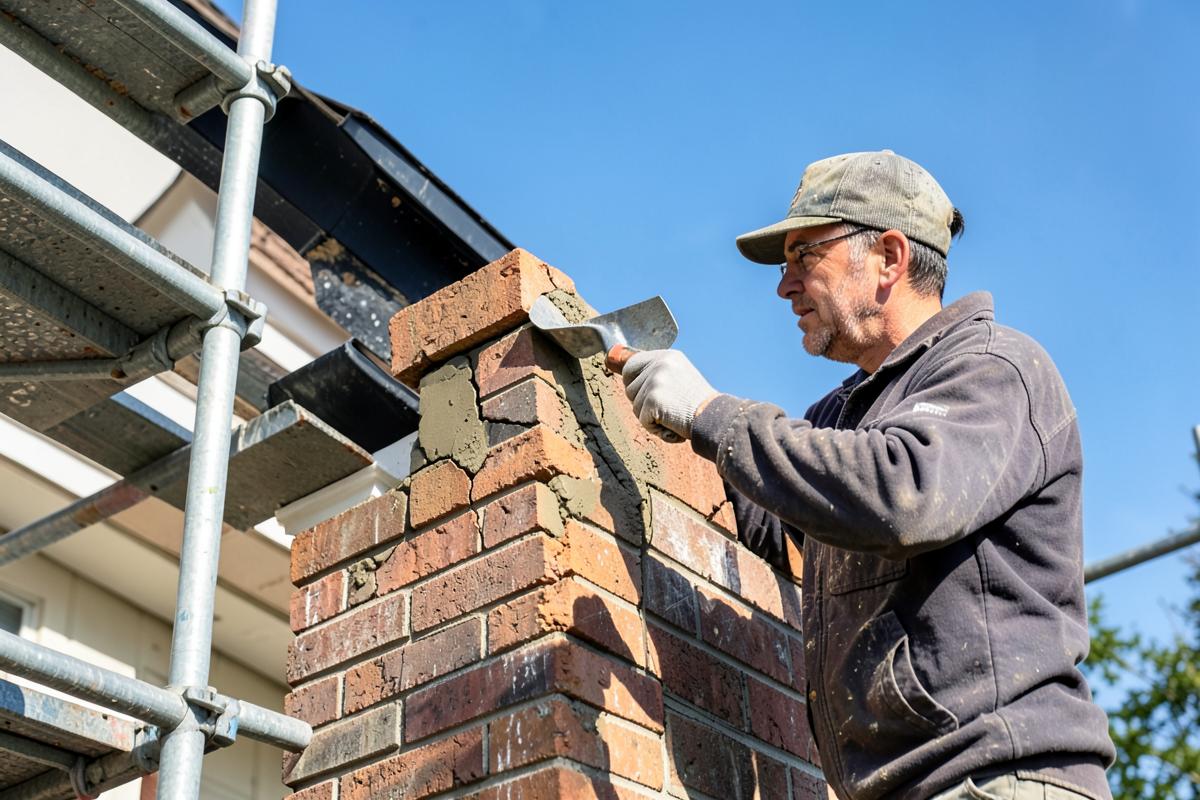
Repair starts by identifying the entry point rather than the symptom. We repoint failed joints, rebuild or resurface the crown, replace flashing where the roof interface has failed, and seal masonry with a vapour-permeable treatment so the structure can still dry.
What the visit includes
- Diagnosis of the water or heat path causing the damage
- Repointing of failed mortar joints
- Crown resurfacing or rebuild
- Flashing repair or replacement at the roofline
- Breathable masonry water repellent where appropriate
Signs you need this
- Brick faces flaking, popping or crumbling
- Damp patches on the ceiling or wall near the chimney
- Mortar you can scratch out with a key
- Pieces of concrete or brick found on the roof or in the eaves
Areas we cover around Pickering
Bay Ridges · Amberlea · Rougemount · Brougham · Claremont
Chimney repair covers the broad middle ground between routine maintenance and a full rebuild: fixing specific, identifiable damage before it spreads to the rest of the structure. The trick is treating the actual cause rather than just patching the visible symptom, because a chimney that looks fixed but is still taking on water in the same spot will simply show the same damage again within a season or two.
In Ontario, the overwhelming majority of chimney repair calls trace back to one root cause: water finding its way into masonry that then freezes and expands. A crack that starts as a hairline in October can be a half-inch gap by the following spring after four or five months of nightly freeze-thaw cycling, which is why small chimney problems in this climate rarely stay small if they are left alone.
This page covers the most common repair types, how a technician decides between repairing a section and recommending a rebuild, what materials and methods are typically used, and how repair timing interacts with Ontario's weather-limited construction season.
Diagnosing the actual entry point
Before any mortar is mixed, the job is figuring out exactly how water or heat is reaching the point of damage, because the visible symptom and the entry point are often in different places. A stain on a second-floor ceiling can trace back to flashing eight feet away, a cracked crown, or an open mortar joint well above where the stain appears, since water tracks sideways along framing before it finally shows itself.
This diagnostic step usually combines an exterior visual check, sometimes a camera look down the flue, and questions about when the problem is worst, since a leak that appears only during wind-driven rain points toward flashing, while one that appears steadily after any rain points more toward crown or masonry saturation.
Skipping this step and repairing the first visible crack found is one of the most common reasons a repair fails to solve the underlying problem, and it is worth pushing back on a quote that does not explain what the actual water path is believed to be.
Repointing failed mortar joints
Mortar is deliberately the weaker material in a masonry chimney, meant to wear out and be replaced before the brick itself is damaged. When mortar erodes past a certain depth, though, it stops shedding water and starts holding it against the brick face, which accelerates spalling and lets moisture reach the flue liner behind it.
Repointing means raking out the failed mortar to a consistent depth, typically at least twice the joint width, and packing new mortar in thin layers so it bonds and cures properly rather than shrinking and cracking as one thick pour. Matching the mortar type to the age of the brick matters: older Ontario brick was often laid with a softer lime-based mortar, and repointing it with modern hard Portland-cement mortar can trap moisture and cause the brick itself to spall instead, which is the opposite of what the repair was meant to prevent.
- Rake joints to at least twice the joint width before repacking
- Match mortar hardness to the age and softness of the original brick
- Pack in thin layers rather than one thick fill
- Tool the joint profile to match the surrounding courses
- Allow proper cure time before any water repellent is applied
Crown and cap repairs as part of a repair package
Many repair visits address the crown and cap alongside mortar work, since all three sit at the top of the system where weather exposure is worst. A cracked crown gets either a flexible resurfacing coating for hairline damage or a partial rebuild for wider cracking, while a missing or damaged cap gets replaced outright rather than repaired, since a cap is a relatively low-cost item compared to the water damage it prevents.
Doing these together rather than one at a time avoids paying for a second mobilization and roof setup within the same season, and it means the crown, cap and mortar are all addressing water intrusion at the same time rather than fixing one path while leaving another open.
Flashing and liner repairs
Where the chimney meets the roof, failed flashing is repaired by cutting a new reglet into the mortar joint for counter-flashing and reweaving step flashing into the surrounding shingle courses, rather than relying on caulk or roofing cement as a long-term fix. Caulk has a service life measured in a few years at most under Ontario's UV and freeze-thaw exposure, and using it as the primary seal instead of proper metal flashing is one of the most common reasons a 'fixed' leak returns.
Liner damage found during a repair-focused visit, such as a single cracked tile section rather than widespread liner failure, can sometimes be addressed with a targeted patch or a partial relining rather than a full liner replacement, depending on where the damage sits and how the appliance is vented.
Water repellent treatments and their limits
A vapour-permeable masonry water repellent, applied after mortar and crown repairs have cured, reduces how much water the brick face absorbs while still allowing existing moisture in the wall to escape as vapour. This distinction matters: a sealant that blocks vapour transfer in both directions can trap moisture inside the masonry, which then does more damage through freeze-thaw cycling than it prevents.
Water repellent treatment is a supplement to structural repair, not a substitute for it. Applying a repellent coating over an open mortar joint or a cracked crown does not fix the underlying gap, it just changes how water moves around it, and marketing that frames repellent treatment as a standalone repair should be treated with some skepticism.
Deciding between repair and rebuild
The general threshold professionals use is how much of the structure is affected and how many times it has already been repaired. A single failed joint or an isolated crack is a repair. Once deterioration has spread through roughly the top third of the stack, or repointing has already been done once and failed again within a few years, a partial rebuild of that section usually works out cheaper across a ten-year horizon than a cycle of repeated patching.
Structural movement, such as a visible lean, separation from the roofline, or brick that comes away in whole sections rather than crumbling at the mortar joints, points toward rebuild territory regardless of how small the visible damage looks, because those are signs of a foundation or framing issue that repointing cannot address.
- Isolated cracks or single failed joints: repair
- Damage limited to the top third of the stack: partial rebuild candidate
- Repeated repointing failing within a few years: rebuild candidate
- Visible lean or separation from the roofline: structural rebuild needed
- Bricks detaching in whole units rather than crumbling mortar: rebuild candidate
Timing repairs around Ontario's weather window
Mortar, crown coatings and masonry adhesives all need temperatures reliably above freezing to cure correctly, which limits most structural repair work in Ontario to roughly April through October depending on the specific year's weather. Work forced through in marginal temperatures with tenting and heaters is possible but adds cost and is usually reserved for genuinely urgent situations rather than routine scheduling.
Non-masonry repairs such as flashing replacement, cap installation and liner work are much less weather-dependent and can often proceed through winter in a pinch, which is useful to know if a leak is discovered mid-January and cannot wait for spring.
Chimney Repair cost in Pickering
A typical single-issue chimney repair in Ontario lands around $500 to $900, with combined visits addressing several problems at once running higher.
| Work | Typical range | What moves the price |
|---|---|---|
| Spot repointing, small areaisolated joint failure on an otherwise sound stack | $300 – $550 | isolated joint failure on an otherwise sound stack |
| Full repointing above the rooflinedepends on chimney height and brick face area | $900 – $2,200 | depends on chimney height and brick face area |
| Crown crack repair with flexible coatinghairline to moderate cracking, no rebuild needed | $350 – $650 | hairline to moderate cracking, no rebuild needed |
| Flashing replacementstep and counter-flashing reset into a new mortar reglet | $450 – $950 | step and counter-flashing reset into a new mortar reglet |
| Masonry water repellent applicationapplied after other repairs have fully cured | $250 – $450 | applied after other repairs have fully cured |
| Combined repair visit (mortar, crown, cap)bundled pricing for addressing several water paths in one mobilization | $1,100 – $2,600 | bundled pricing for addressing several water paths in one mobilization |
Ranges are estimates for planning only, not quotes. Final pricing depends on what we find on site, access, and the condition of the existing system.
What moves the price
- Extent of masonry deterioration and how much area needs work
- Chimney height and roof pitch affecting scaffold or lift needs
- Whether one issue or several (mortar, crown, flashing) are addressed together
- Mortar type matching required for older or heritage brick
- Seasonal timing and whether temporary heating or tenting is needed
- Accessibility for equipment and material staging on site
Want a number for your own fireplace? Send us the details and we will come back with an estimate, or call (833) 949-4153.
How the work goes, step by step
- 1
Diagnose the water path
The technician traces how water or heat is actually reaching the damaged area, using exterior inspection and sometimes a camera scan, rather than assuming the visible crack is the only issue.
- 2
Quote the specific repair
A written quote describes exactly which joints, crown area or flashing sections will be addressed and why, tied to the diagnostic findings.
- 3
Protect the site
Roof and ground-level tarps or containment are set up to catch debris from raking, cutting or coating work.
- 4
Remove failed material
Deteriorated mortar, cracked crown coating, or old flashing is removed back to sound material rather than applied over top of the failure.
- 5
Rebuild the repaired section
New mortar, crown coating or flashing is installed in proper layers or courses, matched to the surrounding material where visible.
- 6
Final check and protection
Once cured, a water repellent treatment may be applied, and the repaired area is photographed for the homeowner's records.
How long it takes: Most single-issue repairs take one day on site; combined repairs addressing mortar, crown and flashing together typically take one to three days plus cure time.
Looking after it afterwards
- Avoid pressure washing repaired masonry, which can force water into new joints before they fully cure
- Keep gutters and downspouts near the chimney clear so runoff does not pool against the repair
- Watch the repaired area after the first few heavy rains and report any staining
- Reapply water repellent treatment on the manufacturer's recommended cycle, typically every several years
- Book a follow-up inspection the following season to confirm the repair held through a winter
Mistakes we see most often
- Patching the visible crack without identifying the actual water entry point
- Using hard modern mortar to repoint historic soft-mortar brickwork
- Relying on caulk instead of proper flashing metal as a long-term fix
- Delaying repair until damage has spread from the crown down into the brick face
- Applying water repellent over unrepaired cracks instead of fixing them first
Questions homeowners ask
- Can chimney repairs be done in winter?
- Some can. Mortar and crown work needs temperatures above freezing to cure properly, so those are scheduled for the shoulder seasons, while liner, cap and flashing work can usually go ahead year-round.
- Is repair or rebuild the better value?
- It depends how far the deterioration has gone. Once more than roughly the top third of the structure is loose, a rebuild of that section usually costs less over ten years than repeated repointing.
- How urgent is a small mortar crack?
- It is rarely an emergency the day it is noticed, but every winter it goes unrepaired lets freeze-thaw cycling widen it, so it is worth scheduling repair within the same season rather than letting it carry over another full winter untreated.
- Can I repair just the section that is visibly damaged?
- Often yes, if the deterioration is genuinely isolated, but a proper diagnosis should confirm that the surrounding area is still sound before limiting the repair scope, since stopping short of the full affected area can mean the same failure reappears just past the repaired edge.
- Does home insurance cover chimney repair?
- It depends on the cause and the policy. Sudden damage from a specific event, like a lightning strike, is more likely to be covered than gradual deterioration from age and weather, which most policies treat as a maintenance responsibility rather than an insurable loss.
- Will repointing change how my chimney looks?
- A careful repointing job matches mortar colour and joint profile closely enough that it is not obvious from the ground, though very old, weathered mortar can be difficult to match exactly, and a sample area is a reasonable thing to ask for before work proceeds on a highly visible chimney.
- What happens if I ignore a cracked crown?
- Water entering through the crack works its way into the brick below and, eventually, toward the flue liner, so an inexpensive crown repair delayed for a few seasons can turn into a much larger repointing or partial rebuild bill once the water has spread through several courses of brick.
- Can repairs be done at the same time as a sweep or inspection?
- Yes, and it is often efficient to do so, since the inspection identifies exactly what needs repair and the sweep clears the flue so any liner-related work can proceed without soot obscuring the area being fixed.
Nearby
Other Communities Near Pickering
Related work
Often Booked Together
Chimney Sweeping in Pickering
Full mechanical sweep of the flue, smoke chamber and firebox with containment and photos.
Chimney Liner in Pickering
Stainless steel and cast-in-place relining sized to the appliance being vented.
Chimney Cap in Pickering
Stainless caps and multi-flue covers that keep out rain, snow, animals and embers.
Flashing Repair in Pickering
Step and counter-flashing repair where the chimney meets the roof.