
Ontario Fireplace & Chimney Specialists
Chimney Fan Installation in Arnprior
When geometry will not allow natural draft, mechanical draft can.
Every job starts with a proper look at your system — not a guess over the phone. You get a written quote before any work begins, a clear explanation of what we found, and a technician who works to manufacturer and code requirements from start to finish.
- Written quotes, no surprise charges
- Photo-backed findings after every visit
- Work performed to code and manufacturer specs
- Serving Arnprior and Renfrew County, year-round
Chimney Fan for Arnprior homes
Arnprior pairs heritage brick and stone near the rivers with newer subdivisions where direct-vent gas fireplaces are the default.
River moisture combined with valley cold is hard on crowns and flashings, and untended caps are the usual reason water reaches a firebox here.
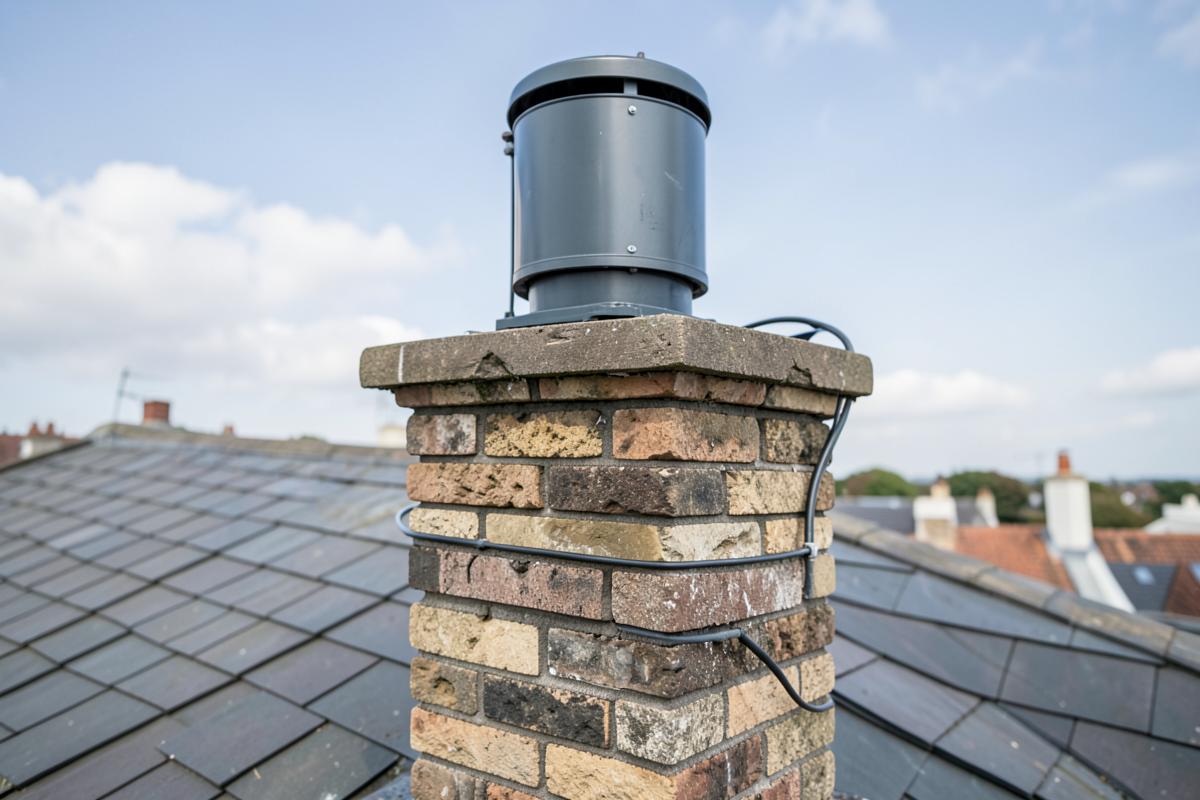
Some chimneys simply cannot draft properly: too short, terminating below a taller roof section, or serving a firebox in a tightly sealed house with no makeup air. Where the structure cannot be changed, a chimney fan mounted at the termination creates the draft mechanically.
This is a last resort, not a first one. We rule out blockage, flue sizing, smoke chamber roughness and combustion air first, because those fixes are permanent and a fan is equipment that needs power and servicing.
What the visit includes
- Draft measurement and problem diagnosis
- Elimination of blockage, sizing and air-supply causes
- Fan sizing for flue dimension and appliance
- Mounting, wiring coordination and speed control
- Commissioning with draft measurement
Signs you need this
- Smoke spills into the room despite a clean flue
- The chimney is short or blocked by a taller roof
- A very airtight home with no makeup air
- Previous draft fixes have not worked
Areas we cover around Arnprior
Braeside · White Lake · Pakenham · Fitzroy Harbour · Renfrew
A chimney that refuses to draft properly, pushing smoke back into the room instead of pulling it up and out, is one of the more frustrating problems a fireplace owner can face, and it is not always fixable by adjusting the fire or opening a window. When the underlying cause is a flue that is too short, a house that is too airtight, a termination in a wind-affected spot, or a chimney on the shaded, cool side of the building, a powered draft-inducing fan mounted at the top of the flue can solve a problem that no amount of technique will fix on its own.
These fans, sometimes called induced-draft or chimney draft fans, sit at the flue termination and use a small electric motor to create the negative pressure a passive chimney relies on convection alone to generate. They are controlled from inside the house, usually with a variable-speed switch, and they run only while a fire is burning or shortly before and after, rather than continuously. Installing one correctly involves electrical work, careful sizing to the flue and appliance, and mounting hardware rated for rooftop exposure to Ontario winters.
This page covers when a chimney fan is the right fix versus when it is masking a different underlying problem, what installation actually involves, typical costs, and what ongoing maintenance a fan needs that a passive chimney does not.
When a fan solves the actual problem and when it does not
Chimney fans work well for genuine draft-limiting conditions: a flue that is shorter than code height recommendations but cannot practically be extended, a chimney positioned in the turbulent wind zone downwind of a taller roofline or nearby structure, or a tightly sealed modern house where competing exhaust fans and a lack of natural infiltration starve the fireplace of makeup air. In these cases a fan restores usable draft without requiring structural changes to the chimney itself.
A fan is the wrong fix, however, for smoke problems caused by a blocked or narrowed flue, a damper stuck in the wrong position, or a firebox and flue that are badly mismatched in size. Installing a fan on a chimney with heavy undiagnosed creosote buildup or a cracked liner treats a symptom while leaving the actual hazard in place, so a proper inspection should always precede a fan recommendation rather than jumping straight to a mechanical solution.
Homes undergoing an airtightness upgrade, such as new windows, added insulation or a heat recovery ventilator installation, sometimes develop draft problems on a previously fine fireplace simply because the house now competes harder for available air. In that situation a fan paired with a dedicated outdoor combustion air supply is often a more complete fix than the fan alone.
Seasonal wind patterns specific to a lot's exposure are worth considering separately from general chimney height rules, since a termination sitting in the lee of a steeply pitched roof section, a stand of mature trees, or a neighbouring two-storey addition can experience turbulent downdraft on certain wind directions even when the chimney otherwise meets standard height guidance. A fan set to a moderate speed specifically for those wind-affected days can resolve an intermittent problem that would otherwise seem inconsistent and hard to diagnose.
Types of chimney fans and how they are chosen
Rooftop-mounted fans sit directly on the flue termination and are the most common choice, pulling air up through the entire flue length and venting it above the roofline where wind and buoyancy carry it away from the house. In-line fans mounted lower in the system, sometimes inside an unused portion of a chase, are less common in residential retrofits but occasionally used where roof access or termination design makes a top-mount fan impractical.
Sizing depends on the flue's cross-sectional area, the appliance's typical firebox size, and the specific draft deficiency identified during inspection, since an undersized fan will not solve the problem and an oversized one can create excessive draft that burns wood too fast and wastes heat up the flue. Manufacturers publish sizing charts based on these variables, and a competent installer works from measured flue dimensions rather than a generic one-size assumption.
- Rooftop top-mount fans for standard masonry and factory-built chimneys
- In-line fans for chases where roof-mount access is impractical
- Variable-speed models to fine-tune draft rather than an on/off unit
Electrical and control requirements
Every chimney fan needs a dedicated electrical circuit run from the fan location down to an interior wall switch or variable-speed control, and that wiring has to be weatherproofed at the roof penetration and routed in a way that respects the chimney's clearance-to-combustibles requirements just as the flue itself does. This is not a job for a simple extension cord or a plug-in adapter, and most municipalities require the wiring portion to be done or reviewed by a licensed electrician.
Some installations pair the fan with a differential pressure switch or a safety interlock tied to the appliance, so the fan cannot be left running unattended indefinitely or so it automatically ramps to a minimum speed whenever the appliance is in use. These add complexity and cost but improve both safety and convenience for households that would otherwise have to remember to manage fan speed manually every time they light a fire.
Mounting and weatherproofing on Ontario roofs
The fan housing has to be secured to the flue termination with hardware rated for the wind loads and temperature swings typical of an Ontario winter, and the base gasket or seal needs to handle repeated freeze-thaw cycling without cracking. A poorly sealed fan base is one of the more common sources of water intrusion into a chimney after a fan is added, since the mounting plate interrupts the flashing and crown detail that previously shed water cleanly.
Ice and snow accumulation around the fan housing is a normal winter condition, and most quality units are designed with motor housings sealed against moisture intrusion, but homeowners should expect to occasionally clear heavy snow buildup around the base if it accumulates enough to interfere with the fan blade or motor vents.
Impact on draft, efficiency and appliance performance
A correctly sized and adjusted fan gives the homeowner active control over draft strength that a passive chimney never offers, which can be especially useful on windy or very cold nights when natural draft is unpredictable. Running the fan on a moderate setting rather than full speed for most fires is usually the right approach, since maximum draft pulls heat up the flue faster than the appliance can use it efficiently.
For wood-burning appliances, the fan should generally be used to establish draft at startup and then reduced once the fire is established and drawing well on its own, rather than run at full speed for the entire burn, both to conserve energy and to avoid overdrawing heat that would otherwise warm the room.
- Use higher fan speed at startup to establish draft quickly
- Reduce speed once the fire is established and drawing well
- Avoid running at maximum speed for an entire burn cycle
Maintenance specific to powered chimney fans
Unlike a passive chimney cap, a fan has a motor, bearings and moving blades that need periodic attention. Most manufacturers recommend an annual inspection alongside the regular chimney sweep, checking for bearing wear, verifying the motor runs smoothly without unusual noise, and confirming the wiring and control switch are functioning correctly.
Soot and creosote can still accumulate on the fan blades and housing interior over a heating season, particularly for wood-burning applications, and that buildup should be cleaned during the same visit as the annual flue sweep since it sits directly in the same debris path.
Cost and payback considerations
A chimney fan installation is a meaningful upfront cost, but it is often considerably less expensive than the structural alternative of extending a chimney's height to meet clearance requirements, particularly on a tall or difficult-access roof where masonry extension work would require substantial scaffolding. For households facing a genuine draft deficiency with no easy structural fix, a fan is frequently the more economical long-term answer.
Homeowners should weigh the fan's ongoing electrical draw and maintenance needs against the alternative of simply using the fireplace less often or living with occasional smoke spillage, and for most people who actually want to use a problematic fireplace regularly, the fan pays for itself in usability even without a strict financial payback calculation.
Chimney Fan Installation cost in Arnprior
Most Ontario chimney fan installations land between $1,300 and $1,900 including standard electrical work and mounting.
| Work | Typical range | What moves the price |
|---|---|---|
| Standard rooftop fan, single flue, straightforward accessincludes fan unit, wall control and standard wiring run | $1,100 – $1,700 | includes fan unit, wall control and standard wiring run |
| Rooftop fan with difficult roof access or long wire runsteep pitch, multi-storey chase or long interior wiring distance | $1,600 – $2,300 | steep pitch, multi-storey chase or long interior wiring distance |
| In-line fan for chase-mounted installationless common configuration requiring extra ductwork adaptation | $1,400 – $2,000 | less common configuration requiring extra ductwork adaptation |
| Variable-speed control with safety interlock upgradeadd-on to base installation cost | $200 – $400 | add-on to base installation cost |
| Annual fan inspection and cleaning bundled with sweepongoing maintenance beyond the initial installation | $90 – $150 | ongoing maintenance beyond the initial installation |
| Fan motor or bearing replacementtypical repair cost after several years of service | $350 – $650 | typical repair cost after several years of service |
Ranges are estimates for planning only, not quotes. Final pricing depends on what we find on site, access, and the condition of the existing system.
What moves the price
- Flue size and cross-sectional area determining fan capacity needed
- Roof pitch, height and access difficulty for mounting
- Distance from the fan location to the nearest available electrical circuit
- Whether a variable-speed control or safety interlock is added
- Number of flues on the property requiring separate fans
- Pre-existing draft diagnosis versus a straightforward like-for-like fan swap
Want a number for your own fireplace? Send us the details and we will come back with an estimate, or call (833) 949-4153.
How the work goes, step by step
- 1
Draft diagnosis
The technician measures existing draft conditions and confirms a fan is the appropriate fix rather than a symptom of an unrelated flue or appliance problem.
- 2
Fan sizing
Flue dimensions and appliance type are used to select a fan model rated for the correct airflow capacity for that specific chimney.
- 3
Electrical rough-in
A dedicated circuit is run from the electrical panel or a nearby junction to the fan location and down to the interior control switch location.
- 4
Mounting and sealing
The fan base is secured to the flue termination and sealed against water intrusion using weatherproof hardware and gasket materials.
- 5
Wiring and control installation
The interior variable-speed switch is installed and connected, with any safety interlock wiring completed at this stage.
- 6
Testing and calibration
The system is run through its full speed range while checking draft response at the appliance to confirm proper operation before the crew leaves.
How long it takes: A standard chimney fan installation typically takes four to six hours including electrical work, depending on access and wiring distance.
Looking after it afterwards
- Run the fan at reduced speed once a fire is established rather than full speed throughout
- Clear heavy snow accumulation around the fan housing base during winter storms
- Have the fan inspected annually alongside the regular flue sweep
- Report any unusual motor noise or vibration promptly rather than continuing to run it
- Keep the wall control accessible and avoid covering it with furniture or curtains
Mistakes we see most often
- Installing a fan without first diagnosing the actual cause of poor draft
- Choosing a fan sized by guesswork rather than measured flue dimensions
- Using a household extension cord instead of proper dedicated wiring
- Running the fan at maximum speed for an entire burn, wasting heat up the flue
- Skipping annual maintenance because the fan is out of sight on the roof
Questions homeowners ask
- Are chimney fans noisy?
- Modern units at the correct speed setting are generally unobtrusive from inside the room. Oversizing is what makes them audible.
- Do you need to fix draft causes first?
- Yes, and we insist on it. A fan masking a blockage or an undersized flue hides a safety issue rather than solving it.
- Can a single chimney fan serve two separate flues in the same chase?
- Generally no, since each flue needs its own dedicated fan sized to that flue's specific dimensions and appliance, and attempting to share a single unit across two flues undermines the sizing calculation that makes a fan effective in the first place.
- Does adding a fan change how the fireplace should be lit?
- It can make starting a fire noticeably easier, since running the fan on a higher setting for the first few minutes helps establish draft before the flue has warmed up naturally, which is often the exact window where a marginal chimney used to smoke back into the room.
- Will a chimney fan work with a wood-burning fireplace or only gas?
- Fans are commonly installed on both, though wood-burning applications need more attention to soot accumulation on the fan blades and require the fan and housing to tolerate higher flue temperatures than a typical gas application produces.
- How loud is a chimney fan when running?
- Most quality units are designed to run quietly at moderate speeds, producing a low background hum that is barely noticeable from inside the house, though full-speed operation on some models is more noticeable, particularly in a quiet room directly below the chimney.
- Can a chimney fan be added to an existing wood stove insert?
- Yes, provided the flue and connector pipe dimensions are compatible with a fan-assisted system, though the diagnosis should confirm the insert's own draft requirements are being addressed correctly first.
- Does a chimney fan replace the need for a chimney cap?
- No, a cap for keeping out rain, debris and animals is still needed, and most fan units are designed to integrate with or replace the cap specifically at the termination while still providing that basic weather protection.
- What happens if the power goes out while a fire is burning?
- The chimney typically reverts to whatever passive draft it had before the fan was installed, which may mean reduced performance or some smoke spillage until power is restored, so households in areas with frequent outages should plan fires accordingly during storms.
- How long does a chimney fan typically last?
- With annual maintenance, most units provide reliable service for eight to fifteen years before motor or bearing wear necessitates replacement, similar in lifespan to other outdoor-rated mechanical equipment exposed to Ontario weather.
Nearby
Other Communities Near Arnprior
Related work
Often Booked Together
Dryer Vent Cleaning in Arnprior
Full-length lint removal from dryer ducting, with airflow testing at the termination.
Dryer Vent Repair in Arnprior
Rerouting, resealing and replacing crushed, disconnected or improperly vented ducting.
Air Duct Cleaning in Arnprior
Supply and return duct cleaning with negative-air containment and before-and-after photos.
Chimney Sweeping in Arnprior
Full mechanical sweep of the flue, smoke chamber and firebox with containment and photos.