
Ontario Fireplace & Chimney Specialists
Chimney Damper Repair in King City
A damper that does not seal is an open window above your fireplace.
Every job starts with a proper look at your system — not a guess over the phone. You get a written quote before any work begins, a clear explanation of what we found, and a technician who works to manufacturer and code requirements from start to finish.
- Written quotes, no surprise charges
- Photo-backed findings after every visit
- Work performed to code and manufacturer specs
- Serving King City and York Region, year-round
Damper Repair for King City homes
King's housing skews large: multi-storey masonry chimneys, two-sided fireplaces and outdoor hearths appear far more often here than in neighbouring municipalities.
Tall chimneys serving several flues need each one inspected separately, and cross-flue leakage between shared chases is one of the more serious findings we report in this area.
Throat dampers rust, warp and seize, and even a good one seals only approximately because it is a steel plate on a steel frame. On an unused fireplace that gap can account for a noticeable share of a winter heating bill.
Where the original damper is repairable we clean, free and adjust it. Where it is past that, a top-mounted damper with a silicone gasket seals at the top of the flue instead, which keeps the whole flue warmer and dry and is operated by a cable at the firebox.
What the visit includes
- Damper plate, frame and pivot assessment
- Cleaning, freeing and adjusting a serviceable damper
- Throat damper replacement where the frame is sound
- Top-sealing damper installation with cable control
- Draft verification after adjustment
Signs you need this
- A cold draft from the fireplace when it is closed
- The handle is stuck, loose or missing
- You can hear street noise through the firebox
- Rain water reaching the smoke shelf
Areas we cover around King City
Nobleton · Schomberg · Kettleby · Snowball · Ansnorveldt
A damper is a simple mechanical part doing a job that matters far more than its size suggests. When it is open, it lets combustion gases and smoke leave the house through the flue. When it is closed and sealing properly, it is supposed to stop the flue from acting as a permanently open vent to the outdoors for the other eleven months of the year when no fire is burning. Most homeowners never think about their damper until it is either stuck or obviously failing, but a poorly sealing damper is quietly costing money every single day.
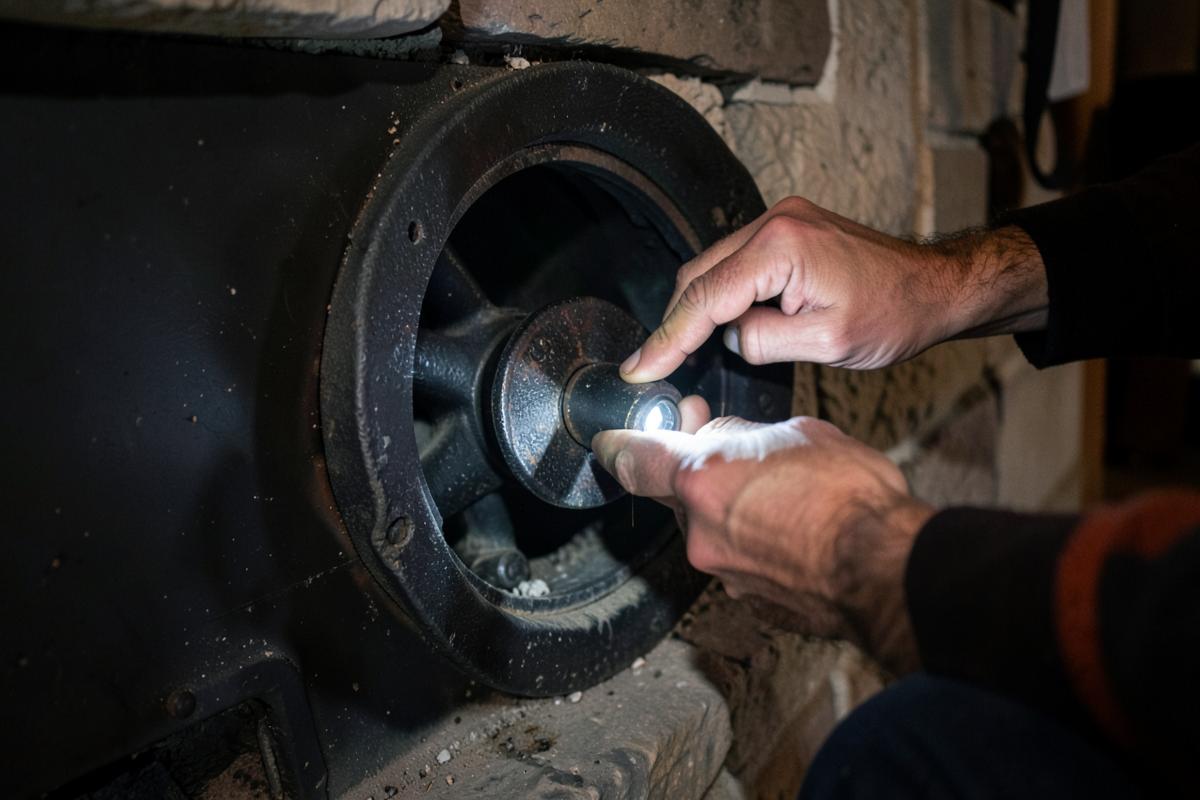
The two damper types found in Ontario homes work quite differently. A throat damper sits just above the firebox, typically a cast-iron or steel plate on a rotating shaft, and it was standard in almost every masonry fireplace built before top-sealing dampers became common. A top-mounted damper sits at the very top of the flue, operated by a cable running down to the firebox, and seals against a rubber or silicone gasket rather than metal against metal.
This service covers assessing which type your fireplace has, diagnosing why it is not sealing, adjusting or freeing a repairable unit, or replacing it entirely with either a matching throat damper or an upgraded top-sealing damper. Because the damper directly affects both safety and heating cost, it is one of the more consequential small repairs a chimney company performs.
Why throat dampers fail
A throat damper is a metal plate resting on a metal frame, and metal-on-metal seals are never perfect even when new. Over years of heat cycling, the plate warps slightly, the frame corrodes from moisture exposure, and the pivot mechanism collects soot and creosote residue that stiffens its movement. Eventually the handle becomes hard to turn, the plate stops seating flush against the frame, or the whole assembly rusts to the point that it will not close fully in either direction.
Corrosion is usually the bigger long-term issue in this climate, since a flue exposed to rain, melting snow, and condensation cycles through wet and dry conditions constantly. Rust does not just weaken the metal, it also builds up unevenly on the plate and frame, which changes the geometry of the seal in ways that a simple cleaning cannot fully correct once it has progressed far enough.
Even a well-maintained throat damper has an inherent limitation: it was never designed to create an airtight seal, only a reasonably tight one. That is part of why replacing an old, failing throat damper with an equivalent new one still leaves some draft, whereas moving to a top-sealing damper addresses the sealing problem at its source rather than just refreshing the same design.
How much heat loss a bad damper actually causes
An open, unsealed flue behaves like a permanently cracked window at the top of the house, since warm air rises and escapes through any available opening, and a chimney flue is often the most direct vertical path out of a heated living space. Over a full Ontario winter, homes with fireplaces used only occasionally can see a measurable share of heating cost attributable to draft loss through a poorly sealing or improperly closed damper.
The effect compounds because warm air escaping upward pulls replacement cold air in from elsewhere in the house, often through gaps around windows, doors, and other leakage points, meaning a bad damper does not just waste the heat directly above the fireplace, it increases the draw of cold air throughout the home. This is a big part of why fixing a damper is often one of the more cost-effective repairs relative to its impact on comfort and heating bills.
Throat damper repair versus top-sealing damper upgrade
When a throat damper's frame is structurally sound, cleaning the pivot points, freeing a seized mechanism, and re-adjusting the plate to close flush against the frame is often enough to restore reasonable sealing performance at a modest cost. This is the right call when the underlying hardware is basically good and the issue is soot buildup, minor warping, or a stiff handle.
When the frame itself is rusted through, badly warped, or missing entirely, or when a homeowner wants meaningfully better sealing performance, a top-sealing damper installed at the flue crown is usually the better long-term choice. Because it seals against a gasket at the very top of the chimney rather than partway down, it also keeps the flue itself warmer and drier between uses, which reduces condensation-related deterioration inside the flue liner over time.
Cost, ease of future flue access, and how the fireplace is actually used all factor into this decision. A rarely used decorative fireplace with a badly failed throat damper is often a strong candidate for the top-sealing upgrade, since the energy savings alone can offset the higher upfront cost within a few winters.
- Cast-iron throat damper cleaning, freeing, and re-adjustment
- Throat damper frame or full assembly replacement
- Stainless steel top-sealing damper with cable-operated gasket seal
- Cable and handle mechanism repair for existing top-sealing units
- Damper sizing verification against flue dimensions
Seasonal draft behaviour in Ontario homes
Draft direction and strength through a chimney change with outdoor temperature, wind, and how the rest of the house is pressurized by exhaust fans and forced-air heating systems. In the depths of an Ontario winter, the temperature difference between inside and outside is large enough that even a modestly leaking damper produces a noticeable cold draft at floor level near the fireplace, which many homeowners describe simply as their living room feeling colder than the rest of the house.
During shoulder seasons, when temperature differences are smaller, the same leaking damper may produce far less noticeable draft, which is part of why damper problems often get reported for the first time only once a real cold snap arrives. It is worth checking damper seal specifically in the fall, before heating season starts in earnest, rather than waiting for the first cold night to reveal a problem that a quick check would have caught.
Safety and code considerations
A damper is a safety-relevant component because it must be fully open before and during a fire, and general fireplace safety guidance under WETT-referenced practice always includes checking that the damper opens completely and is not restricted by debris, nest material, or a warped plate before lighting any fire. A damper stuck partially closed is a real hazard, since it restricts the exit path for combustion gases and can contribute to smoke spilling into the room.
Top-sealing dampers also need their cable mechanism verified periodically, since a cable that jams or a handle that disconnects internally can leave a homeowner unable to confirm the damper is actually open before lighting a fire, even though it looks fine from the firebox. This is one of the checks worth including whenever a chimney gets its annual inspection.
What damper problems reveal about the rest of the system
A stuck or badly rusted damper is sometimes a symptom of a broader moisture problem rather than an isolated issue, since heavy corrosion usually means water has been getting into the flue regularly, whether from a missing or failed chimney cap, cracked crown, or flashing leak higher up the system. Addressing the damper without checking why it corroded that badly risks a repeat failure within a few years.
Similarly, a damper that will not close because debris is jammed behind the plate can indicate an animal nest, a chimney cap that failed, or accumulated creosote flaking off the flue liner above. Part of a proper damper repair visit includes a quick camera check or visual inspection up the flue to rule out these related causes rather than treating the damper in isolation.
Resale and everyday comfort value
A damper that will not seal is a common item flagged during a home inspection, since inspectors typically test that the damper opens and closes fully as part of a standard fireplace check. Fixing it before listing a home removes an easy negotiating point for a buyer and signals that the fireplace has been reasonably maintained.
Beyond resale, the day-to-day comfort improvement from a properly sealing damper is one of the more noticeable results of any single chimney repair, since it directly affects how a living room feels on a cold night regardless of whether the fireplace is ever used that season.
Chimney Damper Repair cost in King City
Most homeowners spend somewhere between $300 and $500 on a standard damper repair or replacement, depending on whether they stay with a throat damper or move to a top-sealing unit.
| Work | Typical range | What moves the price |
|---|---|---|
| Throat damper cleaning, freeing, and adjustmentframe and plate structurally sound | $150 – $260 | frame and plate structurally sound |
| Throat damper plate and frame replacementstandard masonry firebox opening | $320 – $520 | standard masonry firebox opening |
| Top-sealing damper installationincludes cable and handle assembly | $375 – $650 | includes cable and handle assembly |
| Top-sealing damper replacement, existing cable retainedgasket and lid unit only | $300 – $475 | gasket and lid unit only |
| Cable or handle mechanism repair onlyexisting top-sealing damper body reused | $130 – $220 | existing top-sealing damper body reused |
| Custom-sized damper for oversized or unusual fluenon-standard flue dimensions | $450 – $850 | non-standard flue dimensions |
Ranges are estimates for planning only, not quotes. Final pricing depends on what we find on site, access, and the condition of the existing system.
What moves the price
- Whether the existing throat damper can be repaired or needs full replacement
- Choice between a repaired throat damper and a new top-sealing damper
- Flue size, since non-standard dimensions require a custom-fitted unit
- Extent of corrosion or debris found during inspection
- Whether an existing cable system can be reused with a new top-sealing lid
- Access difficulty for flue-top work on tall or steep-roofed chimneys
Want a number for your own fireplace? Send us the details and we will come back with an estimate, or call (833) 949-4153.
How the work goes, step by step
- 1
Visual and functional assessment
We open and close the existing damper fully to check how well it seats, look for rust, warping, and debris, and confirm which damper type is currently installed before recommending repair or replacement.
- 2
Flue camera check
A quick camera pass above the damper confirms there is no nesting material, creosote flaking, or structural issue contributing to the damper problem before we proceed with repair work.
- 3
Cleaning and freeing, where applicable
For a repairable throat damper, we clean soot and rust from the pivot points and frame, then work the mechanism until it moves freely through its full range.
- 4
Adjustment or removal
A repairable damper is adjusted so the plate seats flush against the frame in the closed position; a damper being replaced is removed along with any attached hardware.
- 5
Installation of new components
A new throat damper is fitted to the existing frame opening, or a top-sealing damper is mounted at the flue crown with its cable run down to a handle at the firebox.
- 6
Function verification
We test the completed repair or new unit through several full open-close cycles and confirm the handle or cable operates smoothly from inside the firebox before finishing the visit.
How long it takes: A throat damper repair or replacement typically takes one to two hours, while a top-sealing damper installation usually takes two to three hours including cable routing.
Looking after it afterwards
- Operate the damper through its full range a few times each fall before the first fire of the season
- Confirm the damper is fully open before lighting any fire, never partially
- Have the damper checked whenever the chimney is swept, since soot buildup affects its movement
- Keep an eye on the handle or cable mechanism for stiffness, which can signal early wear
- Address any rust or corrosion on a throat damper promptly rather than waiting for it to seize completely
Mistakes we see most often
- Assuming a damper is closed properly just because the handle has moved, without checking the plate seats flush
- Forcing a stuck damper handle, which can bend the plate or shaft further
- Leaving a top-sealing damper's cable slack or misrouted so it binds partway through its travel
- Ignoring a persistent cold draft near the fireplace instead of having the damper checked
- Replacing a damper without first checking why the old one corroded or seized, missing a related moisture issue
Questions homeowners ask
- Is a top-sealing damper better?
- For energy loss, generally yes, because it seals with a gasket and keeps the flue itself out of the weather. Throat dampers remain the simpler repair when the frame is in good condition.
- Can I leave the damper open all winter?
- Only while a fire is burning or coals are live. Left open otherwise, it vents heated household air straight outdoors.
- How do I know if my damper is the reason my living room feels drafty?
- Hold a hand or a lit incense stick near the closed damper on a cold day; noticeable air movement usually confirms a sealing problem. A chimney inspection can then determine whether the issue is a repairable seating problem or a damper needing replacement.
- Is a top-sealing damper worth the extra cost over repairing a throat damper?
- For most fireplaces used only occasionally, yes, since the gasket seal at the top of the flue reduces heat loss far more effectively than even a well-adjusted throat damper. Frequent fireplace users may find a properly repaired throat damper perfectly adequate.
- Can I install a top-sealing damper myself?
- It involves working at the top of the chimney and running a cable down the full flue length, which carries real fall risk and requires care not to damage the flue liner. Most homeowners are better served having this done by someone experienced with flue-top work.
- Why does my damper handle feel stuck only in cold weather?
- Metal contracts in cold temperatures, and a marginally tight fit that works in summer can bind once everything contracts further in winter. Rust and creosote residue on the pivot points make this worse and are usually the underlying fixable cause.
- Will a bad damper actually show up on my heating bill?
- A single leaking damper on an occasionally used fireplace is unlikely to be dramatic on its own, but combined with other draft sources in an older home it contributes measurably to heating cost, especially through a long Ontario winter.
- Does every fireplace need a damper?
- Any wood-burning masonry fireplace intended to be closed off between fires should have a functioning damper of some kind. Some gas inserts and factory-built units use a different sealing approach specified by the manufacturer instead of a traditional damper.
Nearby
Other Communities Near King City
Related work
Often Booked Together
Chimney Sweeping in King City
Full mechanical sweep of the flue, smoke chamber and firebox with containment and photos.
Chimney Repair in King City
Targeted repairs to crowns, caps, mortar joints, flashing and liners.
Chimney Liner in King City
Stainless steel and cast-in-place relining sized to the appliance being vented.
Chimney Cap in King City
Stainless caps and multi-flue covers that keep out rain, snow, animals and embers.