
Ontario Fireplace & Chimney Specialists
Chimney Crown Repair in Minden
The crown is the chimney's roof, and most of them were built too thin.
Every job starts with a proper look at your system — not a guess over the phone. You get a written quote before any work begins, a clear explanation of what we found, and a technician who works to manufacturer and code requirements from start to finish.
- Written quotes, no surprise charges
- Photo-backed findings after every visit
- Work performed to code and manufacturer specs
- Serving Minden and Haliburton County, year-round
Crown Repair for Minden homes
Minden's year-round homes and seasonal cottages both lean on wood heat, with a large number of older stove installations dating back decades.
Older installations frequently miss modern clearance requirements, and documenting an appliance properly matters here both for safety and for insurance.
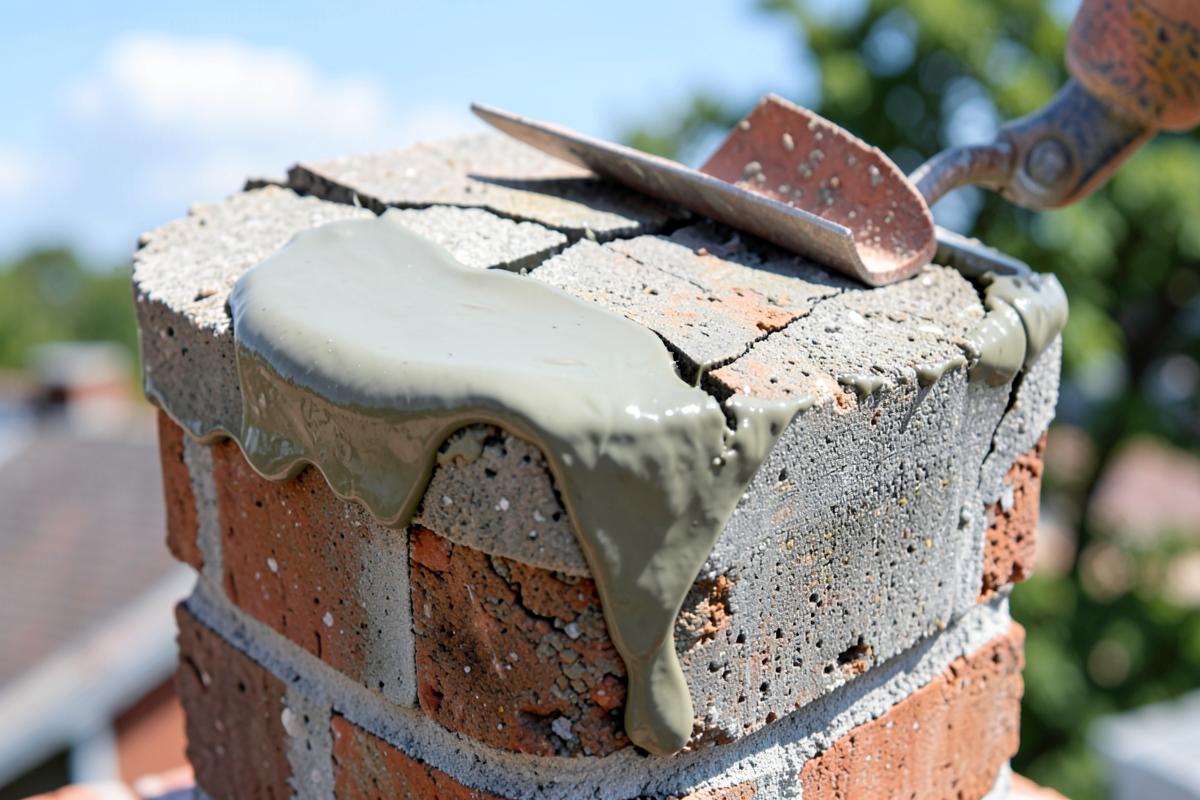
A crown should be a reinforced slab that overhangs the brick with a drip edge, sloped to shed water away from the flue. A great many were finished instead with a thin mortar wash troweled flat, which cracks within a few seasons and then feeds water directly into the brickwork.
Depending on condition we either resurface the existing crown with a flexible cementitious coating or break it out and form a new one with proper thickness, reinforcement, an expansion joint at the tile and an overhang that throws water clear of the face.
What the visit includes
- Assessment of crown thickness, slope and overhang
- Crack repair and flexible crown coating, or full recast
- Expansion joint at the flue tile penetration
- Drip edge formed to shed water clear of the brick
- Coordination with cap and flashing work
Signs you need this
- Visible cracks radiating across the top slab
- Crown pieces sitting on the roof or in gutters
- Spalling brick concentrated in the top few courses
- Water staining down one face of the chimney
Areas we cover around Minden
Haliburton · Kinmount · Norland · Gooderham · Carnarvon
The crown is, functionally, the roof of the chimney: the slab that caps the top of the masonry, sheds rain and snow away from the structure, and seals the gap between the brick and the flue tile or liner passing through it. When a crown is undersized, poorly sloped or simply cracked, it stops doing that job and becomes instead one of the most direct paths for water to enter the chimney from above.
A striking number of Ontario chimneys were originally finished with a thin mortar wash troweled across the top rather than a properly formed, reinforced slab. That kind of finish can look adequate for years before cracking under the first serious freeze-thaw cycling, and once it cracks it channels water directly into the brickwork below rather than shedding it, which is why crown problems often show up as brick spalling concentrated specifically in the top few courses of a chimney.
This page covers how to tell whether a crown needs resurfacing or a full recast, what a properly built crown actually requires, and how crown condition connects to spalling brick, liner damage and interior leaks that seem unrelated at first glance.
What a properly built crown looks like
A correctly formed crown is a reinforced concrete or mortar slab, typically several inches thick, sloped away from the flue tile toward the edges so that water runs off rather than pooling. It overhangs the brick face on all sides by an inch or two, with a drip edge, a groove or reveal cut into the underside of that overhang, that forces water to drip off cleanly rather than following the underside of the slab back against the brick face.
An expansion joint, a compressible sealant bead, is provided where the crown meets the flue tile, since the crown and the tile expand and contract at different rates with heat, and without that joint the crown cracks around the tile as the two materials move against each other over repeated heating cycles.
Many older or budget-finished chimneys skip most of these details, using a thin, flat, unreinforced mortar wash with no meaningful overhang or drip edge. That kind of finish is essentially guaranteed to crack within a handful of years and offers no expansion allowance at the tile, which is exactly the combination that produces the classic radiating crack pattern seen on so many aging Ontario chimneys.
How crown cracks form and spread
Cracking typically starts as hairline fractures radiating outward from the flue tile, driven by the differential expansion between crown and tile described above, combined with shrinkage as the original mortar or concrete cured. Once a crack exists, water gets into it, and Ontario's freeze-thaw cycle takes over: water freezes overnight, expands, and widens the crack by a small but measurable amount, repeating through every cold snap across a five-month heating season.
By the second or third winter, a hairline crack has often become wide enough to hold a small coin, and by that point water is not just sitting in the crack but tracking down into the brick coursing below, which is when spalling brick faces typically start appearing in the top few courses, well before the rest of the stack shows any comparable wear.
Resurfacing versus full recast: how the decision gets made
Hairline to moderate cracking on a crown that is otherwise structurally intact, still adequately thick and not badly undermined, generally responds well to a flexible cementitious resurfacing coating. This kind of coating is specifically designed to bridge small movement without cracking itself, and it restores a sloped, sealed surface over the existing slab rather than replacing it outright.
Once cracks are wide enough to insert a coin, sections of the crown have separated or are loose to the touch, or the original crown was built without adequate thickness or reinforcement to begin with, resurfacing over that base does not solve the underlying problem and a full recast is the more honest recommendation. A recast means breaking out the existing crown to the brick, reforming a properly sized and reinforced slab with correct overhang, drip edge and expansion joint, and finishing with a sloped surface from scratch.
Cost is naturally part of this decision, but the more important factor is whether the existing base is sound enough to support a coating long-term. Coating a genuinely undersized or already-failing crown is a short-term fix that tends to need redoing within a few years, so it is worth pressing for a clear structural assessment rather than defaulting to the cheaper option regardless of the underlying condition.
- Hairline cracks, sound base: flexible resurfacing coating
- Coin-width cracks or loose sections: full recast recommended
- Originally undersized or unreinforced crown: full recast recommended
- Crown pieces already found on the roof or in gutters: full recast required
- Isolated cracking with no spalling below yet: earliest and cheapest point to act
The connection between crown damage and liner or interior problems
Because the crown seals the gap around the flue tile, a cracked crown often lets water directly into the top of the flue itself, not just into the surrounding brick. That water travels down the inside of the liner, and over time contributes to the same freeze-thaw tile cracking discussed in liner-focused inspections, meaning a neglected crown can be a contributing cause behind a liner replacement that might otherwise not have been needed as soon.
Interior water stains on a ceiling or wall near the chimney are sometimes traced back to crown damage rather than flashing, particularly when the staining appears after any rain rather than only during wind-driven storms, since that pattern suggests water coming straight down through the top of the chimney rather than sideways through the roof interface.
Materials used in crown repair and recasting
Resurfacing coatings are typically a fibre-reinforced, flexible cementitious compound designed specifically for crown repair, applied over a cleaned, primed surface and finished with the correct slope even if the original crown had lost its slope through wear or was never sloped adequately to begin with.
A full recast uses reinforced concrete, often with wire mesh or rebar embedded for tensile strength, formed with removable edge boards to create the overhang and drip edge before the concrete is placed. Curing takes several days minimum before the crown can be considered fully set, and the work needs to happen in a stretch of above-freezing weather to cure correctly.
Weather timing and coordinating with other roof-level work
Crown work is one of the most weather-dependent chimney services in this climate, since both resurfacing coatings and recast concrete need sustained above-freezing temperatures to cure without frost damage, generally limiting the work to spring through autumn in most parts of Ontario. A crack discovered in December is worth noting and monitoring, with resurfacing or recasting scheduled for the following construction season rather than attempted in freezing conditions.
Because crown work requires the same roof access as cap installation and flashing repair, it is efficient to bundle these together into a single visit when a crown is already being addressed, rather than paying for separate roof access mobilizations for each component.
Preventive value of catching crown damage early
Crown repair is one of the clearest examples in chimney maintenance of a small, inexpensive fix preventing a much larger one. A hairline crack addressed with a resurfacing coating in year one might cost a few hundred dollars; the same crack left through several more winters can progress into spalled brick, liner damage and eventually a partial rebuild costing many times more.
This is part of why crown condition is one of the standard items checked during any annual sweep or inspection, since catching the earliest stage of cracking is specifically what keeps the repair in the inexpensive category rather than letting it escalate unnoticed.
Chimney Crown Repair cost in Minden
Most Ontario crown repairs average around $450 to $650 for a resurfacing coating, or roughly $1,000 to $1,400 for a full recast.
| Work | Typical range | What moves the price |
|---|---|---|
| Flexible crown coating, minor crackingsound base slab with hairline to moderate cracking | $300 – $500 | sound base slab with hairline to moderate cracking |
| Flexible crown coating, larger or multi-flue crownincreased surface area on wider chimneys | $500 – $800 | increased surface area on wider chimneys |
| Partial crown recastsection of the crown broken out and reformed rather than the full slab | $700 – $1,300 | section of the crown broken out and reformed rather than the full slab |
| Full crown recast with reinforcementcomplete removal and rebuild with proper overhang and drip edge | $900 – $1,800 | complete removal and rebuild with proper overhang and drip edge |
| Expansion joint repair at flue tileresealing the movement joint without full crown work | $150 – $300 | resealing the movement joint without full crown work |
| Combined crown, cap and flashing visitbundled roof-level work in a single mobilization | $1,200 – $2,600 | bundled roof-level work in a single mobilization |
Ranges are estimates for planning only, not quotes. Final pricing depends on what we find on site, access, and the condition of the existing system.
What moves the price
- Extent and width of existing cracking
- Whether resurfacing is adequate or a full recast is needed
- Size of the crown, including single versus multi-flue configurations
- Roof pitch and access requirements
- Whether the expansion joint at the flue tile needs separate attention
- Whether crown work is bundled with cap or flashing repair in the same visit
Want a number for your own fireplace? Send us the details and we will come back with an estimate, or call (833) 949-4153.
How the work goes, step by step
- 1
Assess crown condition
The crown is examined for crack width, slope, overhang, drip edge presence and overall thickness to determine whether resurfacing or a recast is appropriate.
- 2
Clean and prepare the surface
Loose material, debris and any old failed coating are removed and the surface is cleaned so a new coating or new concrete bonds properly.
- 3
Address the expansion joint
The joint between the crown and flue tile is cleared of old sealant and refilled with an appropriate flexible sealant sized to the gap.
- 4
Apply coating or form for recast
A resurfacing coating is applied and shaped to the correct slope, or edge forms are set up to rebuild a proper overhang and drip edge for a full recast.
- 5
Cure and finish
The repair is left to cure for the manufacturer's or standard concrete curing period, protected from rain and debris during that window.
- 6
Final inspection
The finished crown is checked for slope, overhang and joint seal before the visit is closed out and documented with photos.
How long it takes: A resurfacing coating typically takes half a day including cure setup; a full recast takes one to two days on site plus several days of curing before it should be exposed to heavy rain.
Looking after it afterwards
- Avoid walking on a newly recast crown until it has fully cured
- Check the crown annually during sweeping or inspection for new cracking
- Keep gutters and roof drainage near the chimney clear so water is not funnelled back toward the base
- Reapply resurfacing coating on the product's recommended cycle if that route was chosen
- Address any new hairline cracking promptly rather than waiting for it to widen
Mistakes we see most often
- Coating over a crown that is already structurally undersized or separating
- Ignoring a hairline crack until it has widened enough to hold a coin
- Skipping the expansion joint at the flue tile during a repair
- Assuming crown damage is unrelated to interior ceiling stains near the chimney
- Scheduling crown work in freezing temperatures where curing is compromised
Questions homeowners ask
- Can a cracked crown just be sealed?
- Hairline cracking responds well to a flexible crown coating. Once cracks are wide enough to hold a coin or the slab has separated, recasting is the honest answer.
- Is crown work weather dependent?
- Yes. Cement needs above-freezing temperatures to cure, so crown work is scheduled outside the deep winter months.
- How can I tell if my crown needs attention without climbing the roof?
- Some signs are visible from the ground or a window overlooking the roof, such as pieces of crown material in the gutters or on the ground, or a visible crack line photographed with a zoom lens. A proper close-up assessment during a sweep or inspection is still the most reliable way to judge crack width and overall condition.
- Is crown resurfacing a permanent fix?
- It is a durable, long-lasting fix when applied to a sound base slab, but it is not a substitute for a full recast on a crown that is structurally undersized or already failing, since the coating can only do as well as the surface underneath it allows.
- Can crown repair be done at the same time as a sweep?
- It can be scheduled together for convenience, though sweeping addresses the flue interior while crown repair addresses the top exterior surface, so they are different scopes of work that simply share the same roof access.
- Does a cracked crown affect draft?
- Not directly in most cases, since draft depends more on flue sizing and termination height than crown surface condition, though a badly deteriorated crown that has let water into the top of the liner can indirectly affect draft if it has contributed to liner damage.
- How much does weather affect crown repair timing?
- Significantly. Both resurfacing coatings and recast concrete need sustained above-freezing temperatures to cure properly, so this work is generally scheduled from spring through autumn in Ontario rather than through the winter months.
- Will crown repair stop all water leaks near my chimney?
- Only if the crown is actually the source. Other common leak paths include flashing at the roofline and open mortar joints in the brick face, so a full diagnosis before committing to crown-only work ensures the right problem is actually being fixed.
Nearby
Other Communities Near Minden
Related work
Often Booked Together
Chimney Rebuild in Minden
Partial or full rebuild of deteriorated masonry chimneys, from the roofline up or from the footing.
Waterproofing in Minden
Vapour-permeable water repellent that keeps rain out while letting masonry dry.
Tuckpointing in Minden
Grinding out and replacing failed mortar joints with a correctly matched mix.
Firebox Repair in Minden
Rebuilding cracked firebrick, refractory panels and failed refractory mortar joints.