
Ontario Fireplace & Chimney Specialists
Ash Dump & Cleanout Repair in Petawawa
A small door that causes surprisingly large problems when it fails.
Every job starts with a proper look at your system — not a guess over the phone. You get a written quote before any work begins, a clear explanation of what we found, and a technician who works to manufacturer and code requirements from start to finish.
- Written quotes, no surprise charges
- Photo-backed findings after every visit
- Work performed to code and manufacturer specs
- Serving Petawawa and Renfrew County, year-round
Cleanout Repair for Petawawa homes
Petawawa's housing includes a large amount of post-war and newer construction with gas fireplaces, plus rural properties that heat with wood.
Cold snaps expose weak draft and marginal terminations quickly, so we check termination height and combustion air carefully on every visit in this area.
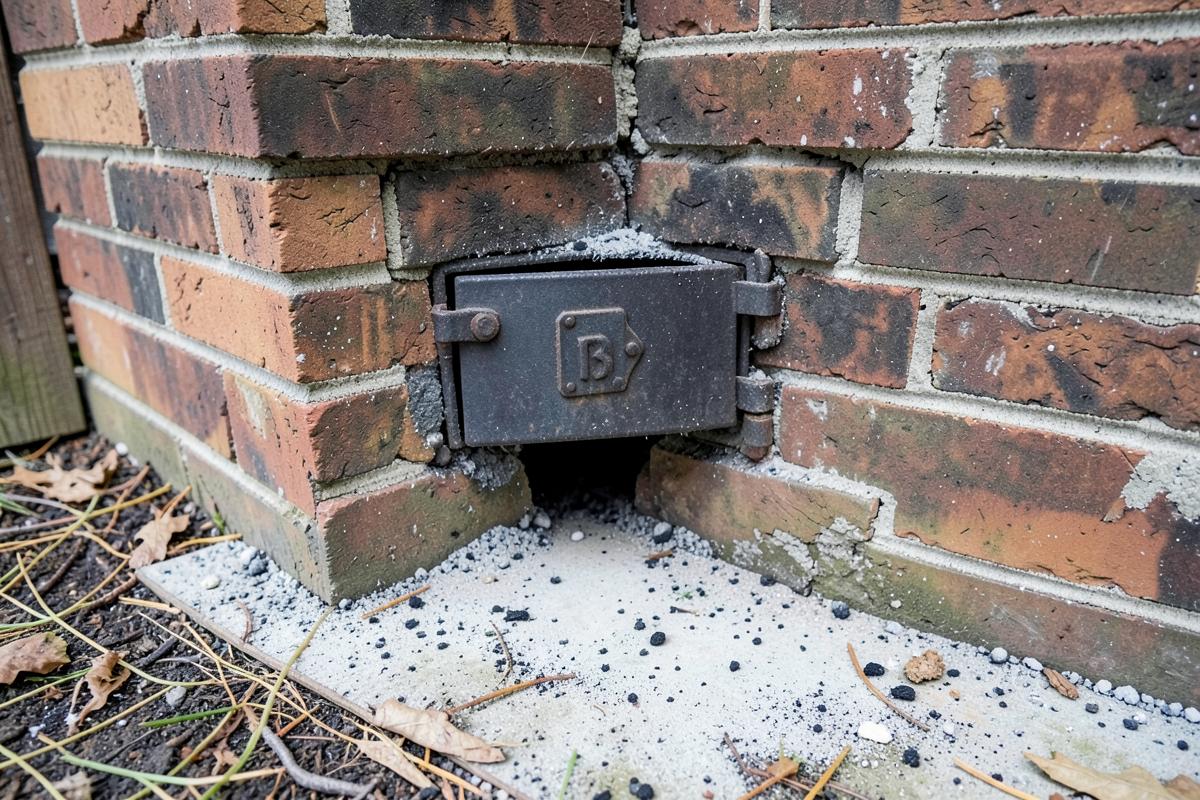
The ash dump in the firebox floor and the cleanout door at the base are simple cast components that rust, warp and eventually stop closing. An open ash dump gives combustion air an unintended path and, on an exterior chimney, lets cold air into the firebox.
We clear the chamber below, replace failed doors and frames with correctly sized cast components, repoint the surrounding masonry, and make sure the assembly closes and seals.
What the visit includes
- Ash chamber emptying and cleaning
- Ash dump door and frame replacement
- Exterior cleanout door replacement
- Repointing around the door frames
- Seal and operation verification
Signs you need this
- The ash dump lid will not sit flat or close
- The cleanout door is rusted open or missing
- Ash overflowing back into the firebox
- A cold draft entering through the firebox floor
Areas we cover around Petawawa
Pembroke · Chalk River · Deep River · Laurentian Hills · Alice
The cleanout is the small access door near the base of a masonry chimney, usually in a basement or crawlspace, that allows accumulated soot and debris from the flue above to be removed without having to access the chimney from the roof or firebox. It is an easy component to forget about entirely since most homeowners never open it, but a damaged, rusted or improperly sealed cleanout door can let combustion gases, moisture and even embers escape into a basement space rather than exiting safely through the flue.
Because cleanout doors sit low in the system and often in unfinished, rarely visited parts of a house, damage here tends to go unnoticed far longer than a problem at the visible firebox or roofline. Corrosion from basement humidity, physical damage from items stacked against the chimney base, or a door that was never properly sealed at installation are all common findings once someone finally looks closely.
This page explains what the cleanout does, the common ways it fails, how repairs are approached, and what a proper repair or replacement costs in a typical Ontario basement setting.
What the cleanout does and why it matters
As soot, ash and creosote loosen from the flue walls above, whether through normal use or during a professional sweep, debris falls down the flue and collects at the base of the chimney rather than in the firebox itself for chimneys with an offset base or a separate ash dump connection. The cleanout door provides access to remove that accumulated debris periodically, which prevents it from building up to the point where it restricts draft or, in more extreme cases, blocks the flue passage.
Beyond simple debris access, the cleanout door forms part of the sealed boundary of the chimney system. A gap, crack or poor seal at this door allows flue gases moving through the base of the chimney to leak into the basement rather than continuing up and out the top, which is a meaningful safety concern for any chimney serving a fuel-burning appliance where those gases can include carbon monoxide.
Some chimney designs route a furnace flue and a fireplace flue through the same base structure with separate cleanouts for each, and homeowners occasionally mistake one door for the other or assume a single cleanout serves the whole system. Confirming which cleanout corresponds to which flue during an inspection avoids a homeowner emptying the wrong access point repeatedly while the one actually accumulating debris goes unchecked for years.
Common cleanout failures
Cast iron cleanout doors are prone to rust over time, particularly in basements with any ongoing dampness, and a rusted door can develop gaps at the hinge or latch that no longer seal tightly against the frame even when closed. Some older doors were never fitted with a proper gasket at all, relying only on metal-to-metal contact that was marginal even when new and only worsens with age and corrosion.
Cracks in the masonry surrounding the cleanout frame are another common finding, often resulting from the same settling or freeze-thaw movement that affects other parts of an aging chimney foundation. These cracks allow air infiltration and, in more serious cases, indicate a broader foundation-level movement issue that extends beyond the cleanout itself and needs separate structural evaluation.
Physical damage from stored items being moved against the chimney base, from a door being forced open when partially rusted shut, or from previous careless attempts at DIY cleaning are also common, and often go unnoticed until an inspection specifically checks this area.
- Rusted or corroded cast iron doors that no longer seal
- Missing or deteriorated gasket material around the door frame
- Cracked masonry in the surrounding frame area
- Physical damage from impact or forced opening
- Doors installed without a proper seal from the original construction
Diagnosing a cleanout problem
A visual inspection of the cleanout door and its immediate surrounding masonry is a standard part of a thorough chimney inspection, though it is easy for this small, low-visibility component to be overlooked during a rushed visit, which is one reason homeowners should specifically ask whether the cleanout was checked as part of any inspection scope.
Signs suggesting a cleanout problem include a persistent musty or smoky smell specifically in the basement near the chimney base, visible soot staining on the wall or floor around the door, or a door that will not close flush against its frame. Any of these findings warrant a closer look before the next heating season begins.
Repair versus full door replacement
For a door that is structurally sound but has lost its seal, replacing the gasket material and ensuring the latch mechanism draws the door tightly against the frame can resolve the problem without replacing the entire unit, provided the frame itself is not warped or corroded beyond that simple fix.
When the door itself is significantly rusted, warped, or cracked, or when the surrounding masonry frame has deteriorated enough that a new door would not seat properly against it, full replacement of the door and frame assembly is the more reliable option. Modern replacement doors come in a range of sizes and are typically installed with a high-temperature sealant or mortar to properly bed the new frame into the existing masonry opening.
Addressing surrounding masonry damage
Where cracking extends into the masonry beyond just the immediate door frame, repointing the affected mortar joints and, in more significant cases, rebuilding a portion of the chimney base is necessary before a new door installation will hold a proper seal. Attempting to install a new door into a compromised frame without first addressing the surrounding masonry typically results in the same sealing problem recurring within a short time.
Any evidence of water intrusion at the chimney base, such as efflorescence staining or damp masonry near the cleanout, should be traced to its source, whether that is poor exterior grading, a foundation crack elsewhere, or water tracking down the inside of the flue from a damaged crown above, since fixing the cleanout alone will not resolve a moisture problem originating from a different part of the system.
- Repoint cracked mortar joints around the cleanout frame before installing a new door
- Trace any water staining to its actual source before assuming the cleanout itself is the cause
- Rebuild sections of deteriorated masonry base if cracking is extensive
Working safely in a finished or occupied basement
Because cleanout access is often located in a finished basement, utility room, or storage area, repair work needs to account for containment of soot and dust that gets disturbed during the repair, using drop cloths and, where significant debris removal is involved, a containment vacuum similar to what is used during a standard sweep.
Homeowners should clear stored items away from the cleanout area well before a scheduled repair visit, both to give the technician clear working space and to avoid damage to belongings from dust or debris during the work.
Long-term maintenance of the cleanout
Once a cleanout door is repaired or replaced with a proper seal, periodic checking of the gasket condition and latch tension during the annual chimney inspection helps catch early wear before it develops into the same sealing failure again. A light application of high-temperature lubricant to the hinge and latch mechanism, where the manufacturer permits it, can extend the working life of the hardware.
Homeowners should also make a habit of having accumulated debris actually removed from the cleanout periodically rather than only opening it to inspect, since some cleanouts are technically accessible but never actually emptied for years at a time, defeating the purpose of having the access point at all.
Carbon monoxide detection near the chimney base
Given that a compromised cleanout seal is specifically a pathway for combustion gases to enter a basement rather than exit through the flue, a working carbon monoxide detector positioned near the chimney base, in addition to any detectors already required elsewhere in the house, gives an early warning that most homeowners do not otherwise think to add in that specific location.
This is particularly relevant for basements that have been finished into a bedroom, home office or recreation room, since occupants spending extended hours in a space adjacent to the chimney base benefit from detection closer to the potential source rather than relying solely on a hallway or bedroom-level unit installed for general code compliance elsewhere in the home.
Detector placement and battery maintenance are a homeowner responsibility separate from the cleanout repair itself, but a technician addressing a cleanout seal issue will often mention this as a reasonable companion step, particularly in older homes where detector coverage may not have been updated in some years.
Ash Dump & Cleanout Repair cost in Petawawa
Most cleanout repairs in Ontario homes fall between $350 and $700 including door replacement and minor surrounding masonry work.
| Work | Typical range | What moves the price |
|---|---|---|
| Cleanout inspection as part of standard sweepoften bundled into a full inspection visit | Included – $60 | often bundled into a full inspection visit |
| Gasket replacement, existing door in good structural conditionresolves sealing issues without full door replacement | $120 – $220 | resolves sealing issues without full door replacement |
| Full cleanout door and frame replacementstandard cast iron or stainless steel replacement unit | $350 – $650 | standard cast iron or stainless steel replacement unit |
| Debris removal from cleanout, heavy accumulationpriced separately from door repair when significant buildup is found | $150 – $300 | priced separately from door repair when significant buildup is found |
| Repointing surrounding masonry frameaddresses cracked mortar before new door installation | $250 – $500 | addresses cracked mortar before new door installation |
| Chimney base rebuild for extensive deteriorationrequired when cracking extends well beyond the immediate frame | $800 – $1,800 | required when cracking extends well beyond the immediate frame |
Ranges are estimates for planning only, not quotes. Final pricing depends on what we find on site, access, and the condition of the existing system.
What moves the price
- Whether the existing door and frame can be resealed or need full replacement
- Extent of cracking or deterioration in the surrounding masonry
- Amount of accumulated debris requiring removal before repair
- Access constraints in finished basements or storage areas
- Whether a water intrusion source elsewhere needs to be traced and addressed
- Material choice for the replacement door and frame assembly
Want a number for your own fireplace? Send us the details and we will come back with an estimate, or call (833) 949-4153.
How the work goes, step by step
- 1
Locate and assess
The cleanout door and surrounding masonry are inspected for rust, cracking, gasket condition and general seal quality.
- 2
Clear the area
Stored items near the cleanout are moved and the immediate work area is protected with drop cloths before any debris is disturbed.
- 3
Remove accumulated debris
Ash, soot and creosote debris built up behind the door are cleared out and bagged for disposal using containment equipment as needed.
- 4
Repair or replace hardware
The gasket is replaced on a sound door, or the full door and frame assembly is removed and replaced where damage warrants it.
- 5
Address surrounding masonry
Cracked mortar joints around the frame are repointed and bedded to ensure the new or resealed door seats tightly.
- 6
Confirm seal quality
The door is closed and checked for a tight, even seal against the frame before the work area is cleaned up and the visit concluded.
How long it takes: A straightforward gasket or door replacement typically takes one to two hours; work involving surrounding masonry repair can take a half day.
Looking after it afterwards
- Keep stored items clear of the cleanout area to allow easy future access
- Have accumulated debris actually removed periodically rather than leaving it unattended
- Check the door seal during each annual chimney inspection
- Monitor for any recurring musty or smoky smell near the chimney base
- Address any new water staining near the base promptly to protect the repaired seal
Mistakes we see most often
- Forgetting the cleanout exists and never having it checked during inspections
- Forcing open a rusted door and damaging the frame in the process
- Assuming a smoky basement smell is unrelated to the chimney system
- Installing a new door into a cracked frame without repointing first
- Stacking storage items against the cleanout, blocking future access entirely
Questions homeowners ask
- Do I need an ash dump?
- Not necessarily. If the chamber is unusable or the door cannot be sealed, closing the dump permanently is often the more sensible repair.
- How often should the chamber be emptied?
- Whenever it approaches full, and always before a sweep so debris has somewhere to fall.
- Can a cleanout door be painted to blend into a finished basement wall?
- A heat-tolerant, appropriately rated finish can generally be applied without compromising the door's function, though homeowners should avoid regular household paint directly on a door subject to periodic heat exposure and should confirm compatibility with the specific door material first.
- Does every masonry chimney in an older Ontario home have a cleanout?
- Most do, but some very old or unusually built chimneys were constructed without one, in which case debris removal has to happen from the top or through the firebox instead, which is worth confirming during any inspection of an older property.
- Where is the cleanout usually located in an Ontario house?
- Most commonly in the basement or a crawlspace at the base of the masonry chimney, though the exact location depends on the chimney's foundation design and whether it serves a fireplace, furnace flue, or both.
- Is a leaking cleanout door dangerous?
- It can be, since a poor seal allows combustion byproducts moving through the base of the chimney to escape into the basement rather than exiting through the flue, which is a genuine concern for carbon monoxide exposure with any fuel-burning appliance connected to that chimney.
- How often should the cleanout actually be emptied?
- This depends on how much debris the flue above sheds, which varies by burning habits and chimney design, but checking it at least once a year alongside the regular sweep is a reasonable baseline for most households.
- Can I replace a cleanout door myself?
- It is a relatively small component, but achieving a proper seal against masonry that may be uneven or slightly deteriorated takes some experience, and a poorly sealed replacement can leave the same safety issue unresolved despite looking fixed.
- Does a damaged cleanout affect the whole chimney's draft?
- Generally the effect on draft itself is minimal, since the cleanout is a side access point rather than part of the main airflow path, but the sealing issue it creates is a separate safety concern from draft performance.
- Will home insurance cover cleanout repair?
- Routine maintenance items like this are typically considered the homeowner's responsibility rather than an insurable event, though damage resulting from a specific covered incident, such as a chimney fire, may be treated differently depending on the policy.
Nearby
Other Communities Near Petawawa
Related work
Often Booked Together
Chimney Rebuild in Petawawa
Partial or full rebuild of deteriorated masonry chimneys, from the roofline up or from the footing.
Crown Repair in Petawawa
Crown resurfacing, rebuilding and sealing to stop water entering the masonry from above.
Waterproofing in Petawawa
Vapour-permeable water repellent that keeps rain out while letting masonry dry.
Tuckpointing in Petawawa
Grinding out and replacing failed mortar joints with a correctly matched mix.