Ontario Fireplace & Chimney Specialists
Chimney Chase Cover Replacement in Sarnia
The rusty pan on top of a framed chase is the leak you have been chasing.
Every job starts with a proper look at your system — not a guess over the phone. You get a written quote before any work begins, a clear explanation of what we found, and a technician who works to manufacturer and code requirements from start to finish.
- Written quotes, no surprise charges
- Photo-backed findings after every visit
- Work performed to code and manufacturer specs
- Serving Sarnia and Lambton County, year-round
Chase Cover for Sarnia homes
Sarnia has a substantial post-war brick housing stock with masonry chimneys, and widespread gas availability means many of those fireplaces now hold gas inserts or log sets.
Lake Huron wind drives rain into the weather-facing side of a chimney harder than most inland exposures, so waterproofing and repointing here are usually needed on one elevation well before the others.
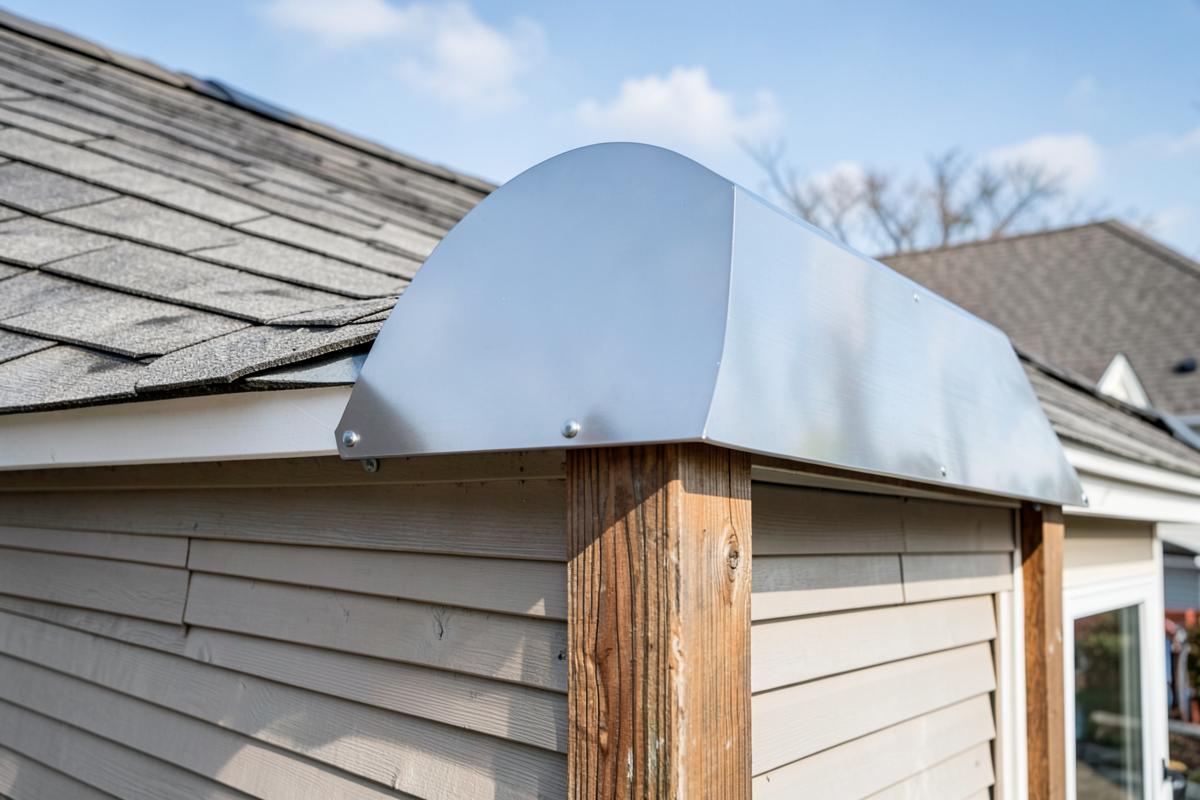
Factory-built fireplaces vent through a framed chase capped with a metal pan. Galvanised pans installed flat hold water, rust through in the low spots, and then drain straight into the framing where the damage is invisible until the ceiling stains.
Replacements are fabricated in stainless with a cross break so water runs off, a drip edge that throws it clear of the siding, and correctly sized flue collars sealed to the pipe.
What the visit includes
- Chase measurement and template
- Stainless pan fabrication with cross break slope
- Drip edge sized to shed clear of the chase
- Flue collars sealed to the venting
- Framing and sheathing condition report
Signs you need this
- Rust streaks running down the chase siding
- Standing water or a visible dip on top of the chase
- Interior stains near a factory-built fireplace
- Rust-coloured water inside the firebox
Areas we cover around Sarnia
Bright's Grove · Blackwell · Wyoming · Point Edward · Corunna
A chase cover is the metal panel that sits on top of a factory-built chimney's framed enclosure, sealing the top of the chase against rain, snow and animal entry while the flue pipe passes through it to terminate above. It takes the brunt of direct weather exposure on a factory-built system, and because it is typically made from a thinner, less durable metal than a masonry chimney's crown, it tends to fail on a shorter timeline and needs replacement more often than most other chimney components.
A failed chase cover is a leading cause of water damage inside a factory-built chimney chase, since once rust perforates the metal or a seam opens up, rainwater runs directly down the inside of the framed enclosure, soaking insulation, staining interior ceilings near the chimney, and in prolonged cases contributing to rot in the wood framing that the chase is built around.
This page explains how chase covers fail, the material options available for replacement, what proper installation involves, and typical Ontario costs for this frequently needed but often overlooked repair.
Why chase covers fail faster than masonry crowns
Many chase covers, particularly on older factory-built chimney installations, are made from galvanized steel, a material that resists corrosion reasonably well when its zinc coating is intact but that rusts through relatively quickly once that coating is scratched, worn or compromised by standing water. Ontario's freeze-thaw cycle accelerates this process, since any water that pools on a slightly warped or improperly pitched cover repeatedly freezes and expands, stressing seams and fastener points each winter.
Chase covers are also typically installed with a slight positive slope to shed water, but that slope can be compromised over time by minor structural settling of the chase framing beneath it, or simply by manufacturing or installation imperfections that leave a low spot where water collects rather than draining off the edge as intended.
Sun exposure plays a secondary role that is easy to overlook, since a chase cover on the south or west face of a roof cycles through a wider daily temperature swing than one in a shaded location, and that repeated expansion and contraction stresses fastener holes and seam seals over the years in a way that a similarly aged cover on a shaded north-facing chase does not experience to the same degree.
Signs a chase cover needs replacement
Visible rust spots, especially reddish-brown staining running down the exterior siding of the chase below the cover, are usually the first visible sign from ground level that the cover has begun to fail. Interior signs include water staining on a ceiling near the chimney chase, a musty smell from the area during or after rain, or visibly damp insulation if the chase interior is ever accessed during other work.
A cover that has separated at its seams, has fasteners backing out or missing, or that visibly flexes or wobbles when checked from the roof is due for replacement regardless of whether interior water damage has yet appeared, since these are early mechanical failure signs that reliably progress to active leaking within a season or two if left alone.
- Rust staining on the cover itself or on exterior siding below it
- Interior ceiling staining or musty smell near the chimney chase
- Visible seam separation or wobbling of the cover under light pressure
- Missing or backed-out fasteners around the cover perimeter
- Standing water visible on the cover surface after rain
Material options for replacement
Stainless steel is the material most commonly recommended for chase cover replacement in Ontario's climate, since it resists corrosion far more effectively than galvanized steel over the long term and holds up better to repeated freeze-thaw stress at seams and fastener points. The higher upfront material cost compared to galvanized steel is generally offset by a considerably longer service life before the next replacement is needed.
Copper is available as a premium option, offering excellent corrosion resistance and a distinctive appearance that develops a natural patina over time, though it comes at a meaningfully higher cost than stainless steel and is chosen more often for aesthetic reasons on higher-end properties than for pure functional necessity.
Galvanized steel remains available as a lower-cost option and is sometimes chosen for budget-conscious replacements, but given its shorter expected service life in this climate, homeowners should weigh the lower upfront cost against the likelihood of needing another replacement considerably sooner than with stainless steel.
- Stainless steel: strong corrosion resistance, the most commonly recommended choice
- Copper: premium option with excellent longevity and a changing patina appearance
- Galvanized steel: lower upfront cost, shorter expected service life in this climate
What proper installation involves
Replacement starts with removing the failed cover entirely, along with any accumulated debris or nesting material found beneath it, and inspecting the top of the chase framing and any visible insulation for water damage that may need separate attention before the new cover goes on. Installing a new cover over damaged, wet framing without addressing that underlying issue just traps a problem the homeowner still needs to deal with later.
The new cover is fabricated or selected to fit the specific chase dimensions, since even a slight mismatch in size creates gaps or overhangs that compromise the water seal, and it needs properly sized openings for the flue pipe or pipes passing through it, sealed with a storm collar rated for the temperature and material combination involved.
Correct pitch and drainage direction are confirmed during installation so water actively sheds off the cover rather than pooling anywhere on its surface, and fasteners are set with washers or sealant appropriate to the chosen metal to avoid creating new points of water entry at the very screws meant to hold the cover secure.
Addressing damage found underneath
It is common to find some degree of water-damaged wood framing, wet or compressed insulation, or minor rust on the flue pipe itself once an old chase cover is removed, since a failing cover often goes unnoticed for a season or more before it is addressed. Any wet insulation should be replaced rather than left in place and simply covered over, since it will not fully dry out inside a sealed chase and can contribute to ongoing dampness and odour.
Framing damage found to be more than superficial surface staining should be flagged for a carpenter or general contractor to address structurally before the new cover installation is considered complete, since a chase cover replacement alone does not repair rotted wood framing underneath it.
Coordinating with flue pipe and flashing work
Because the chase cover interfaces directly with the flue pipe termination and the storm collar sealing that connection, it is often sensible to inspect the visible portion of the flue pipe and its cap at the same time as a chase cover replacement, since both components are exposed to the same weather conditions and often show wear on a similar timeline.
If the chase siding itself shows signs of water damage below the cover, coordinating chase cover replacement with any needed siding repair in the same visit avoids paying for two separate access setups and ensures the full water intrusion path gets addressed rather than just the top-most component.
Preventing premature failure of a new cover
Once a new cover is installed, periodic visual checks from the ground or during the annual chimney inspection can catch early signs of fastener loosening or seam stress well before they progress to an active leak, extending the practical service life of even a well-installed cover through regular attention.
Homeowners should avoid placing anything on top of the chase cover during any other roof work, such as leaning ladders or equipment against it, since even a durable stainless steel cover can be dented or have its seal compromised by careless handling during unrelated roof maintenance.
Coordinating replacement with a broader roof service visit
Because a chase cover replacement requires the same roof access, ladder setup and fall protection considerations as other rooftop chimney work, homeowners scheduling a roof replacement, gutter service or exterior siding repair around the same time often find it efficient to bundle a chase cover inspection or replacement into that same visit rather than paying for separate access setups on two different occasions.
Roofing contractors working near a chimney chase during a full roof replacement will sometimes flag a chase cover in poor condition as part of their own scope of work, and it is worth clarifying up front whether the roofer intends to replace it themselves or whether that specific component should be handled separately by a chimney specialist familiar with flue penetration sealing details that a general roofer may not routinely encounter.
For homeowners without any other roof work planned, a dedicated visit remains the normal and reasonable way to address a failing cover, and there is no need to wait for an unrelated roofing project simply to save on a second access setup if the cover is actively leaking.
Chimney Chase Cover Replacement cost in Sarnia
Most standard stainless steel chase cover replacements in Ontario cost between $500 and $850 for a typical single-flue chase.
| Work | Typical range | What moves the price |
|---|---|---|
| Galvanized steel chase cover replacement, standard sizelower-cost option with a shorter expected service life | $300 – $500 | lower-cost option with a shorter expected service life |
| Stainless steel chase cover replacement, standard sizemost commonly recommended for long-term durability | $450 – $750 | most commonly recommended for long-term durability |
| Stainless steel chase cover, oversized or multi-flue chaselarger surface area or multiple flue penetrations | $700 – $1,100 | larger surface area or multiple flue penetrations |
| Copper chase cover replacementpremium material with distinct long-term appearance | $900 – $1,600 | premium material with distinct long-term appearance |
| Repair or replacement of water-damaged chase framingpriced separately based on extent of damage found underneath | $400 – $1,200 | priced separately based on extent of damage found underneath |
| Combined chase cover and flue cap replacementaddresses both components in a single roof visit | $650 – $1,300 | addresses both components in a single roof visit |
Ranges are estimates for planning only, not quotes. Final pricing depends on what we find on site, access, and the condition of the existing system.
What moves the price
- Material choice: galvanized steel, stainless steel or copper
- Chase size and number of flue penetrations requiring sealed openings
- Extent of any water damage found in the framing or insulation beneath the old cover
- Roof pitch and access difficulty for the replacement work
- Whether flue cap or flashing repair is bundled into the same visit
- Custom fabrication needs for an unusually shaped or sized chase
Want a number for your own fireplace? Send us the details and we will come back with an estimate, or call (833) 949-4153.
How the work goes, step by step
- 1
Remove the failed cover
The old chase cover is carefully detached and removed, along with any accumulated debris trapped beneath it.
- 2
Inspect underlying structure
Chase framing, insulation and the visible flue pipe are checked for water damage or corrosion needing separate attention.
- 3
Measure and fabricate
The new cover is measured or custom fabricated to precisely fit the chase dimensions and flue pipe penetration points.
- 4
Address underlying damage
Any wet insulation is replaced and damaged framing is flagged or repaired before the new cover is installed.
- 5
Install and seal
The new cover is set with correct drainage pitch, and flue penetrations are sealed with an appropriate storm collar.
- 6
Final inspection
Fasteners, seams and drainage are checked once more to confirm the new cover sheds water properly before the crew leaves.
How long it takes: A standard chase cover replacement typically takes two to four hours, longer if underlying framing repair is required.
Looking after it afterwards
- Have the cover visually checked during each annual chimney inspection for fastener or seam issues
- Avoid placing ladders, equipment or debris on top of the cover during other roof work
- Watch for any recurrence of ceiling staining near the chase after heavy rain
- Keep gutters and nearby roof drainage clear so water is not directed toward the chase area
- Address any new siding staining below the chase promptly rather than assuming it is unrelated
Mistakes we see most often
- Delaying replacement after visible rust appears, allowing interior water damage to worsen
- Installing a new cover over wet insulation or damaged framing without addressing it first
- Choosing galvanized steel repeatedly instead of investing once in longer-lasting stainless steel
- Assuming a small cover leak is minor and not worth prompt attention
- Using a poorly fitted generic-size cover instead of one properly matched to the chase dimensions
Questions homeowners ask
- Can a rusted pan be patched?
- Patching buys a season at best. Once rust has perforated the pan, the whole cover is at the end of its life.
- Why stainless?
- Galvanised pans in Ontario weather typically fail within a decade. Stainless with a proper slope lasts far longer and does not stain the siding.
- Should a chase cover be replaced at the same time as a full roof replacement?
- It is often practical to do so, particularly if the existing cover shows early wear, since the roofing crew's equipment and access setup are already in place, though a cover still in good condition does not need to be replaced early just because other roof work is happening nearby.
- Can a chase cover leak be temporarily patched until a full replacement can be scheduled?
- A small, actively leaking seam can sometimes be temporarily sealed to reduce ongoing water entry, but this should be treated as a short-term measure rather than a lasting fix, since the underlying corrosion or seam failure driving the leak will continue to progress underneath any temporary patch.
- How long does a stainless steel chase cover typically last?
- With proper installation and periodic inspection, a stainless steel cover commonly lasts fifteen to twenty-five years or more in Ontario's climate, considerably longer than a galvanized steel equivalent typically manages.
- Can a chase cover be repaired instead of replaced?
- Minor sealant touch-ups at fastener points or seams can extend a cover's life briefly, but once rust has perforated the metal or seams have significantly separated, full replacement is the more reliable and ultimately more cost-effective option.
- Is chase cover replacement covered by home insurance?
- This is generally treated as routine maintenance rather than an insurable event, though resulting interior water damage from a sudden failure may be covered depending on the specific policy and how the damage occurred, which is worth confirming directly with the insurer.
- Does a new chase cover need to match the existing flue cap?
- They do not need to match in material or finish, though coordinating the two during the same visit is often practical since both are exposed to the same weather and may be due for attention around the same time.
- How can I tell from the ground if my chase cover needs attention?
- Rust staining running down the exterior siding below the chase top, or water staining appearing on an interior ceiling near the chimney, are both visible signs from inside or outside the house that do not require getting on the roof to notice.
- Can a chase cover be replaced in winter?
- It is possible but more difficult and sometimes deferred until warmer weather due to roof safety conditions and sealant application requirements, so many homeowners address a failing cover in fall before winter weather makes the repair more difficult to schedule safely.
Nearby
Other Communities Near Sarnia
Related work
Often Booked Together
Chimney Sweeping in Sarnia
Full mechanical sweep of the flue, smoke chamber and firebox with containment and photos.
Chimney Repair in Sarnia
Targeted repairs to crowns, caps, mortar joints, flashing and liners.
Chimney Liner in Sarnia
Stainless steel and cast-in-place relining sized to the appliance being vented.
Chimney Cap in Sarnia
Stainless caps and multi-flue covers that keep out rain, snow, animals and embers.